
Wheel for trolley
Wheels for carts used in repair shops, service centers, warehouses, and yards
A wheel for a cart is a component that directly affects the ease of movement, stability, and load capacity of any transport cart. The right model makes it easier to transport tools, construction materials, boxes, yard waste, machinery, and service equipment. The range includes wheels for hand carts, platform carts, garden carts, service stands, warehouse carts, and auxiliary transport vehicles in workshops.
A cart wheel is selected based on the load, the surface, the mounting method, and the working environment. The various models differ in diameter, width, tread material, bearing type, axle or plate type, presence of a brake, and resistance to impact, moisture, dust, or uneven terrain. This makes the cart easier to maneuver and reduces the load on the frame and the operator's arms.
Main applications of hand truck wheels
A cart wheel is used wherever loads are moved over short or medium distances. In construction, it is used for transporting bags, buckets, tiles, tools, and supplies. In service centers and workshops, they help move carts carrying hand tools, power tools, spare parts, and installation accessories. At home and in the yard, they are used for garden carts, utility platforms, and small transport solutions around garages, storage areas, or outbuildings.
For smooth floors, tiles, concrete, or industrial flooring, wheels with a quieter roll and a tread that leaves no marks are often preferred. For uneven terrain, gravel, dirt, or yard surfaces, models with a larger diameter, wider contact surface, and good elasticity are practical. A cart wheel of the right size rolls more easily over thresholds, joints, and small obstacles.
Types by Material and Construction
The tread material determines how the wheel performs on different surfaces. Rubber options provide a smooth ride, lower noise, and better traction. Polyurethane models are valued for use in warehouses and workshops because they combine durability with good rolling performance. Plastic wheels are lightweight and practical for lighter loads, while metal wheels or those with metal rims are chosen for heavier applications when the frame and axle allow it.
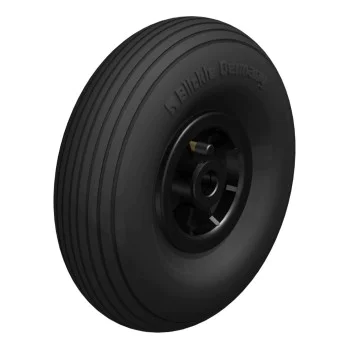
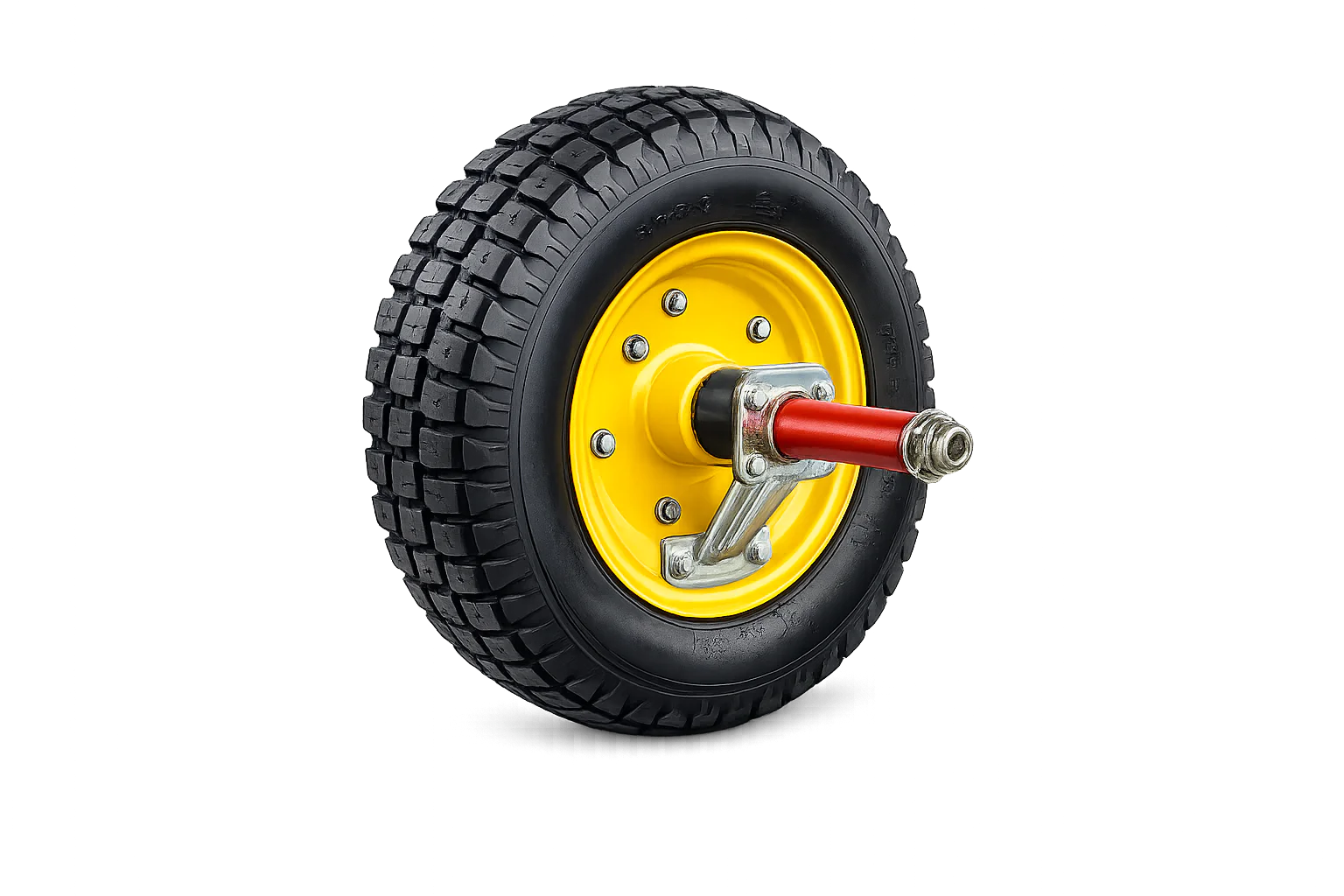
A cart wheel can have a solid tire, an air-filled tire, or a hard tread. Solid wheels do not puncture from thorns, nails, and sharp debris, making them suitable for construction sites and yards. Pneumatic tires provide a smoother ride over uneven surfaces and protect the load from strong vibrations. Solid models are a good choice for flat surfaces and regular movement on floor coverings in a warehouse or service center.
| Wheel type | Characteristics | Practical use |
|---|---|---|
| Solid rubber | No pumping required, puncture-resistant | Yard, construction, rough surfaces |
| Pneumatic | Smooth ride and good vibration absorption | Garden carts, uneven terrain |
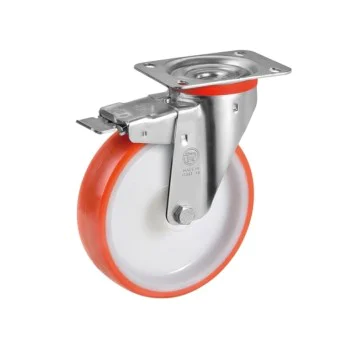
| Polyurethane | Good rolling performance and wear-resistant tread | Warehouse, workshop, service carts |
| Plastic | Lightweight and easy to use | Lightweight utility carts |
How to choose the right wheel for a cart
Before purchasing, check the dimensions of the old wheel or the trolley's specifications. The diameter affects maneuverability, while the width affects stability and load distribution. A larger cart wheel handles uneven surfaces better, while a smaller one is suitable for compact designs and tight spaces.
- Load capacity: Consider the load capacity of a single wheel in relation to the total weight of the load and the number of wheels on the cart.
- Mounting type: axle, bushing, bracket, bolt, or swivel mechanism must match the design.
- Axle diameter: Measure precisely to prevent play, binding, or uneven rotation.
- Floor surface: Hard floors, concrete, asphalt, gravel, or dirt require different tread patterns.
- Operating environment: Moisture, dust, oils, and temperature changes affect the rubber, plastic, bearings, and metal parts.
On four-wheeled carts, fixed and swivel models are often combined. The fixed wheels keep the direction stable, while the swivel wheels facilitate maneuvering. In a workshop or service center, a wheel with a brake is practical when positioning a tool cart near the work area because it prevents unwanted movement on slopes or smooth surfaces.
Compatibility, Safety, and Maintenance
Compatibility isn't limited to just the diameter. You need to compare the hub width, the axle hole, the distance between the mounting holes on the frame, and the total height after installation. If the new cart wheel changes the height too much, the cart may become unstable or difficult to push. When replacing a single wheel, it is wise to check the condition of the others, as varying wear affects smooth movement.
For safe operation, the load must be distributed evenly and must not exceed the capacity of the wheels, axle, and frame. The bearings must rotate freely, without grinding or side play. For models with pneumatic tires, the pressure should be checked periodically. Solid and polyurethane wheels should be cleaned of small stones, metal shavings, dried mortar, and other debris that can accelerate wear.
Wheel for a cart for various loads and terrains
A wheel for a light-duty cart is selected primarily based on size, convenience, and compatibility. For heavier materials, a higher load capacity, a more stable rim, and a well-chosen bearing are required. When working outdoors and on rough terrain, the key factors are the wheel's off-road capability and the tread's durability. For indoor use, quiet operation, minimal floor marks, and easy maneuverability are important.
At Toolsbox.bg, you can select a wheel for your cart based on the specific cart, load, and working conditions. Browse the available models, compare sizes, materials, mounting methods, and load capacity, then choose a solution for repair, maintenance, construction, service, or home use.