
Aerographers
Airbrushes for precision painting, touch-ups, and fine finishes
Airbrushes are used to finely spray paint, varnish, ink, or other liquid coatings using compressed air. They are valued in model making, decoration, artistic painting, auto detailing, touch-ups, hobby projects, and precision maintenance tasks where a regular brush or standard paint spray gun does not provide the necessary control. As part of the pneumatic tools, these devices operate with a compressor and allow for the even application of thin layers onto small, complex, or delicate surfaces.
At Toolsbox.bg, you can find various airbrushes for detailed work, for evenly covering small elements, and for smooth color transitions. The differences between the individual models relate to the paint delivery method, air and material control, nozzle size, cup capacity, trigger type, and compatibility with compressors, hoses, and quick-connect fittings.
Applications of airbrushes in workshops, service centers, and hobby settings
Airbrushes are used for tasks requiring a thin coat, smooth lines, and control over the amount of material. In model making, they help with painting miniatures, models, figures, and small plastic or metal parts. In repair and maintenance, they can be used for spot touch-ups, coloring small details, applying lacquer coatings, and creating decorative effects.
For artistic activities, the airbrush allows for soft gradients, shading, outlines, and multi-layered effects. In automotive service settings, it is used for minor corrections, details on hoods, panels, rims, decorative elements, and custom coatings. In furniture maintenance and restoration, it can be useful for small areas, edges, ornaments, and hard-to-reach areas.
Main types based on feed and control
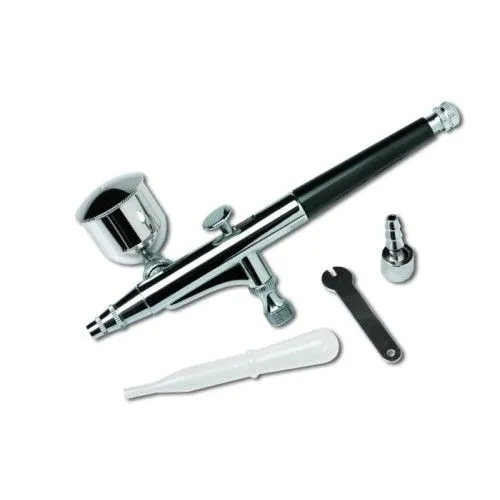
The choice of airbrush depends on the desired precision, the type of paint, and the work area. Top-feed models dispense material by gravity and are convenient for fine work with small quantities. Bottom-feed models hold more material and are practical for longer operations where frequent refilling is undesirable. A side-mounted cup provides good visibility of the work area and is preferred for specific techniques.
| Airbrush Type | Characteristics | Application |
|---|---|---|
| Top-feed | Precise control and economical use with small amounts of paint | Model making, miniatures, detailed retouching |
| With bottom reservoir | Larger material capacity and convenience for a series of details | Decoration, maintenance tasks, small coatings |
| Single-action | Easier airflow control | Beginners, even base coats |
| Double-action | Separate control of air and paint | Fine lines, gradients, complex decorative techniques |
How to choose an airbrush based on the task
When choosing an airbrush, pay attention to the nozzle and needle. Finer nozzles are suitable for thin lines, shading, and small details, while larger orifices work better with thicker materials and broader coverage. For acrylic paints, varnishes, stains, or specialized coatings, the correct dilution is needed to achieve an even spray and reduce the risk of clogging.
The cup capacity also affects the workflow. A small cup is convenient for changing colors and precise dispensing, while a larger one is practical for repetitive tasks. The body shape, access to the needle, and the ability to disassemble the unit are important for cleaning after use. For professional use, better trigger control, a stable spray pattern, and compatibility with frequently changed accessories are sought.
Compatibility with a compressor and pneumatic accessories
Airbrushes operate on compressed air, so the compressor, pressure regulator, hose, and connections directly affect the final result. Stable pressure helps ensure even spray distribution, and a moisture and oil separator reduces the risk of water droplets in the paint. When working with very fine finishes, a regulator close to the tool is useful, as it allows for more precise adjustment during painting.
Before purchasing, check the thread size of the connectors, the length and flexibility of the hose, the type of compressor, and the necessary adapters. If you already have pneumatic equipment in your workshop, checking for compatibility saves you additional costs and work interruptions.
Consumables, Cleaning, and Safe Operation
Good airbrushing results depend not only on the tool but also on the consumables. Paints and varnishes must be compatible with the nozzle and the recommended thinner. Filtering the material before filling helps prevent clogging, and test spraying on a sample surface makes it easier to adjust the spray pattern.
After each session, clean the airbrush of residue from the cup, needle, nozzle, and paint channels. Timely cleaning extends the service life of the seals and reduces uneven spraying. When working with lacquers, thinners, or aerosol particles, good ventilation, a protective mask, goggles, and gloves are required. This maintains control over the process and limits contact with vapors and fine particles.
Airbrushes for precision work from Toolsbox.bg
Airbrushes are a practical choice for anyone looking to apply coatings with precision to small parts, decorative elements, or complex shapes. Choose a model based on the paint delivery method, nozzle size, required control, and available pneumatic equipment. Browse the selection at Toolsbox.bg and choose an airbrush, accessories, and supplies tailored to your workshop, service center, or hobby project.