
Hoist for cars
Car Lift for Auto Repair Shops, Garages, and Maintenance
A car lift is one of the most important lifting devices for the repair, diagnosis, and maintenance of passenger cars. It lifts the vehicle to a convenient working height, providing access to the undercarriage, exhaust system, brakes, suspension, transmission, and interior, making work in a service center or garage more precise and organized. Toolsbox.bg offers solutions for various load capacities, workspaces, and service tasks-from compact models for limited spaces to more robust lifts for intensive professional use.
A properly selected car lift facilitates tire changes, brake system repairs, shock absorber replacements, oil and filter changes, work on sills and bodywork, installation of exhaust components, and inspection of the vehicle's undercarriage. In a service setting, this equipment directly impacts the mechanic's comfort, work speed, and workplace organization.
Types of car lifts and their applications
Different designs are selected based on load capacity, installation method, lifting height, platform or arm size, and the type of vehicles to be serviced. A car lift can be stationary, mobile, electro-hydraulic, mechanical, or combined, depending on its design and intended use.
| Lift Type | Application | Distinctive features |
|---|---|---|
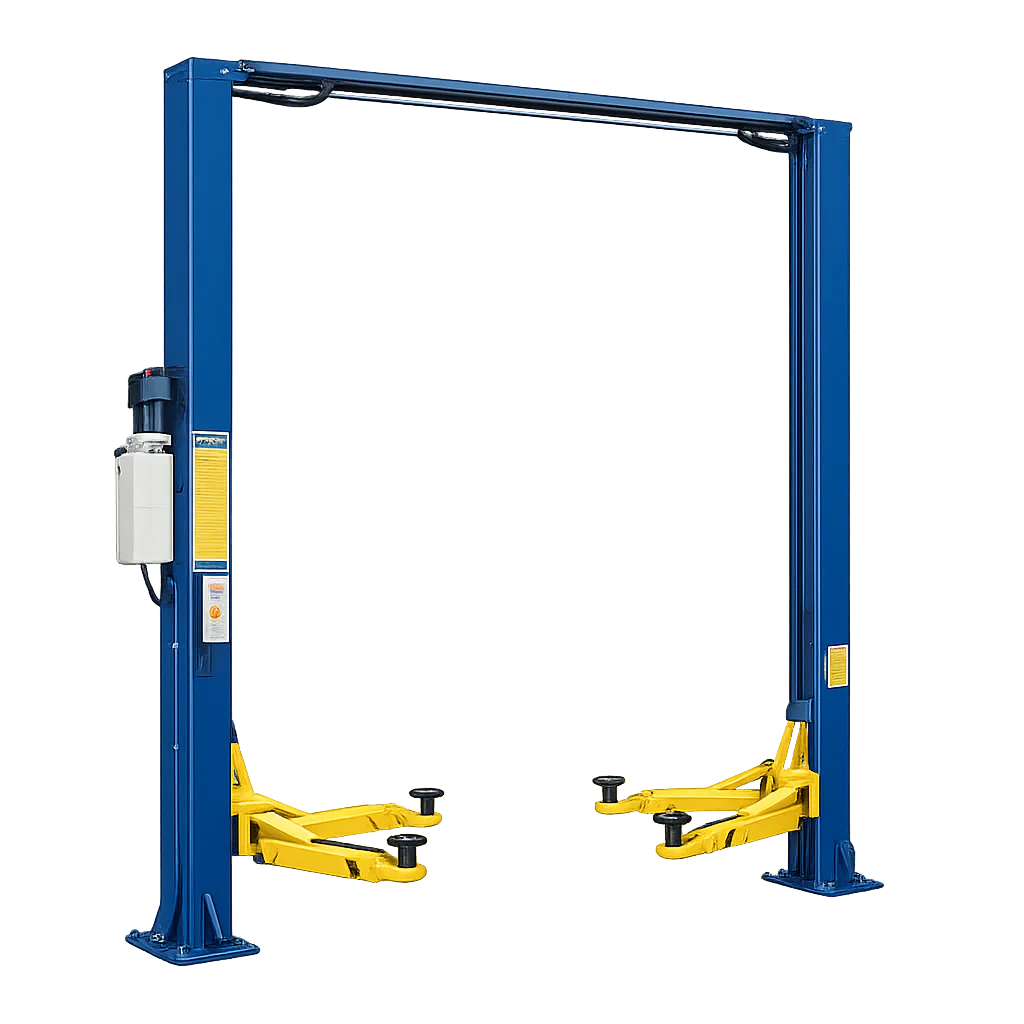
| Two-post | Service repairs, suspension, tires, brakes | Unobstructed access to the wheels and underside of the vehicle, compact relative to the work area |
| Four-post | Diagnostics, alignment, servicing of heavier vehicles | Stable platform, comfortable for prolonged work and vehicle storage |
| Scissor | Quick service, tires, bodywork, confined spaces | Low profile, easy installation, and efficient operation in smaller spaces |
| Mobile or low-profile | Garage work, temporary workstations, minor repairs | Easy positioning and practical use for light service tasks |
How to Choose a Car Lift
A car lift is selected first based on its maximum load capacity. For standard passenger cars, models with a capacity margin above the vehicle's actual weight are typically sought, while SUVs, vans, or heavier vehicles require a higher capacity. The capacity margin reduces the load on the structure and ensures smoother operation with different vehicles.
The second criterion is available space. You need to consider the ceiling height, distances to walls, doors, and workbenches, the width of the vehicle, the space required for opening doors, and the clearance around the lift. In low-ceilinged rooms, scissor and low-profile models are practical, while two-post models require a solid foundation and sufficient lifting height.
- Load capacity: choose a capacity based on the heaviest vehicle you will be servicing.
- Lifting height: a greater stroke facilitates working in an upright position.
- Drive type: Electro-hydraulic systems are common in auto repair shops due to their smooth lifting action.
- Power supply: Check the available electrical grid and the requirements of the specific model.
- Installation base: The concrete floor must meet the requirements for anchoring and stability.
- Vehicle access: The arms, platforms, and sills must be compatible with the types of vehicles you service.
Design, Safety, and Ease of Use
For a car lift, the design must ensure stable lifting, even load distribution, and secure holding of the vehicle in the working position. Therefore, pay attention to the columns or platforms, locking mechanisms, synchronization between sides, safeguards against sudden lowering, and ease of operation. Ergonomically placed buttons, clear markings, and easy release of the lock save time during daily service work.
For home use in a well-equipped garage, the more compact car lift is often sufficient for seasonal tire changes, minor repairs, and suspension inspections. For a professional service shop, a model designed for more frequent use, different wheelbases, various lifting points, and higher daily load capacity is required. The difference lies not only in size but also in the durability of the mechanics, lifting speed, and ease of use during repetitive operations.
Compatibility with vehicles and work tasks
Before purchasing, it is wise to specify the types of vehicles-small city cars, sedans, station wagons, low-clearance sports models, SUVs, or light commercial vehicles. A car jack with adjustable arms offers more flexibility for different lifting points, while platform models are convenient for diagnostics and operations where the vehicle must remain on its wheels.
Compatibility with additional accessories is also important. Rubber pads, arm extensions, sill adapters, tool trays, and auxiliary jacks can expand operational capabilities. In intensive service operations, spare parts and consumables for maintaining the hydraulics, cables, rollers, and locking elements help ensure longer equipment service life.
Car Lift Maintenance
Regular maintenance of a car lift includes a visual inspection of load-bearing components, checking the anchors, cleaning the work areas, monitoring for hydraulic leaks, and inspecting the locking mechanisms. Moving parts must be kept clean and lubricated according to the manufacturer's instructions. This ensures smooth operation and reduces the risk of uneven lifting.
During installation, precise site selection, a stable foundation, and proper leveling are required. Electrical connections must meet the model's specifications, and operators must use only the designated lifting points on the vehicle. Overloading beyond the permissible capacity, uneven positioning, and operating with damaged safety components are not permitted during service operations.
Car Lifts from Toolsbox.bg
A car lift is an investment in a more convenient, organized, and safe auto repair shop. At Toolsbox.bg, you can browse models for various service tasks, garage spaces, and load capacities, compare technical specifications, and choose equipment that suits your workflow. Choose the right option based on the vehicles, space, and frequency of use to equip your workspace with a practical lifting device.