
Construction Leggings
Construction buckets for building, renovation, and mixing materials
Construction buckets are practical containers for preparing, transporting, and temporarily storing construction mixtures, water, sand, gravel, plaster, adhesives, and waste material. They facilitate work on the job site, in the yard, in a workshop, or during home repairs when a container with a larger volume, a stable bottom, and easy access to the contents is needed. Construction buckets are used for manual operations with a trowel, putty knife, and shovel, but they are also useful when working with mixers, construction mixers, and other mixing tools.
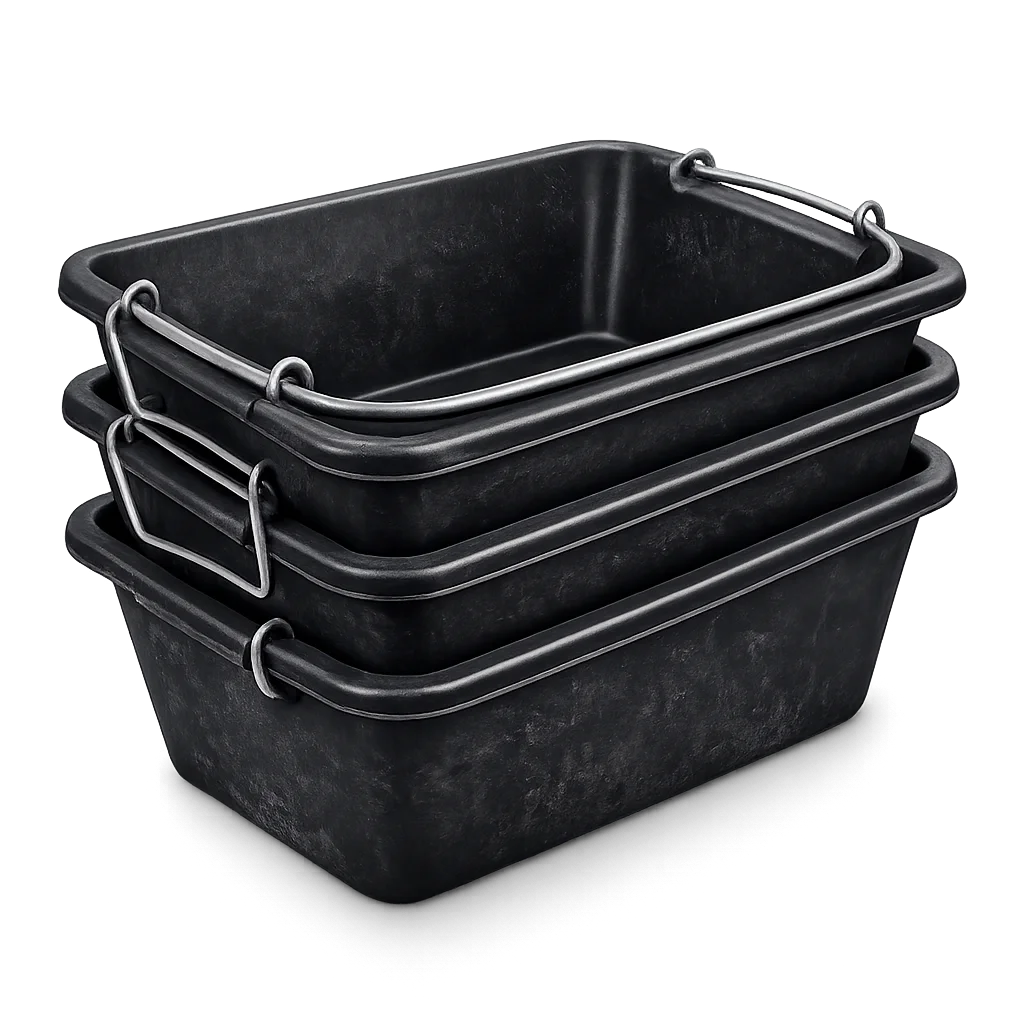
Within the category of construction buckets, these containers are distinguished by a wider opening and a lower profile. This makes it easier to scoop up material, reduces spillage during mixing, and allows for better control when dispensing. Construction buckets are a good choice for plastering, tile setting, spackling, masonry work, cleaning up after demolition, preparing foundations, and small concrete jobs.
Applications of construction buckets
Construction buckets are used for various tasks related to construction, repair, installation, and maintenance. In finishing work, they are used to prepare tile adhesive, grout, gypsum plaster, lime-cement mortar, or primers, provided the container is compatible with the specific mixture. For rough construction operations, they hold sand, cement, ballast, water, or debris from drilling, cutting, and chiseling.
The flat bottom and wide shape are convenient for working on the floor, on scaffolding, or near the work area. For gardening and yard work, these same containers are used to transport soil, compost, gravel, wood waste, and water. For maintenance tasks in a garage or workshop, they help with collecting small parts, cleaning components, and organizing the workspace.
Difference between basins and standard construction buckets
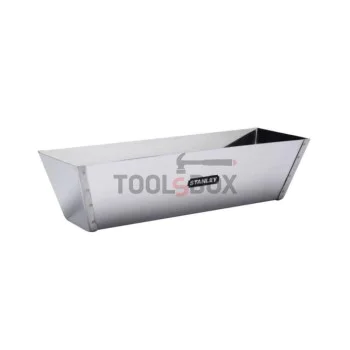
A construction bucket is deeper and more convenient for carrying liquids or bulk materials vertically, while a trough provides more surface area for mixing and access. This is useful for mortars mixed with a hand tool, for putty mixtures with a thicker consistency, and for tasks where the material is repeatedly scooped up with a trowel or putty knife. Construction tubs reduce the need to transfer between containers and save movements when working at close range.
How to choose construction buckets based on the task
When purchasing, consider the volume, shape, material, handles, and load-bearing capacity. Smaller containers are convenient for home repairs, installation work, and working in tight spaces. Larger capacities are a better choice for construction sites, preparing larger batches of mix, or collecting waste. With heavy materials, an excessively large volume isn't always practical, as a full container becomes difficult to move.
- Volume: smaller models are easy to carry, while larger ones hold more mixture or bulk material.
- Shape: Round containers are convenient for mixing, while rectangular ones stack more easily against a wall or in a trunk.
- Material: Plastic models are lightweight and easy to clean; more flexible material blends withstand impact and bending during loading.
- Rim and handles: A reinforced rim and comfortable handles make it easier to move and pour.
- Base: The stable base reduces the risk of tipping over when stirring or scooping.
Materials and durability in daily use
Construction buckets are most often made of plastic or flexible polymer compounds that withstand contact with water, sand, cement, and mortar. For heavy-duty professional use, it is advisable to look for models with thicker walls, reinforced rims, and sturdy bottoms. For home use, the key factors are convenience, capacity, and ease of cleaning after finishing work.
When working with cement and plaster mixtures, the container should be cleaned before the material sets. Dried-on residue makes subsequent mixing difficult and reduces the usable volume. For adhesives and grout mixtures, it is best for the inner surface to be smooth, as less material sticks to it and cleaning takes less time.
Compatibility with tools, machines, and consumables
Construction buckets are used with hand tools such as trowels, putty knives, scrapers, shovels, and mixing paddles. When working with power tools for mixing, the size of the container must allow for free movement of the mixer without splashing or hitting the sides. For thicker materials, a container with a sturdier bottom is needed, one that remains stable under rotational stress.
These are often used in conjunction with measuring containers, construction buckets, sponges, brushes, plastic sheeting to protect flooring, gloves, and other supplies for maintaining a clean work area. When buckets, pails, and tools are selected for the same type of activity, the workflow becomes more organized and materials are used more efficiently.
Safety and Maintenance
A full bucket should be lifted with proper posture and without sudden movements, especially when handling cement, sand, or wet mixtures. Do not overfill it beyond the rim, as this makes it harder to carry and increases spillage. When mixing with a machine, place the container on a level surface, and the operator should wear safety goggles and gloves, especially when handling powdery materials and aggressive mixtures.
After completing the task, the container should be washed, dried, and stored away from heavy objects that could crush it. This preserves the shape of the walls and rim. In cold weather, the plastic becomes stiffer, so hitting or throwing a loaded container is not recommended.
Construction buckets at Toolsbox.bg
At Toolsbox.bg, you can browse construction buckets for various tasks-from small repairs to professional construction projects. Compare capacity, shape, material, and ease of grip, then choose a bucket that suits the mixtures, tools, and workload at your job site or workshop.