
Solar station
Solar power station for off-grid power supply and charging
A solar station is a portable power source designed to charge and power devices far from a standard outlet. It combines a battery pack, an inverter, a charge controller, and various outputs into a single compact unit. It can be charged from the electrical grid, a car outlet, or a compatible solar panel, making it practical for use on job sites, camping, service work, yard maintenance, and as a backup power source at home.
Among chargers, the solar station holds a special place because it not only charges batteries and mobile devices but also stores energy for later use. It can power phones, tablets, laptops, LED lighting, measuring devices, small appliances, cameras, radios, and cordless tool chargers when the station's specifications meet the required power output.
What is a solar station?
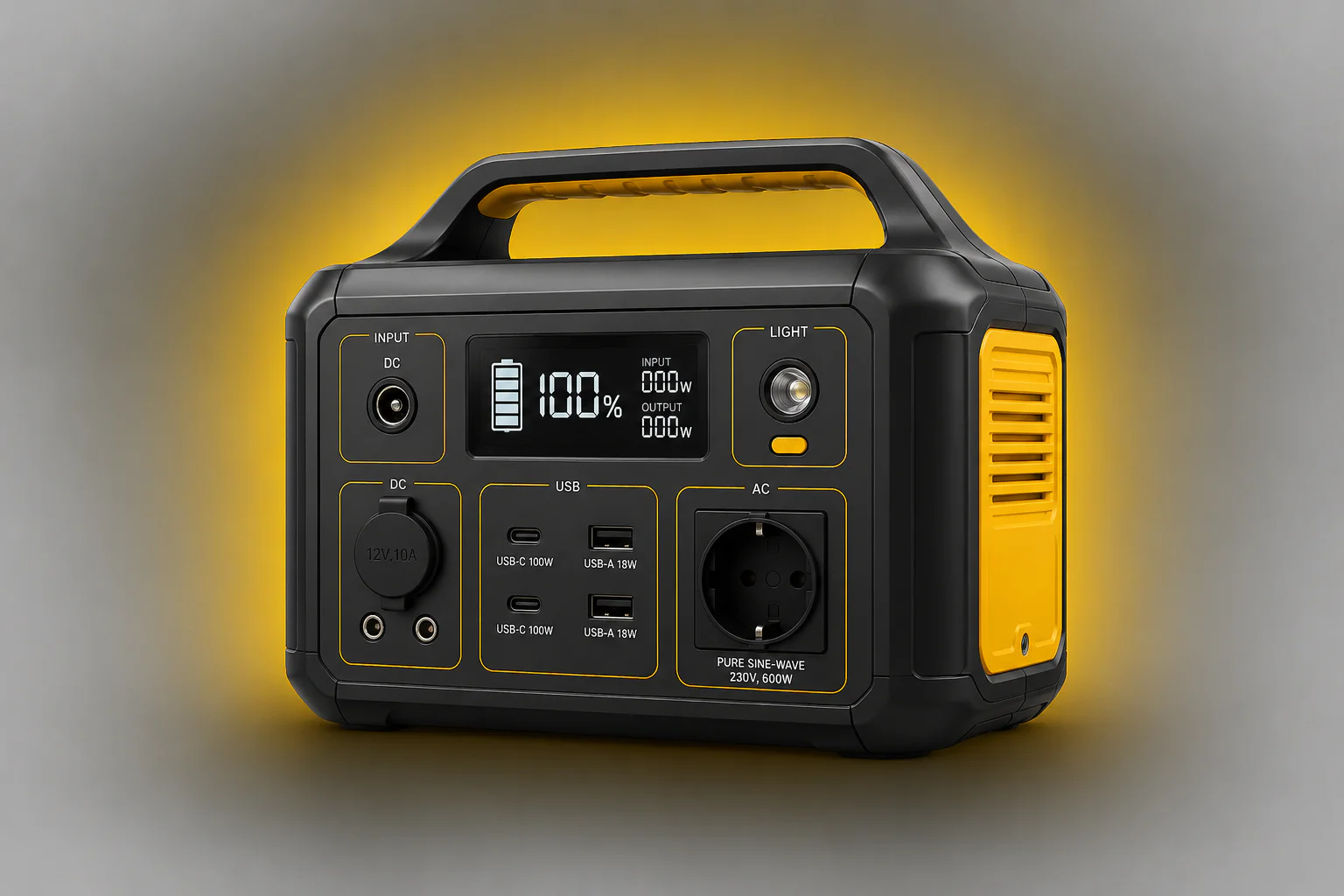
A solar station is a mobile power plant with a built-in battery and outputs for various types of devices. Some models feature a 230 V outlet for AC devices, DC outputs for low-voltage equipment, and USB-A and USB-C ports for electronics. The more powerful models use a pure sine wave inverter, which is necessary for sensitive equipment and devices with electric motors.
The differences between the individual models are most evident in battery capacity, output power, number of ports, weight, charging speed, and compatibility with solar panels. Compact stations are easy to transport and convenient for short-term use, while larger ones provide longer runtime and can power equipment with higher power consumption.
Main Applications
On-site work and mobile service
During installation, repair, and service in locations without power, the solar station provides a stable source for charging rechargeable batteries, lighting, laptops, testers, measuring devices, and small machines. It is useful for technicians, installers, craftsmen, and crews working in new buildings, remote properties, garages, warehouses, or temporary work zones.
Camping, Caravanning, and Outdoor Activities
For camping and travel, the solar station keeps phones, navigation devices, cameras, portable coolers, lighting, and communication equipment charged. When combined with a solar panel, autonomy increases during the day, and the stored energy remains available for evening use.
Home backup during power outages
At home, the solar station serves as a practical backup for a router, laptop, phone, lamp, small fan, or low-power medical equipment when the power goes out. For devices with a heater, compressor, or high inrush current, consider not only the inverter's rated power but also its peak power.
Parameters to consider when choosing
- Battery capacity-usually specified in Wh. The higher the value, the longer the station can power the connected equipment.
- Rated and peak power-rated power indicates the continuous load, while peak power is required when starting electric motors and compressors.
- Battery type - lithium-ion batteries are lightweight, while LiFePO4 variants are valued for their long cycle life and good thermal stability.
- Outputs - 230 V outlet, USB-C Power Delivery, USB-A, 12 V DC, and car outlet cover various devices and chargers.
- Solar panel input-check the input voltage, current, and power ratings to select a compatible panel.
- Charging time - depends on the input power, the charger, and the available solar energy during solar charging.
- Weight and housing-models with a handle, a clear display, and a durable outer casing are convenient for frequent transport.
Comparison by Use
| Type of solar station | Typical use | What to look for |
|---|---|---|
| Compact | Phones, tablets, lighting, small electronics | Lightweight, USB-C ports, easy to carry |
| Mid-range | Laptop, router, tool chargers, camping gear | Capacity, 230 V output, pure sine wave |
| More powerful | Service work, backup power, high-power equipment | Peak power, number of outlets, compatibility with solar panels |
Compatibility with solar panels and chargers
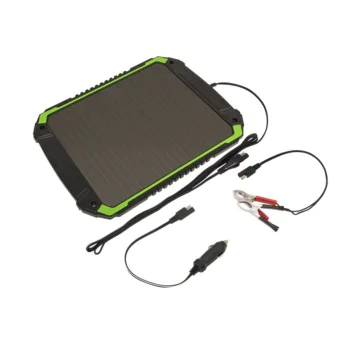
During solar charging, the station operates via an input controller that receives energy from the panel and directs it to the battery. Compatibility depends on the input voltage range, maximum current, connectors, and panel power. It is good practice for the panel to match the station's parameters without exceeding the input limits.
To charge cordless tools, use the original or a compatible charger for the respective battery, connected to the station's 230 V output. Thus, the solar station does not replace the specialized charger but provides power where there is no electrical grid.
Safety and Maintenance
Modern solar stations typically feature battery management systems and protection against overloading, overheating, short circuits, and excessive discharge. For safe operation, the station should be placed on a stable surface, away from water, large amounts of dust, and sources of intense heat. The ventilation openings must not be covered, as the inverter and battery generate heat during operation.
When in storage, the battery should not be left fully discharged for an extended period. Periodic recharging preserves capacity and extends service life. Cables, connectors, and adapters should be inspected for damage, and devices should only be connected to outlets with the appropriate voltage and rated power.
Solar Power Stations for Professional and Home Use
A solar station is a valuable tool for professionals who work on the go and for discerning home users who want backup power for essential equipment. With the right capacity, power, and outputs, it offers flexibility for charging, installation, repair, maintenance, and travel.
Toolsbox.bg offers a selection of solar power stations for various tasks-from compact models for personal electronics to more powerful options for service, workshops, and backup power. Choose a solar station based on the required runtime, the type of equipment, and the charging method to ensure you have power wherever the job demands it.