
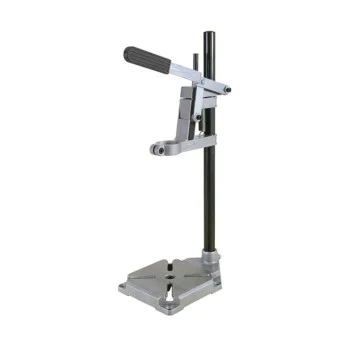
Stand for drill
Drill stand for precise and stable vertical drilling
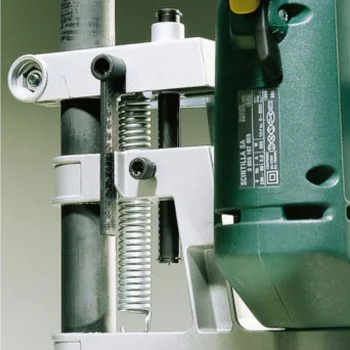
A drill stand is a practical accessory that transforms a handheld electric drill into a compact drilling rig for a workshop, garage, construction site, or hobby area. By securing the drill to a guide column, you achieve better control over the direction, depth, and repeatability of the hole. This makes drilling in metal, wood, plastic, composite panels, and other workable materials more precise, with less drill bit deviation and a more comfortable operator position.
This type of accessory is valuable for tasks where free-hand operation of the drill does not provide the necessary precision. When fabricating parts, repairing metal components, installing hinges, drilling holes in profiles, or working on small batches, the stable stand helps ensure consistent results. It is a good choice for both professionals and service technicians, as well as for demanding DIYers who work with electric drills and want better precision without having to buy a separate drill press.
What models of drill stands are available
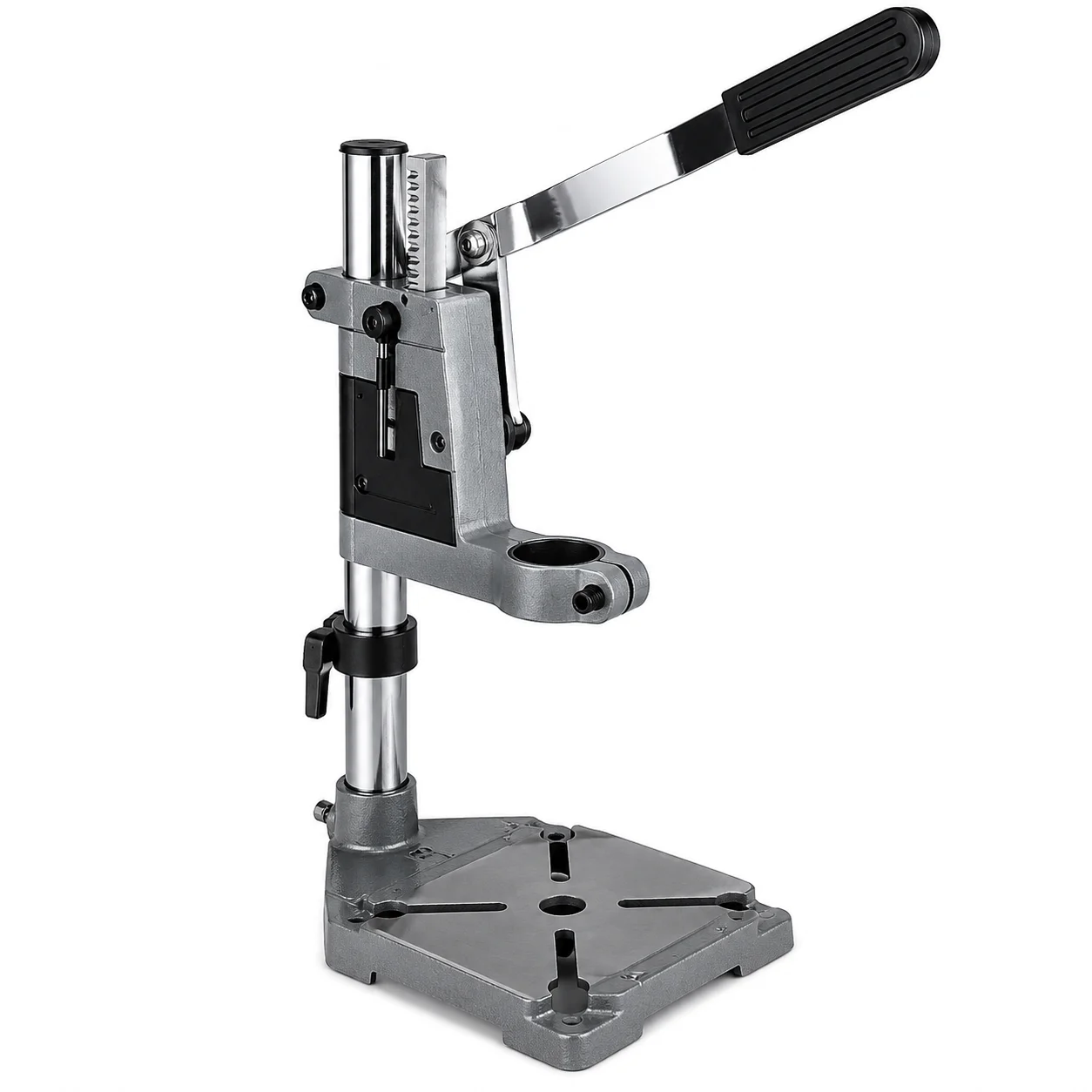
Drill stands vary in design, base size, column height, slide mechanism travel, method of securing the drill, and adjustment options. With the more compact models, the focus is on convenient storage and working with smaller parts. The more robust models have a sturdier base, a longer column, and more precise guidance, which is useful for frequent use in a workshop.
Some stands feature a depth stop, which facilitates the repeatable drilling of holes of uniform depth. Others allow for adjustment of the angle or height of the drill head, which expands the range of tasks for installation and repair. Some models have a mounting point for a vise or workbench, which secures the workpiece and reduces the risk of slipping. When choosing a model, it is wise to compare not only the dimensions but also the stability of the guide elements, the smoothness of the stroke, and the comfort of the handle.
Applications in the workshop, repair, and installation
A drill stand is particularly useful for vertical holes, where even a deviation of a few degrees can compromise the assembly or the appearance of the workpiece. In woodworking, it facilitates precise drilling for dowels, screws, hinges, decorative elements, and jig work. When working with metal parts, the stable guidance of the drill bit reduces strain on the hands and helps achieve a cleaner start to the hole, especially when using a center punch and properly selected drill bits.
For maintenance tasks, the stand is convenient for working on small strips, housings, brackets, profiles, and fasteners. In a home setting, it saves space since it does not require a separate large machine but uses the available drill. For better results, the workpiece must be securely clamped, and the speed, pressure, and drill bit type should be adjusted to the material.
Criteria for choosing a drill press
Compatibility with the specific drill is the primary criterion. You need to check the chuck diameter, the shape of the body around the chuck, and whether the drill can be securely fastened without twisting. Models with an adjustment ring or clamp make it easier to adapt to different drill bodies, but the dimensions specified in the product specifications must always be followed.
- The base affects stability. A wider and heavier base is an advantage when working with metal parts or larger drill bits.
- The column and guides determine the precision of movement. Less play and smooth operation provide better control when drilling.
- The stroke of the mechanism must correspond to the thickness of the workpieces and the desired hole depth.
- Height adjustment is useful for different workpiece and drill sizes.
- The depth stop facilitates work on a series of identical holes.
- The ability to mount it to a workbench increases stability during prolonged use.
Comparison of key features
| Feature | Practical significance |
|---|---|
| Base size | A larger support area allows for smoother operation with heavier workpieces. |
| Spindle head stroke | Determines how deep the drill bit can be driven into the material. |
| Drill chuck | Must match the body and shank of the machine. |
| Height adjustment | Helps when changing drill bits and working with workpieces of varying thicknesses. |
| Depth stop | Maintains a consistent depth for repetitive drilling. |
Compatibility, consumables, and safe operation
A good drill press works best with properly selected drill bits, a stable vise, and a suitable work surface. When working with metal, it is helpful to secure the workpiece, and if necessary, use a lubricating and cooling fluid appropriate for the material and drill bit. When working with wood and plastic, the clean hole depends on the sharpness of the tool, smooth pressure, and the correct rotation speed.
Before starting work, the drill must be securely fastened in the stand, the workpiece must be stationary, and the chuck and drill bit must be properly secured. Safety goggles, tucked-in loose clothing, and a clean work surface reduce the risk of injury and damage to the workpiece. After use, it is advisable to clean the column and guides of chips and dust, and to maintain the moving parts according to the manufacturer's instructions.
Choosing a drill stand from Toolsbox.bg
When selecting a drill stand, consider compatibility with the machine, expected frequency of use, the size of the workpieces, and the required precision. For home repairs, a compact model with smooth operation and a stable base is often sufficient, while for more intensive workshop use, it is wise to look for a more robust construction, fine adjustment, and the ability to securely mount it to a workbench.
Browse the options at Toolsbox.bg and choose a drill stand that suits your machine, work materials, and workflow. This will give you more precise drilling, better control, and a more organized setup for repairs, installations, and part fabrication.