
Plania
Planer for precision woodworking
Woodworking planers are used to remove a thin layer of wood, level surfaces, trim edges, and prepare parts before assembly, gluing, painting, or varnishing. They are among the machines that save time when working with beams, boards, doors, frames, countertops, and various wooden elements. The right model helps achieve a clean planing line, a smooth surface, and better control over the part's dimensions.
This section of Toolsbox.bg features planers for use in a workshop, on a construction site, or for home repair projects. Some models are compact electric planers designed for portable use, while others are geared toward more intensive woodworking. The differences between them are evident in power, planing width, depth of cut, settings, blade type, dust collection, and comfort during prolonged use.
What tasks are planers used for?
Planers are used for rough and fine preparation of wood components. When installing doors, the machine helps precisely adjust the edge that rests against the door frame or floor. In furniture making, planing evens out the surface before subsequent sanding. When working with beams and boards, the planer removes unevenness, saw marks, slight warping, and rough spots.
Electric planers are convenient for repairs, carpentry work, surface alignment, chamfering, and reducing thickness in limited areas. Stationary planers, when available, are suitable for processing larger batches of workpieces where uniformity and repeatability are critical. For professional use, stability, precise adjustment, and good ergonomics are sought, while for home use, convenience, easy adjustment, and safe operation are the top priorities.
Main types of planers
Electric hand planers
A hand-held electric planer is a practical choice for on-site work. It allows for adjustments to parts that are already installed or difficult to move. When choosing one, the width of the cutter bar, the maximum planing depth, the smoothness of adjustment, and the shape of the base are important factors. Models with a chamfering groove make it easier to shape edges, and the parallel guide helps with straight-line guidance.
Stationary planers and planing machines
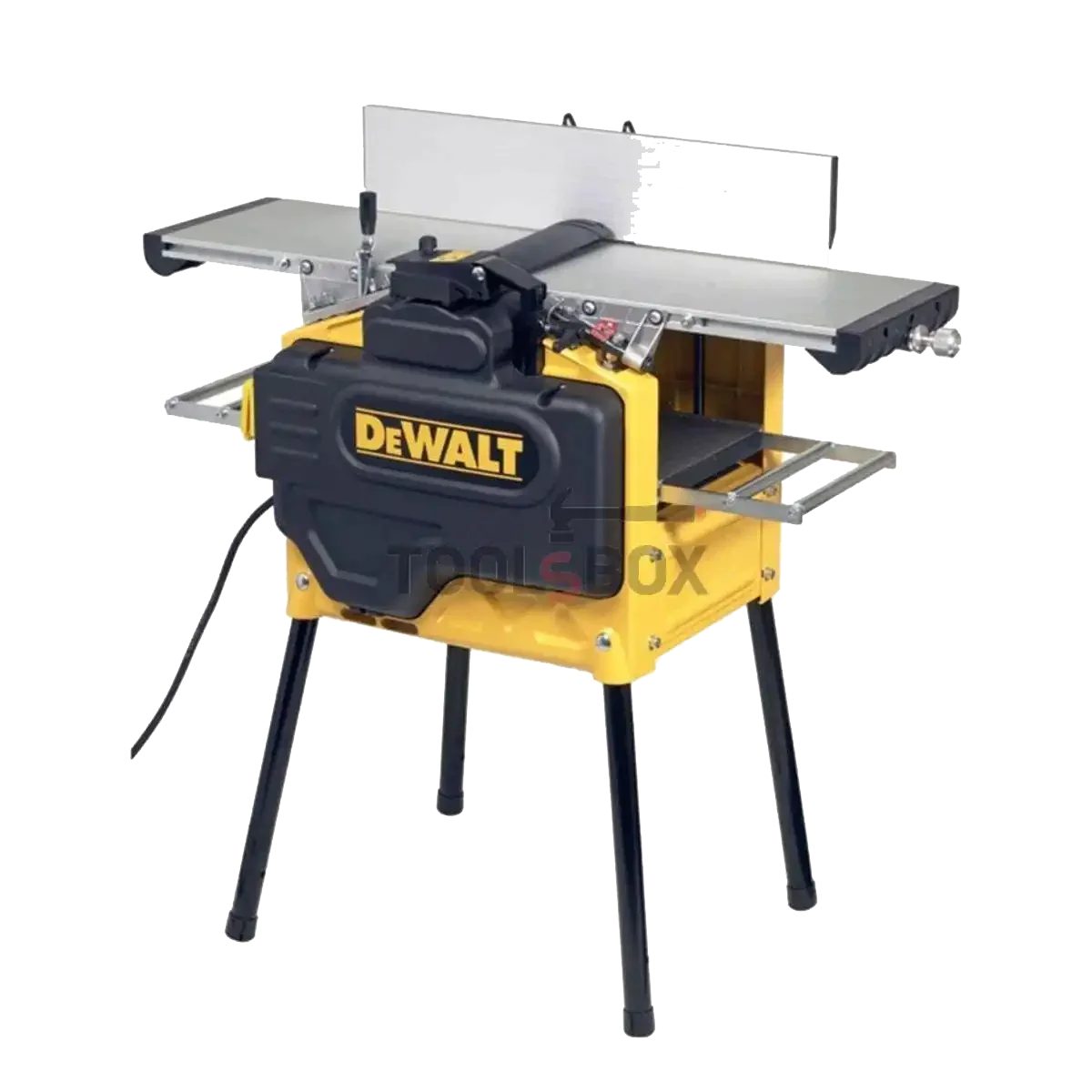
Stationary models are designed for extended work with boards, strips, and beams. They are in demand in woodworking shops, repair shops, and production facilities where larger workpieces or a large number of identical elements are processed. With these machines, pay special attention to the worktable, feed mechanism, thickness adjustment, structural stability, and the ability to connect to a dust collector.
Combined planing solutions
Some woodworking machines combine surface planing and thickness calibration functions. Such solutions are practical when workshop space is limited and when multiple operations need to be performed with a single machine. When choosing them, it is important to consider how quickly the operating mode can be changed, how stable the settings are, and what size of workpieces can pass through the machine.
How to Choose a Planer Based on the Job
The selection process starts with the type of wood and the size of the workpieces. For minor adjustments, assembly work, and hobby projects, a compact electric planer with a comfortable handle and a clear adjustment scale is sufficient. For denser wood, wider pieces, or extended planing, you need a model with a more powerful motor, good ventilation, and a stable base plate.
- Power and RPM: These affect the uniformity of material removal and performance on hard wood.
- Planing width: determines how large an area is processed in a single pass.
- Cutting depth: Fine adjustment is valuable for precise corrections and finishing work.
- Blades: vary in size, material, and mounting method; checking compatibility prevents purchasing the wrong accessories.
- Dust collection: A vacuum adapter or chip bag keeps the work area cleaner.
- Ergonomics: Weight, balance, grip, and easy access to settings matter during long work cycles.
Blades, Accessories, and Maintenance
The quality of the planed surface depends directly on the condition of the blades. Dull or improperly installed blades leave marks, cause vibrations, and strain the motor. When replacing blades, be sure to use the correct size, mounting type, and recommended blade position. For double-sided blades, flipping them to the unworn side extends their service life.
Practical accessories for planers include rip guides, depth stops, chip bags, dust extraction adapters, and spare belts for belt-driven models. Regular chip removal, cable inspection, checking tightness, and storing the machine in a dry place keep it in good working condition. For stationary machines, it is helpful to periodically inspect the tables, guides, and adjustment mechanisms.
Safe and Precise Operation
Planing requires the workpiece to be securely clamped and the machine to be carefully guided in the direction of machining. With hand planers, the front of the base is first placed on the workpiece, after which the machine is guided evenly without excessive pressure. With stationary machines, the material must be fed calmly, with proper support, and without bringing your hands close to the cutter bar.
Safety goggles, ear protection, and a dust mask are essential parts of the equipment when working with wood. Dust and shavings can impair visibility and contaminate the machinery, so connecting to a vacuum cleaner or dust extraction system is a valuable aid in the workshop. The machine must be disconnected from the power supply during any adjustment, blade change, or cleaning.
Planer for professional and home use from Toolsbox.bg
A good planer makes any task easier where wood needs to be made flat, precisely sized, and ready for the next operation. At Toolsbox.bg, you can select a model based on working width, planing depth, power, blade type, and available accessories. Browse our selection and choose a planer that meets the demands of your workshop, service center, or home repair corner.