
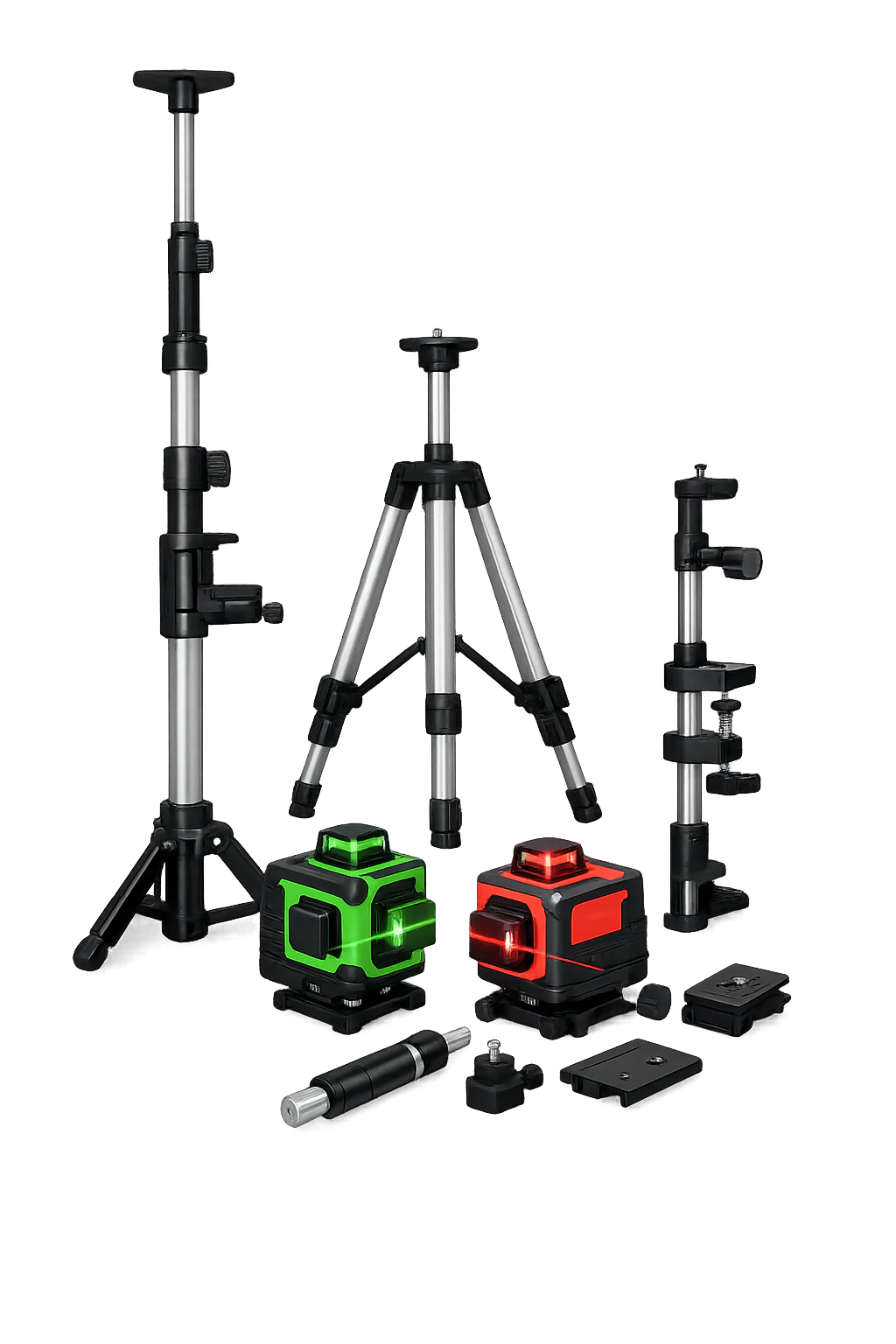
Telescopic mounts for laser level
Telescopic tripods for laser levels for precise leveling work
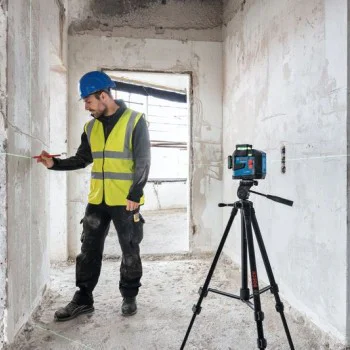
Telescopic stands for laser levels are a practical accessory for precisely positioning the measuring instrument during construction, renovation, drywall installation, furniture assembly, suspended ceilings, partition walls, tiling, window and door installation, and plumbing. They hold the laser level steady at the required height and facilitate the transfer of horizontal, vertical, and cross lines onto walls, floors, and ceilings. A well-chosen stand saves time during marking, reduces the risk of deviations, and provides a more comfortable working position indoors and on job sites.
Toolsbox.bg offers a selection of telescopic stands, tripods, columns, and kits for use with laser levels. The various models differ in working height, mounting type, mounting thread, base stability, weight, section material, and portability. This way, every craftsman, installer, or discerning home user can find an option suited to the specific task and the tool they are working with.
Applications of telescopic stands
Telescopic stands for laser levels are used for tasks where the laser line must remain stationary throughout the entire work cycle. When laying tiles, the stand helps position the laser line at the height of the first row or at the desired grout level. When installing cabinets, shelves, and kitchen furniture, it facilitates the alignment of mounting points. When constructing suspended ceilings and drywall structures, it allows the laser to be positioned close to the work area without placing the device on unstable surfaces.
For electrical and plumbing installations, the stand assists in marking routes, brackets, outlets, pipes, and profiles. For finishing work, it is useful for checking levels around doors, windows, sills, and decorative elements. For service teams and installers who frequently visit different sites, lighter telescopic tripods for laser levels with compact folding and a convenient carrying case are particularly valuable.
Types of Stands and Design Solutions
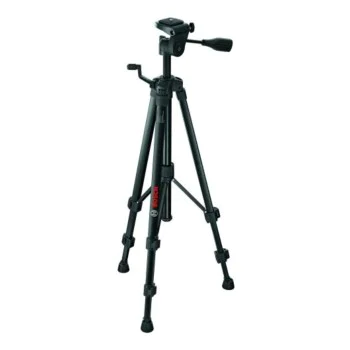
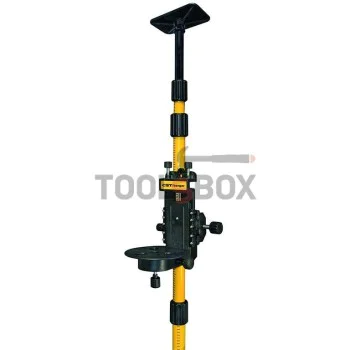
Telescopic stands differ in how they are secured and adjusted. Classic tripods are convenient for working on subfloors, plaster, tiles, or rough construction surfaces. They feature three legs that spread out to provide stable support, and the height is adjusted via telescopic sections. Telescopic rod-type stands are stretched between the floor and ceiling and are very practical in spaces where a large vertical range and quick vertical adjustment of the laser are needed.
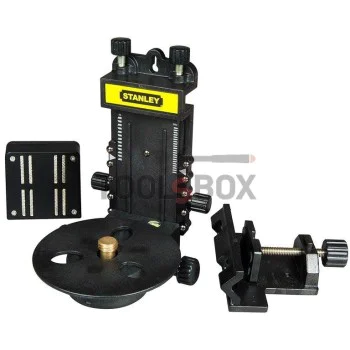
Some models feature a movable platform or clamp for precise positioning of the level. This is convenient for fine-tuning the line without having to reposition the entire stand. In other models, the focus is on easy folding, low weight, and convenient transport. For more intensive work on a job site, sturdier metal sections, secure locking mechanisms, and stable legs with good traction are preferred.
| Tripod Type | Practical application | What to look for |
|---|---|---|
| Tripod | General repair and installation work, work on the floor or a platform | Leg spread, height, stability, thread |
| Telescopic pole | Suspended ceilings, interior finishing work, wall marking | Extension range, clamps, adjustable clamp |
| Clamp set | Precise positioning of the laser level at a specific height | Compatibility, smooth adjustment, locking |
How to choose a tripod for a specific laser level
When selecting telescopic tripods for a laser level, compatibility and working height are key factors. The device's thread and the tripod's thread must match, or an adapter must be used. Many laser levels feature 1/4-inch and 5/8-inch threads, so this parameter should be checked before purchase. For heavier devices, the stability of the base and the load capacity directly affect the accuracy of the line and safe operation.
The working height is selected based on the task. For furniture installation and electrical work, a medium height with easy adjustment is often needed. For ceilings, partition walls, and taller spaces, a tripod with a longer range of telescopic sections or a column that secures between the floor and ceiling is more convenient. When working in tight spaces, a compact base is an advantage, while in outdoor or harsher conditions, stable legs and a more robust construction provide better control.
Materials, fasteners, and ease of use
Telescopic tripods for laser levels are most often made of aluminum, steel, or composite materials. Aluminum sections are lightweight and easy to carry, while steel components add stability during heavy-duty use. Well-functioning clamps are particularly valuable because they hold the sections in the desired position and prevent accidental slipping. Rubber feet, a stable base, and clearly visible adjustment scales make daily work easier.
For professional use, it's also worth considering the transport format. Foldable stands take up less space in a car or workshop, and the carrying case protects the sections from dust and impacts. For home use, a lighter model with sufficient height and standard threads is often a good choice for repairs, installing shelves, paneling, and decorative elements.
Compatibility, Safety, and Maintenance
Before use, place the stand on a stable surface and lock the sections in sequence. For a tripod, the legs should be spread wide apart without obstructing movement around the work area. For a telescopic column, the pressure between the floor and ceiling should be adjusted carefully to avoid damaging the flooring or wall covering. The laser level should be mounted without excessive tightening to protect the threads and housing.
Maintenance is easy but affects the accuracy and lifespan of the stand. After use, dust from the sections and locking mechanisms should be removed with a dry cloth, and moving parts should be protected from sand, plaster, and moisture. During transport, it is best to fold and store the stand to prevent deformation of the sections and damage to the fasteners.
Choosing a telescopic tripod from Toolsbox.bg
Telescopic tripods for laser levels are a small but very valuable piece of equipment for precise leveling. They improve control over the laser's position, speed up marking, and make work more organized during installation, repair, and construction activities. Browse the selection at Toolsbox.bg and choose a stand with the right height, thread, base, and mounting method for your laser level.