
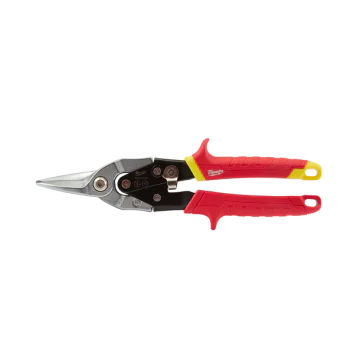
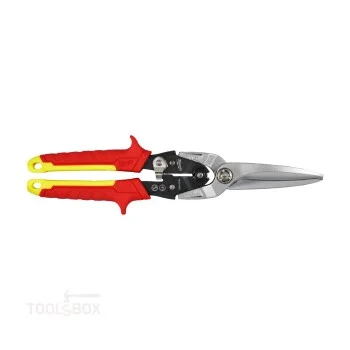
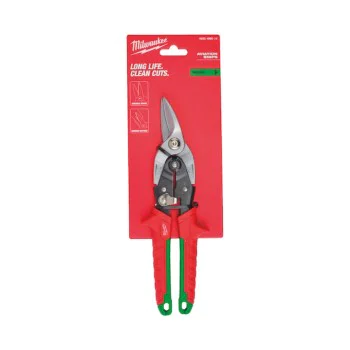
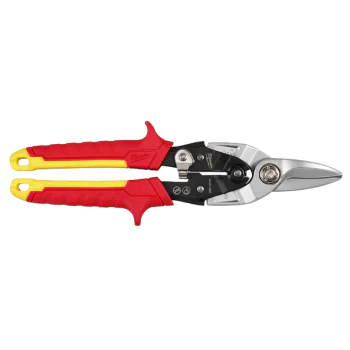
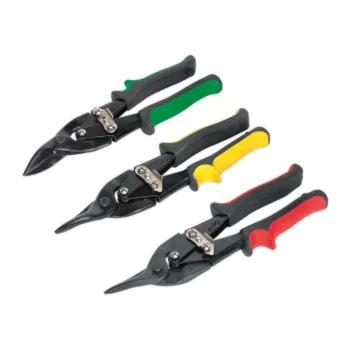
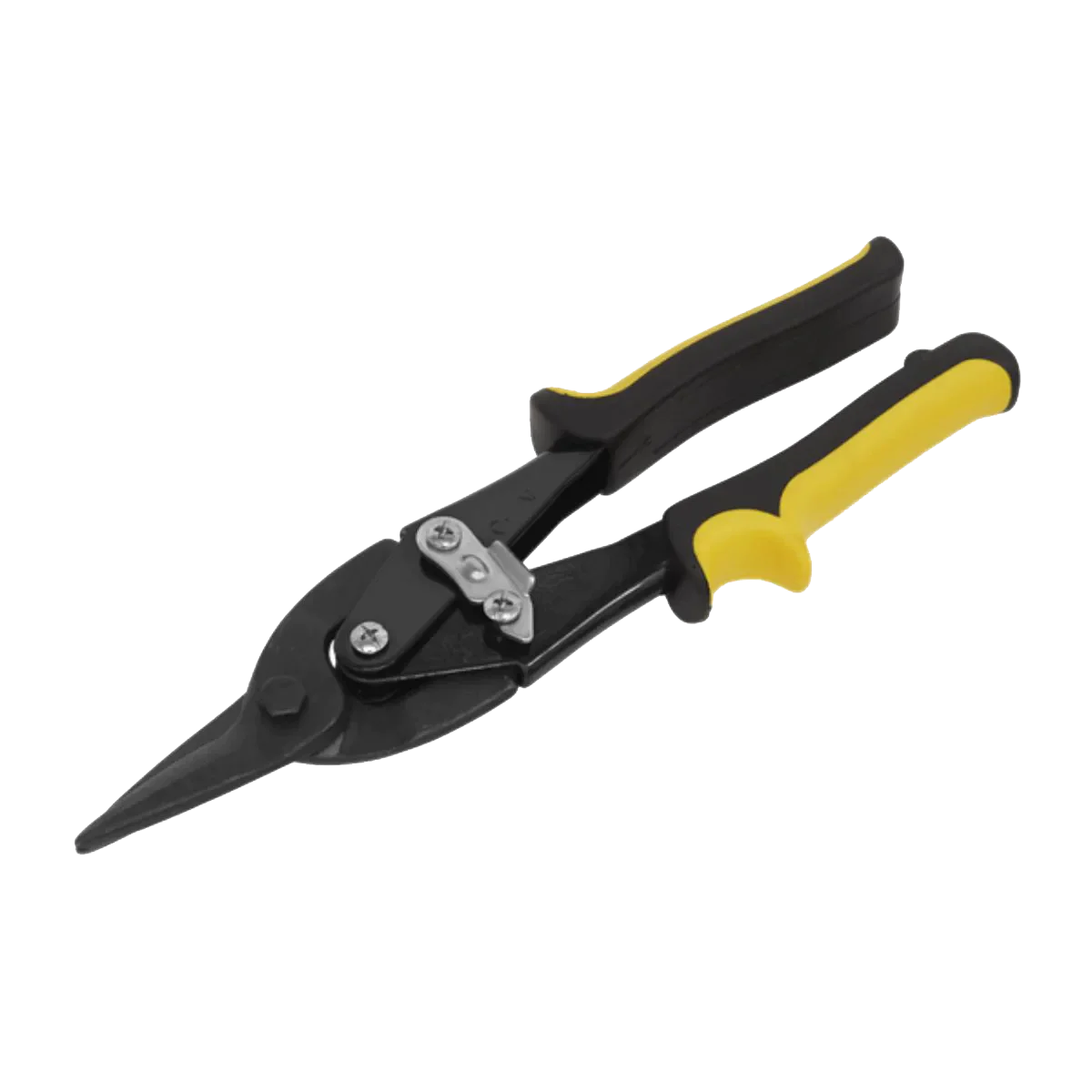
Shears for sheet metal
Sheet metal shears for precise manual cutting
Sheet metal shears are a practical hand tool for cutting thin metal sheets, profiles, cladding, gutters, air ducts, and parts during repairs, installation, maintenance, and workshop fabrication. They are used where good visibility of the cutting line, manual control, and clean material separation without a power supply are required. Toolsbox.bg offers a selection of manual models for straight, left, and right cuts, solutions for curved cutting, and heavier-duty versions for professional use.
Sheet metal shears are ideal for working with galvanized sheet metal, aluminum, copper, thin steel, mesh, decorative metal elements, and mounting strips. Choosing the right model depends on the thickness and type of material, the cutting direction, the length of the cut, the frequency of use, and the comfort of the handles. A well-chosen pair of shears keeps the edge cleaner, minimizes sheet deformation, and makes it easier to follow markings precisely.
Types of sheet metal shears
Different designs are developed for specific types of movement and access to the workpiece. In installation and construction work, one often works in tight spaces, around corners, bends, and pre-installed elements. Therefore, the cutting direction and the shape of the jaws are directly relevant to the ease and cleanliness of the cut.
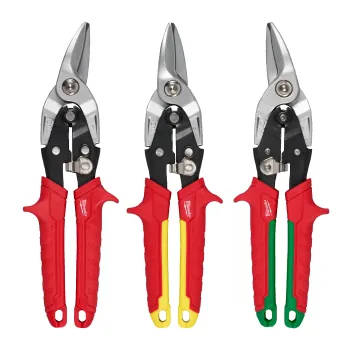
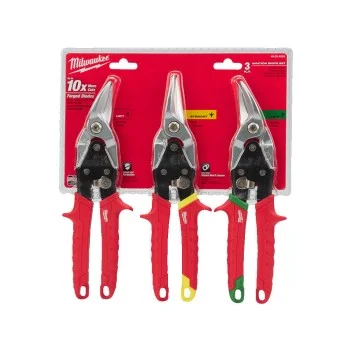
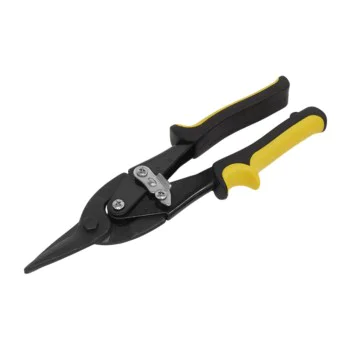
- Straight cut-for cutting in a straight line, shortening sheets, trimming edges, and shaping flat parts.
- Left-hand cut-for guiding the line to the left and working along radii or curves in that direction.
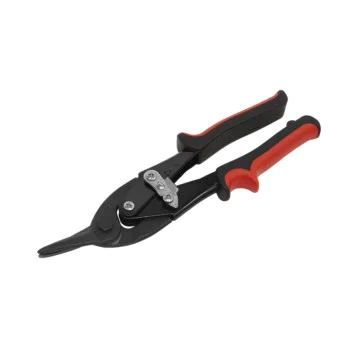
- Right-hand cut-for curved lines to the right, shaping openings, and precise cutting around mounting areas.
- Combined models-for more versatile work when cutting both straight sections and moderate curves.
- Heavy-duty shears-for more intensive professional use, harder materials, and long production runs.
Shears with a straight cutting direction provide better control over the scrap material. With left- or right-hand shears, the cut strip is removed more easily, and the cutting line remains visible. This is beneficial when cutting out covers, cladding, ventilation components, sheet metal boxes, and roofing system elements.
Where Sheet Metal Shears Are Used
Sheet metal shears are valuable for sheet metal work, drywall construction, HVAC installations, roof repair, fabrication of metal cladding, installation of garage doors, fences, facade details, and small maintenance tasks. For home use, they are used for cutting thin sheets in hobby projects, repairing gutters, fabricating strips, or making adjustments to metal accessories.
For professional use, look for models with hardened cutting edges, a sturdy hinge, comfortable handles with a good grip, and a spring mechanism for easier opening. During extended cutting, the ergonomic design reduces strain on the wrist and allows for even material feed. Sheet metal shears with well-shaped jaws cut more smoothly and reduce the risk of unwanted sheet twisting.
How to choose the right model
When selecting a model, pay attention to several practical parameters. Sheet metal thickness is the key factor, as each model has a specific working range. For thin aluminum or soft galvanized sheet metal, standard hand shears are sufficient, while harder sheets require a more robust construction and more durable blades. The type of cut determines the shape of the jaws: straight models are convenient for long lines, while left- and right-curved models are better for circular holes, radii, and working around edges.
The size of the tool affects the effort required and maneuverability. Longer handles provide greater leverage and are convenient for thicker material. Compact versions are easy to handle in tight spaces and for quick adjustments. For frequent use, a good grip on the handles, a locking mechanism, and smooth jaw opening are features that reduce fatigue and improve control.
| Type: Sheet Metal Shears | Typical Use | Practical advantage |
|---|---|---|
| Straight cut | Straight lines, trimming sheets, edges | Easy to follow along markings |
| Left-hand cut | Left curves, holes, details with a radius | Better visibility of the line |
| Right-hand cut | Right-hand curves, mounting cutouts | Control when working around edges |
| Reinforced model | More frequent use and harder materials | More stable cutting under load |
Materials, safety, and maintenance
The cutting parts of high-quality shears are usually made of tool steel or hardened steel, because the blade must maintain its geometry under pressure. Proper hinge adjustment is crucial for a clean cut: a mechanism that is too loose causes the sheet metal to bend, while one that is too tight leads to fatigue and uneven movement. Shears for sheet metal with serrated or finely finished jaws hold the material more securely and reduce slippage.
Working with sheet metal requires gloves because the cut edges are sharp. Safety goggles are recommended when cutting small pieces or when working above eye level. After use, clean the blades of shavings and dust, dry the tool if it comes into contact with moisture, and lubricate the hinge periodically. Storing the shears with the jaws locked protects the cutting edges and reduces the risk of injury in the toolbox.
Sheet metal shears for workshops, installation, and repair
Sheet metal shears are a small tool of great importance for the precise processing of metal sheets. They do not replace power tools for mass cutting of large areas, but they provide control, mobility, and quick readiness for on-site installation work. For professionals, it makes sense to have a set of right-hand, left-hand, and straight-cut shears, while for home use, a single well-chosen model is often sufficient for typical tasks.
Choose a sheet metal shear from Toolsbox.bg based on the material, the cutting direction, and the workload. This way, you'll get a tool that fits into any workshop's equipment and helps achieve precise results in construction, repair, installation, and maintenance.