
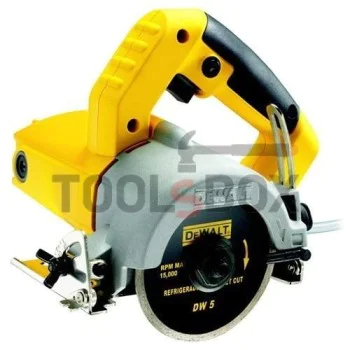
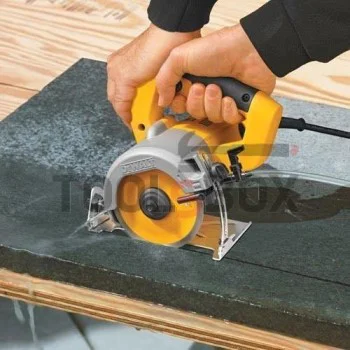
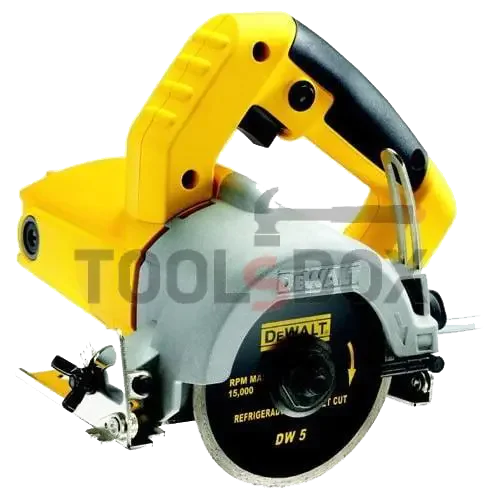
Circular saw for tiles
Tile saw - precise cuts for tiling projects
A tile saw is an electric tool designed for the precise cutting of ceramic tiles, terracotta, porcelain tiles, stone cladding, and similar hard materials. It is a valuable tool for renovating bathrooms, kitchens, hallways, and patios, as well as for finishing work and professional tile installation. With the right cutting disc and steady guidance, the machine ensures straight, clean, and controlled cuts, including narrow strips, diagonals, and shaping around corners, pipes, or thresholds.
Unlike hand-held tile cutters, the electric tile saw handles thicker, harder, and denser materials with greater confidence. This is particularly useful for porcelain tiles, embossed tiles, and larger-format cladding, where cutting precision and guidance stability directly impact the final appearance of the installation. The product range includes bench-top models, water-cooled machines, bridge-type circular saws, and compact solutions for smaller projects.
What do tile cutting machines include?
Machines of this type use a diamond blade that cuts the hard surface through abrasive action. Some models are equipped with a water cooling system for the blade and dust suppression. Wet cutting protects the cutting tool, reduces overheating, and keeps the work area cleaner. For dry cutting, ensure good ventilation, use the correct blade, and wear personal protective equipment.
The design of a tile saw may include a work surface, a rip fence, an angle guide, a movable head, a water reservoir, a blade guard, and a material support. These elements help ensure even feeding of the tile and reduce the risk of chipping the glaze. For larger formats, a stable base and smooth movement are crucial for a clean result.
Varieties based on operating method
| Machine type | Application | Key advantages |
|---|---|---|
| Bench-top tile saw | Renovation work, home use, small and medium-sized projects | Compact size, easy positioning, convenient operation with straight cuts |
| Bridge-type tile saw | Professional installation, larger-format slabs, batch cutting | More stable guidance, smooth movement of the cutting head, high precision for long cuts |
| Water-cooled model | Porcelain tiles, ceramic tiles, stone cladding, extended operation | Less dust, lower blade temperature, cleaner cut |
| Compact portable version | Work on various sites, on-site adjustments, finishing tasks | Easier to transport, quick setup, convenient in tight spaces |
Applications in renovation, construction, and installation
The tile saw is used for shaping floor and wall tiles, cutting around drainpipes, electrical outlets, door frames, pipe outlets, and decorative elements. The machine is also useful when working with outdoor tiles, where the material is thicker and more durable. Precise cutting reduces material waste and makes it easier to align the grout lines, especially in visible areas and complex laying patterns.
For professionals who perform tiling work daily, a more powerful machine with a larger work surface and water cooling speeds up repetitive tasks. For home renovations, a more compact model is often sufficient, provided it accommodates the tile size and the required cutting depth. When working with harder materials, the diamond blade, the machine's stability, and proper technique are crucial for a clean edge without excessive chipping.
Criteria for choosing a tile saw
Before purchasing, it is helpful to assess the materials to be cut, the tile size, and the frequency of use. Motor power affects performance with denser tiles, while the blade diameter determines the maximum cutting depth. The cutting length is essential for large formats, where the machine must provide stable support along the entire length.
- Power and RPM: A more powerful motor maintains a more stable cut through hard granite and thicker tiles.
- Blade diameter: selected based on the cutting depth and the machine's design.
- Work surface and guides: affect accuracy during straight, diagonal, and repetitive cuts.
- Water cooling: useful for extended operation, harder materials, and reducing dust.
- Angle cutting: required for baseboards, decorative details, and beveling edges.
- Weight and portability: important for installers who move between job sites.
Blades, consumables, and compatibility
The cutting disc is directly related to the cleanliness of the cut. For ceramics, earthenware, terracotta, and porcelain tiles, select diamond discs with the appropriate edge, diameter, and mounting hole. An improperly selected blade can lead to slower operation, overheating, vibrations, or chipping on the cut surface. Compatibility between the blade and the machine is verified by checking the diameter, RPM, mounting hole, and the machine manufacturer's recommendations.
When wet cutting, water must reach the contact area between the blade and the material evenly. The reservoir and channels should be cleaned regularly of sludge, as buildup hinders cooling and contaminates the work area. After finishing work, it is advisable to dry the machine, clean the work surface, and inspect the blade for wear or mechanical damage.
Safe and Precise Operation
When working with a tile saw, wear safety goggles, gloves with good sensitivity, ear protection, and a dust mask during dry cutting. Feed the tile smoothly, without pressure, which can overload the motor or distort the cut line. The material must rest securely on the table, and the guides must be adjusted before starting. For small pieces, work carefully, keeping your hands away from the blade.
Precise results come from a combination of the right machine, a high-quality diamond blade, a stable support, and controlled feed. For visible edges, a test cut on a scrap tile is recommended to check the behavior of the material and the blade. This minimizes surprises when working with expensive tiles and tiles with decorative glaze.
Choosing a machine from Toolsbox.bg
At Toolsbox.bg, you can select a tile saw for home renovation, professional installation, or service work based on the required power, cutting length, cooling type, and compatible diamond blade. Browse the available models, compare the performance specifications, and choose a machine that suits the materials, tile size, and your work style.