
Machines for cutting laminate
Laminate cutting machines for precise installation of flooring
Laminate cutting machines facilitate the precise shaping of laminate panels when installing flooring in homes, offices, commercial spaces, and workshops. They ensure a clean cut, minimal chipping of the decorative layer, and faster preparation of details around walls, doors, columns, and corners. These machines are valuable both for professionals who install flooring daily and for homeowners with high standards for a clean finish.
When cutting laminate, precision is directly linked to the floor's final appearance. An improperly selected tool leaves jagged edges, results in inaccurate joints, and increases material waste. Laminate cutting machines provide control over the cutting line and help achieve consistent results when cutting panels in batches. They are used for straight cuts, angled cuts, and fitting pieces in tight spaces, depending on the design of the specific model.
Where they are used
Laminate cutting machines are used for installing laminate flooring, renovating rooms, finishing repair work, and preparing flooring for commercial projects. When working indoors, hand-held cutters are valued for their low noise and minimal dust emission. Electric models are suitable for more intensive work, harder panels, or when more complex cuts are required.
For larger areas, the machine saves time because it allows for quick repetition of identical lengths. For small repairs, it reduces the risk of damaging the visible surface and makes installation cleaner. For service teams, installers, and construction crews, a good machine is part of the finishing equipment, and for home use, it makes DIY installation more organized and predictable.
Types by Cutting Method
Different laminate cutting machines vary in drive type, capacity, mobility, and cut type. The choice should take into account the thickness of the panels, the width of the boards, the frequency of use, and the location where the cutting will take place.
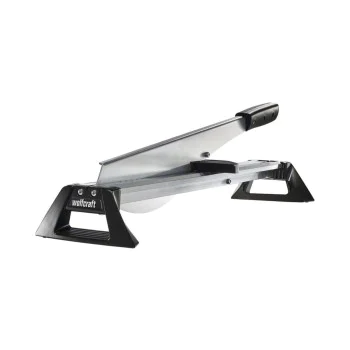
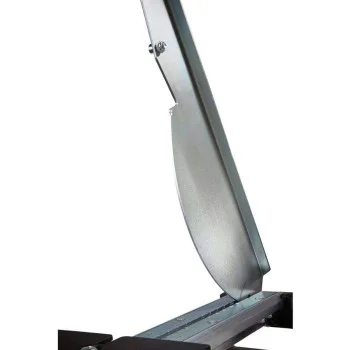
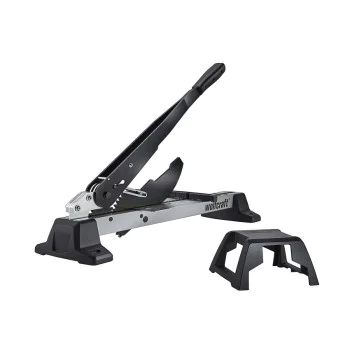
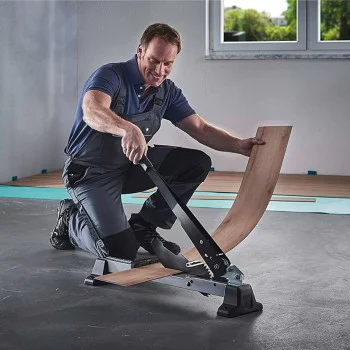
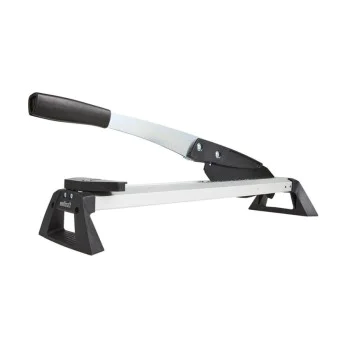
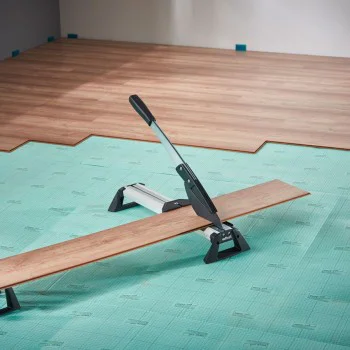
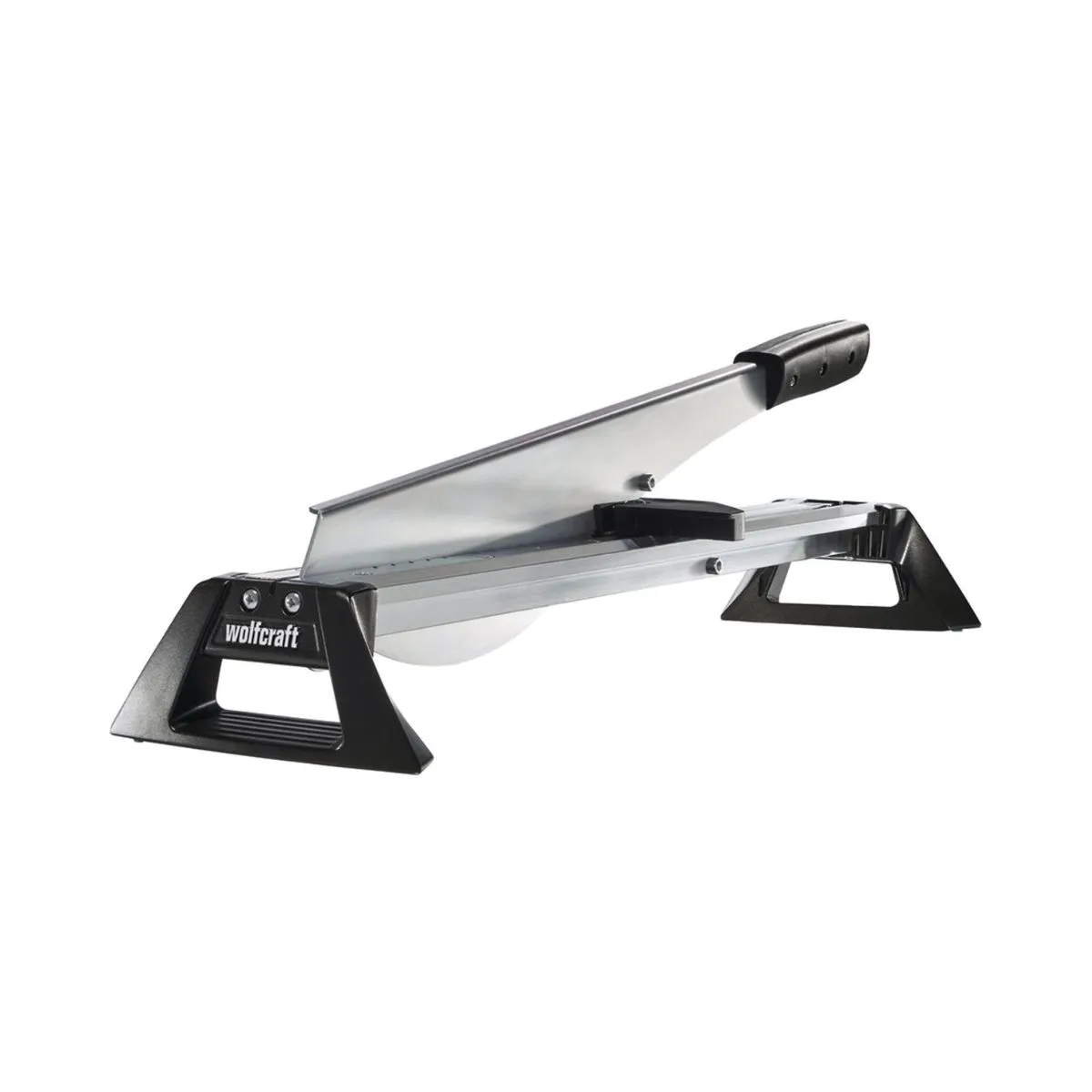
- Manual laminate cutters-operate with a lever mechanism and a blade. They are practical for straight cuts, do not require an electrical power source, and are convenient for installation in finished rooms.
- Electric saws-cut using a rotating blade or other cutting mechanism. They are suitable for larger jobs, harder materials, and tasks requiring higher productivity.
- Bench-top models-provide stable support for the panel and better control for repetitive cuts. They are practical for workshops, job sites, or designated installation areas.
- Models with bevel cutting capability-facilitate the shaping of details around non-standard walls, thresholds, and transitions between rooms.
| Machine type | Most useful for | Major practical advantage |
|---|---|---|
| Hand saw | Indoor installation and smaller projects | Quiet operation and less dust |
| Electric model | Intensive cutting and harder panels | Higher operating speed |
| Bench-top machine | Repeatable cuts and workshop | Stability and control over the workpiece |
How to choose the right machine
When purchasing laminate cutting machines, pay attention to several practical factors. First, check the machine's maximum panel width and thickness. If the machine cannot handle the standard flooring size, work will be delayed and accuracy will suffer. Thicker or denser laminates require a more robust cutting mechanism and a stable base.
Angle cutting is useful for rooms with non-standard layouts. A scale with clearly marked degrees makes it easier to repeat cuts. For electric models, power, blade type, depth settings, and the ability to connect to a dust collector (when the design allows) are important. For manual models, consider the length of the handle, the shape of the blade, the panel support, and portability.
- Cutting capacity-consider the width, thickness, and hardness of the laminated panels.
- Cut type-straight, cross, angled, or combined, depending on the project requirements.
- Portability-lighter models are convenient for installation at different locations, while heavier ones provide stability.
- Consumables-check for spare blades, discs, stops, and support elements.
- Ergonomics - an ergonomic handle, clear scale, and stable panel clamping reduce fatigue.
Accessories, consumables, and compatibility
Laminate cutting machines work best with a properly selected cutting element. For hand-held saws, the blade must be sharp and securely fastened so as not to damage the decorative finish. For electric models, the blade must match the material, diameter, bore, and speed of the machine. An unsuitable blade overheats, leaves a rough edge, and strains the motor.
Useful accessories include length stops, angle guides, clamps, spare blades, workbenches, safety glasses, ear protection, and dust collection systems. When working in residential spaces, protecting surrounding surfaces is also important-a mat or stable work surface protects the floor and furniture from scratches.
Safety and Maintenance
Laminate cutting machines should be used on a stable, level surface. Place the panel flush against the support, and keep your hands away from the cutting line. When using electric models, wear safety goggles and ear protection, keep the cord away from the cutting area, and work only with a securely clamped workpiece. After finishing, clean up the shavings and dust, inspect the blade or disc, and store the machine in a dry place.
Regular maintenance extends the life of the cutting mechanism and preserves accuracy. Clean the guides, check the fasteners, and replace worn consumables in a timely manner. This ensures the machine remains stable under load and ready for the next installation.
Choosing a machine for a clean and precise cut
Laminate cutting machines at Toolsbox.bg cover a variety of needs-from home renovations to professional flooring installation. Browse the options, compare capacity, drive type, settings, and consumables, then select a machine that matches your actual workload and the material you'll be working with.