
Spring for pulling cables
Cable Pulling Spring for Electrical Installation and Repair
A cable pulling spring is a practical tool for pulling wires through pipes, corrugated hoses, cable ducts, suspended ceilings, walls, floor channels, and electrical panels. It facilitates work when installing new systems, replacing old cables, or adding additional lines for lighting, outlets, internet, television, signaling, and low-voltage systems. A properly selected spring reduces the effort required for pulling, minimizes the risk of cable kinking, and helps ensure a cleaner, more organized job site.
This section features models with varying lengths, flexibility, materials, and tip types. Options include steel springs, fiberglass probes, plastic variants, and kits with guides, gripping ears, or flexible heads for navigating bends. The selection is based on the length of the route, the number and radius of the bends, the type of pipe, the cable cross-section, and the working conditions in the building or workshop.
What activities does a cable spring serve for?
Cable springs are used in electrical installations, construction repairs, finishing work, maintenance, and the outfitting of office, residential, and industrial spaces. The installer first runs the guide through the prepared route, then attaches the cable to it and pulls it smoothly to the starting point. This makes it easier to work in tight spaces, behind cladding, through boxes, pipes in plaster, or vertical risers.
Typical applications include running power cables in electrical installations, adding LAN cables, and routing cables for video surveillance, intercoms, alarm systems, antennas, sound systems, and lighting control. For home renovations, the spring is useful for single runs and adjustments, while in professional installations, it is part of the everyday equipment for fast and clean work without unnecessary demolition.
Types based on material and performance in the route
The material determines the spring's stiffness, flexibility, tensile strength, and ease of navigating curves. Stiffer models are easier to guide through straight pipes and longer sections, while more flexible ones handle curved runs, boxes, and tight passages better. When working near existing electrical lines, special caution and adherence to safety rules are required.
| Spring Type | Working environment | Installation advantages |
|---|---|---|
| Steel spring | Straight and moderately complex routes in pipes and ducts | Good stiffness, stable guidance, and resistance to mechanical stress |
| Fiberglass probe | Longer runs, more bends, installations requiring smooth guidance | Combination of flexibility and control, convenient operation during professional installation |
| Plastic or nylon probe | Short runs, lightweight cables, home repairs, and precision work | Lightweight, easy to coil, and gentle on cable ducts |
How to choose the right model
Choosing a cable pulling spring starts with the length. Compact models are convenient for short indoor runs in a home, while larger projects, offices, warehouses, or vertical runs require a longer cable puller. Having some extra length is useful, as the actual cable path is rarely completely straight and includes junction boxes, branches, and turns.
Diameter and stiffness affect maneuverability. A thinner spring fits through narrower pipes but isn't always stable enough for heavy cables. A thicker guide provides better control and withstands greater force, but requires sufficient space in the pipe. In tight corrugated hoses and routes with many bends, a flexible probe reduces the risk of jamming.
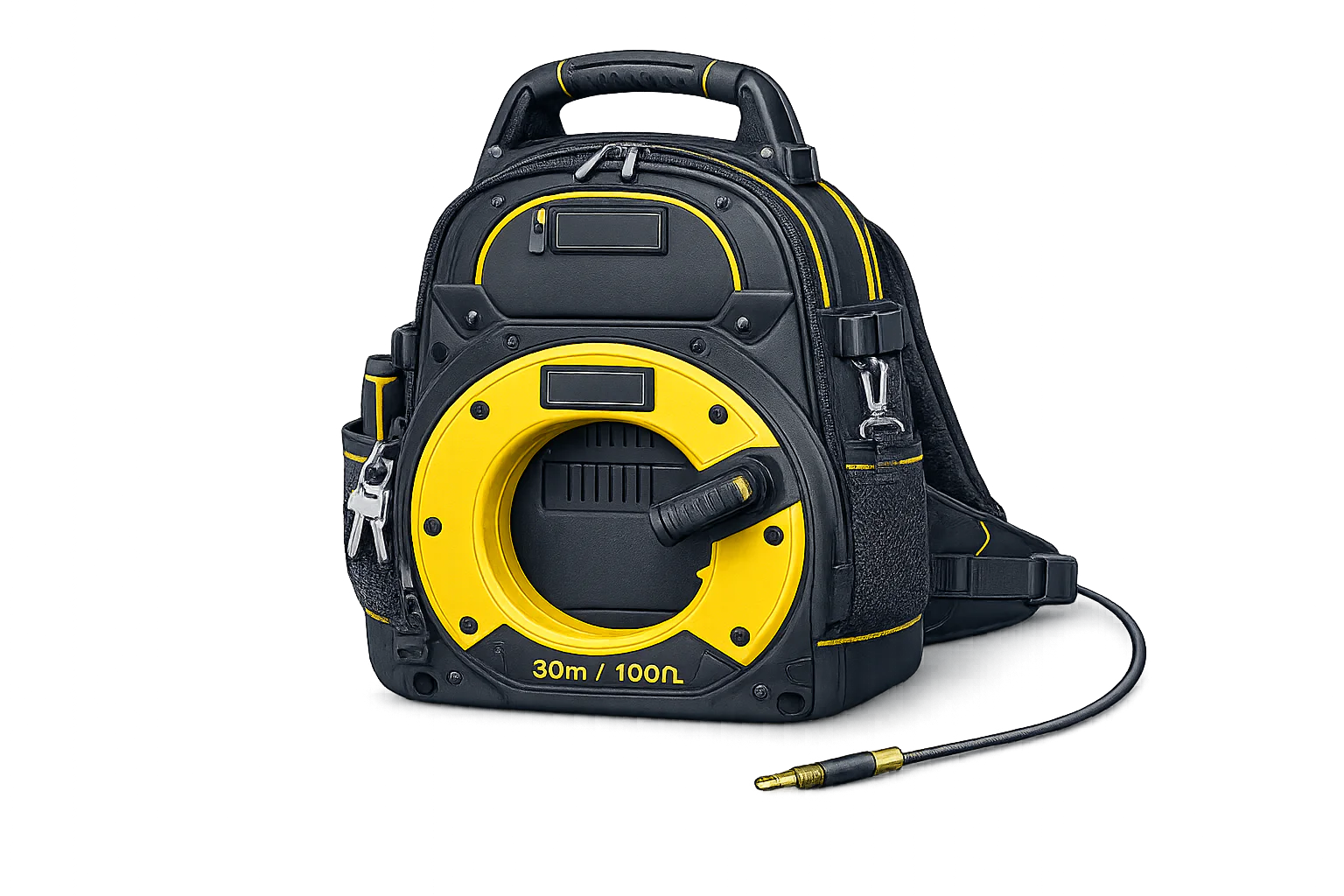
The tip is also important for ease of use. Models with an ear or loop allow the cable to be securely fastened with electrical tape or a thin auxiliary wire. The flexible tip navigates curves more smoothly, and the rounded head reduces snagging on edges, couplings, and transitions. For more intensive work, springs in a cassette or on a reel are practical because they stay organized and unwind more controllably.
Compatibility with cables, pipes, and accessories
The spring must match the inner diameter of the pipe and the cable to be pulled. For power cables with a larger cross-section, the load is higher, so guides with sufficient strength and a secure grip are required. For low-voltage cables, fiber-optic lines, or communication cables, pressure and pulling must be carefully controlled to avoid damaging the sheath or internal structure.
Additional accessories and consumables are used to make the work easier: electrical tape to secure the cable to the pulley, cable lubricants for difficult routes, spare tips, guides, gloves, and pliers. For very long or obstructed runs, lubricant reduces friction, and smooth pulling by two people helps ensure the cable moves evenly through the pipe.
Safety and Maintenance During Operation
Before working on an existing installation, the power is turned off at the panel, and the route is inspected for sharp edges, moisture, construction debris, and damage to the pipes. The spring is inserted without sudden jerks, and if it gets stuck, do not pull excessively. It is safer to pull back slightly, rotate, and re-direct. This protects both the operator and the cable.
After installation is complete, clean the spring of dust, plaster, and grease, then coil it without kinking. Storing it in a case, reel, or dry place protects metal models from deformation and corrosion. Regular inspection of the guide's eye, tip, and surface helps prevent breakage or snagging in the conduit during the next job.
Cable springs for professional and home use
A cable pulling spring is a small but very useful tool for anyone working with electrical installations, communication lines, and cable routes. For one-off repairs, a compact and easy-to-store model is sufficient, while for daily professional use, longer, more durable, and easier-to-wind options are preferred. Browse the available options at Toolsbox.bg and choose a spring that matches the length of the route, the type of cable, and the nature of the work.