
Spindle for scarecrow
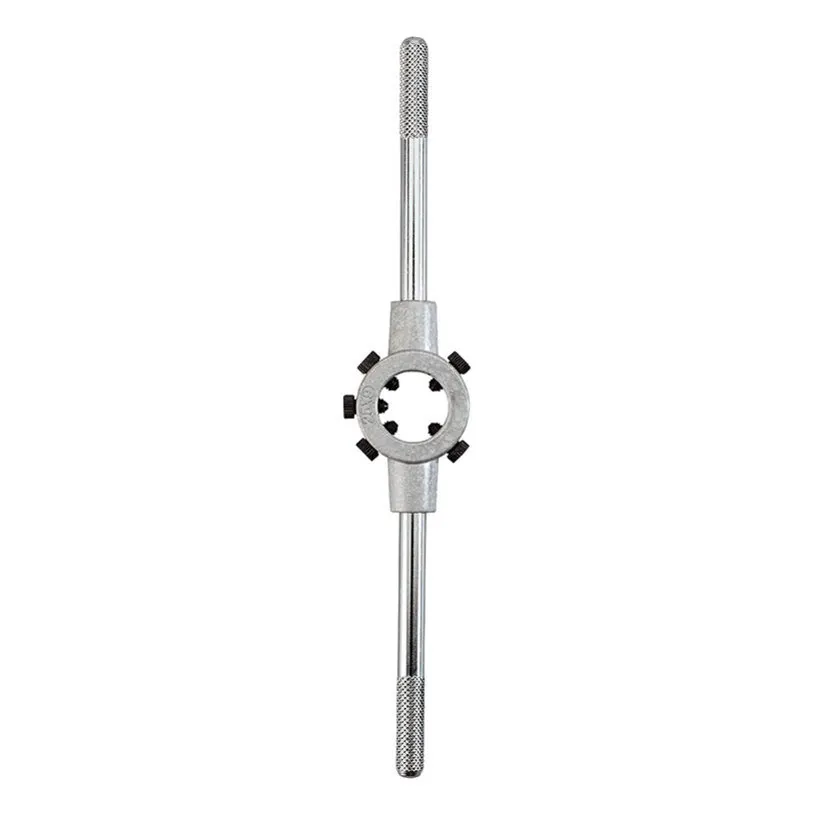
Thread tap handle for precision cutting of external threads
A die holder is a hand-held tool that securely holds the die in place, allowing for controlled cutting or repair of external threads on rods, studs, bolts, pipe fittings, and other metal parts. This tool is directly related to working with taps and dies, ensuring proper guidance of the cutting element, even force with both hands, and a more precise start to the thread. During repairs, installation, maintenance, and workshop work, the right holder reduces the risk of bending, slipping, and damaging the part.
A die holder is selected based on the die size, the type of material being machined, and the workspace around the workpiece. For smaller threads, a more compact holder with good control is needed, while for larger diameters, longer arms help apply torque smoothly. At Toolsbox.bg, you'll find hand tools for various threading tasks, compatible with common tap sizes for metal parts.
Purpose and Applications
A tap wrench is used for cutting new external threads, refreshing damaged threads, and finishing operations after cutting or turning a part. The tool is invaluable for machine maintenance, repairing fasteners, making threaded studs, assembly work, and service activities where a precise thread is crucial for a secure connection.
For home use, the holder assists in repairing bicycle, automotive, garden, and household metal components, provided the die size matches the workpiece being machined. In a professional work environment, a die holder is used for routine operations where repeatability, stability, and good visibility of the cutting area are required.
How the collet holder works
The cutting insert is placed in the holder's socket and secured with screws or clamping elements that keep it centered. After positioning on the workpiece, the handle is rotated evenly, with the two arms allowing for symmetrical force. This way, the cutting edges of the die gradually form the thread profile without sudden deviations in direction.
When working with metal, it is advisable to use thread-cutting oil or another compatible lubricant and coolant. Lubrication reduces friction, aids chip removal, and extends the tap's service life. Periodically backing off at a small angle helps break up the chips and produces a cleaner thread.
Types and Differences Between Models
The different models differ mainly in the diameter of the shank, the length of the arms, the clamping method, and the construction of the body. A tap holder with shorter arms provides better maneuverability in confined spaces, while models with longer handles are more convenient for larger threads and harder materials. Some holders have straight handles, while others have more pronounced ends for a more secure grip.
The size of the holder is determined by the die's outer diameter, not just the thread it cuts. Two dies for different threads sometimes have the same outer diameter and can fit into the same holder. Therefore, when selecting a holder, it is wise to check the markings on the die against the holder's technical specifications.
| Criterion | Practical significance |
|---|---|
| Socket diameter | Determines which inserts the holder will work with. |
| Arm length | Affects control and the force required for rotation. |
| Clamping screws | Keep the insert centered and prevent slippage. |
| Body material | Important for durability under load and during prolonged use. |
| Working space | The compact holder is more convenient around close walls, flanges, and housings. |
How to choose a bushing holder
First, check the size of the insert that will be placed in the holder. Pay attention to the outer diameter and shape of the insert, because a stable fit is essential for a proper cut. When frequently working with multiple sizes, it is practical to keep separate holders for the most commonly used inserts to reduce setup time.
The material of the workpiece affects the required torque. For soft metals and smaller threads, the compact insert driver provides sufficient control. For steel, larger diameters, or deeper cuts, the longer arms provide smoother force and less strain on the hands. Always select a tap with the correct thread profile, pitch, and nominal size for the workpiece.
Compatibility with dies and accessories
Compatibility between the holder and the die is crucial for precise operation. The die must fit snugly in the housing, and the screws must secure it without any play. If there is play, contamination, or improper installation, the thread will be uneven, and the cutting edges will wear out faster. For a cleaner finish, prepare the workpiece with a chamfer at the start of the thread and remove chips, rust, or paint residue.
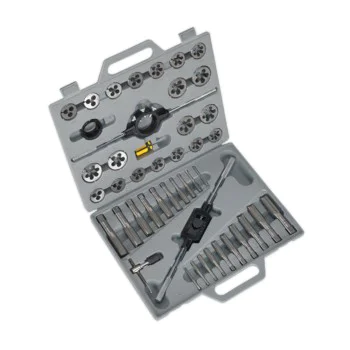
A tap wrench is often paired with taps of various sizes, internal thread taps, tap handles, thread-cutting oil, a vernier caliper, a thread gauge, and a vise. A well-chosen set of hand tools facilitates the entire process of repairing or creating threaded connections.
Operation, Safety, and Maintenance
The workpiece must be securely clamped, and the holder should be guided perpendicular to the axis of the rod or pin. Initial pressure should be even, without sudden movements. If you feel any jamming, stop, pull back slightly, and clear the area of chips. Wear safety goggles when working with metal, as small particles may fly off during cutting.
After finishing, clean the body of the holder and the clamping screws of chips and oil. Dry storage protects metal surfaces from corrosion and maintains clamping accuracy. A die holder with a clean socket and straight screws operates more stably and protects the cutting tool.
Browse the offerings at Toolsbox.bg and choose a die set based on the die sizes, thread types, and workload in your workshop, service center, or home repair corner.