
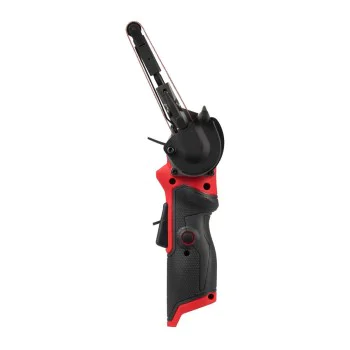
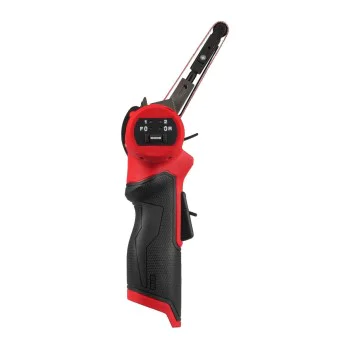
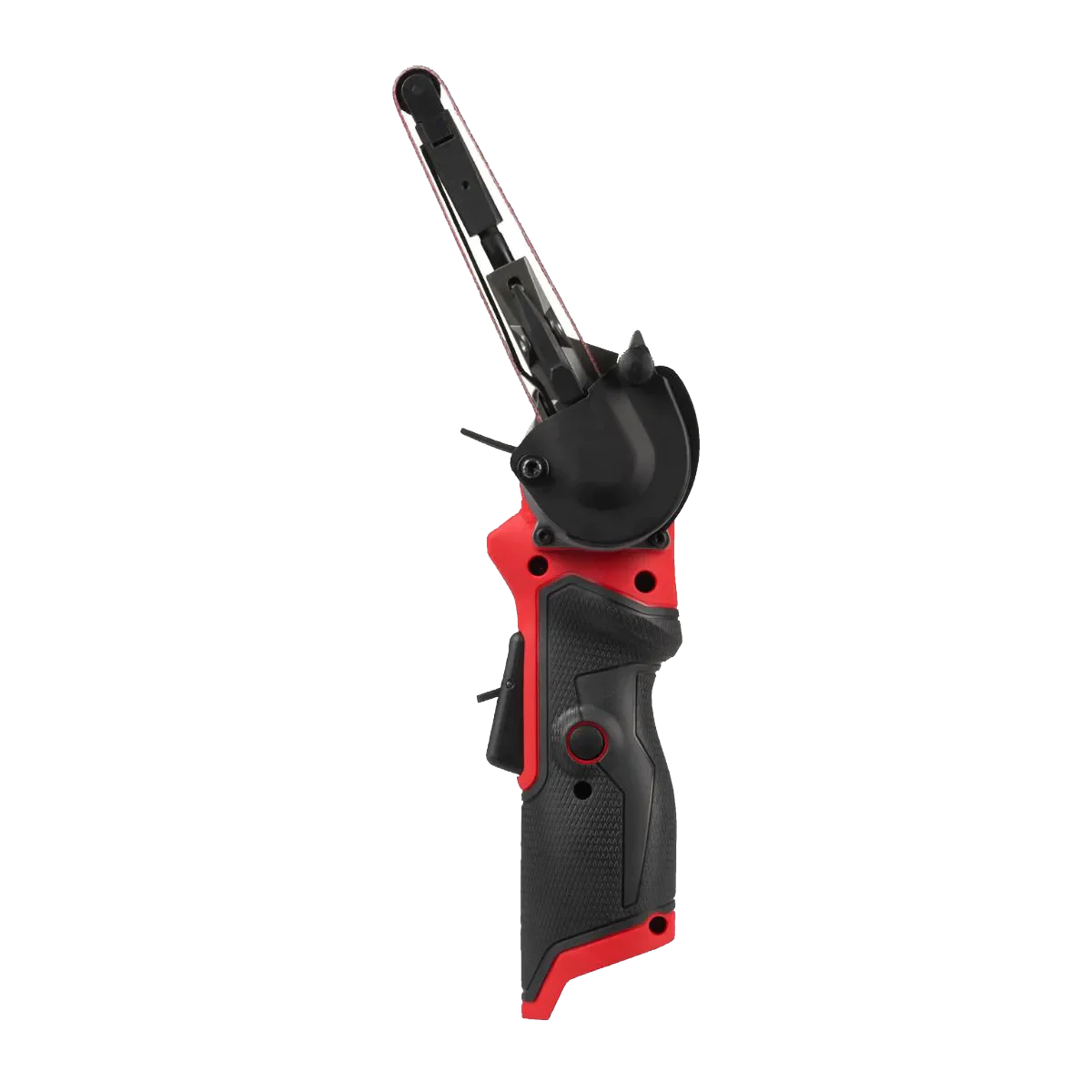
Band saws
Band saws for precision sanding, shaping, and finishing
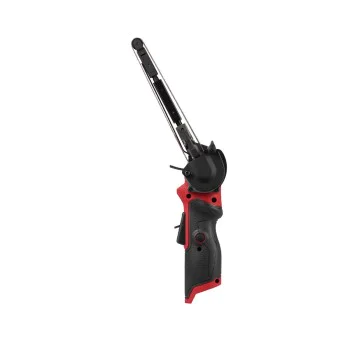
Band saws are compact sanding machines with a narrow abrasive belt, designed for use in areas where a standard belt sander, random-orbit sander, or angle grinder cannot reach comfortably. They are used for cleaning welds, smoothing edges, removing material, and processing holes, channels, pipes, profiles, and hard-to-reach areas. In their cordless versions, these machines offer freedom during installation, maintenance, on-site repairs, and workshop work without being tethered to a power cord.
The narrow working nose and the moving abrasive belt allow for controlled sanding on metal, wood, plastic, and composite materials when the correct consumable is selected. The belt sander does not completely replace large sanders but complements the equipment for fine adjustments, contour shaping, and working around complex-shaped parts. It is valuable for professional technicians, installers, auto mechanics, and welders, as well as for discerning DIYers who value a clean finish and precise control.
Where are band saws used?
Band saws are used in metalworking, furniture manufacturing, auto repair, renovation work, structural assembly, and machine maintenance. When working with metal, they are used to remove burrs, smooth cut edges, remove rust, process internal corners, and perform post-weld finishing. For woodworking, they are ideal for shaping tight radii, making minor adjustments to joints, sanding edges, and preparing surfaces before a final finish.
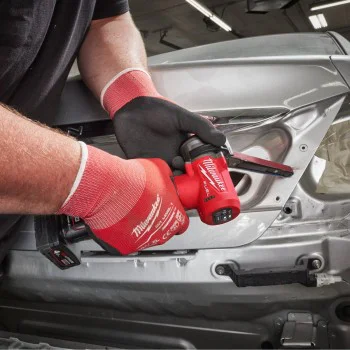
Cordless band saws are practical for work outside a stationary workshop. When installing metal railings, repairing machinery, processing parts on-site, or working in an auto repair shop, the lack of a cord reduces restrictions around the work area. The compact body facilitates one-handed operation for short tasks, and the narrow nose reaches areas around bolts, pipe joints, frames, and profiles.
Typical applications
- Cleaning and smoothing weld seams in confined spaces.
- Shaping metal edges, openings, profiles, and small parts.
- Removing rust, paint, and oxides from hard-to-reach areas.
- Fine sanding of wood on edges, curves, joints, and decorative elements.
- Maintenance of machines, tools, structures, and automotive components.
How different band saws differ
When choosing a band saw, it is helpful to consider several technical and practical characteristics. The width of the band determines how precisely the machine can access tight areas and how quickly it can process a given surface. Narrower bands are suitable for grooves, small holes, and complex-shaped parts, while wider bands provide more stable contact on flat surfaces and more intensive material removal.
The belt speed affects the aggressiveness of the sanding and control over different materials. Adjustable speed makes it easier to transition from rough cleaning to finer finishing. The angle of the working arm, if adjustable, facilitates access to hard-to-reach areas and provides a better body position during prolonged use. For cordless models, battery voltage, capacity, runtime on a single charge, and compatibility with chargers and batteries from the same system are important factors.
| Features | Practical significance |
|---|---|
| Abrasive belt width | Determines precision, access to tight spaces, and processing speed. |
| Belt length | Affects the contact area, cooling, and wear of the consumable. |
| Speed control | Allows for better control when working with metal, wood, plastic, and during fine operations. |
| Working arm | A narrow or adjustable arm facilitates sanding in corners, openings, and around profiles. |
| Cordless platform | Compatibility with existing batteries reduces the need for additional accessories. |
Choosing a band saw based on the task
For rough cleaning of metal surfaces, you need a model with sufficient power, stable belt guidance, and the ability to work with coarser abrasives. For fine shaping and finishing operations on wood or decorative elements, machines with good control, a comfortable grip, and smooth operation with finer grit are more suitable. For service work, where the machine is frequently moved between workstations, the weight, balance, and shape of the handle directly affect operator fatigue.
For professional use, it is wise to pay attention to the design of the guide rollers, easy belt replacement, access to path adjustment, and protection of key components from dust and shavings. For a home workshop, priorities may include compact size, convenient storage, and compatibility with an existing cordless system. A machine that uses batteries from the same series as other power tools saves space and simplifies equipment organization.
Abrasive belts and consumables
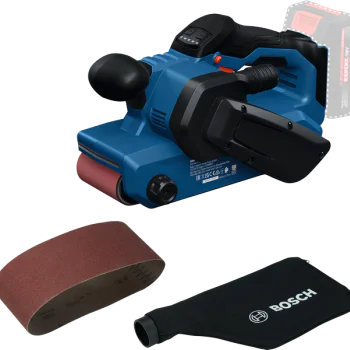
The result of the band saw depends directly on the abrasive belt. Coarse grits are for fast material removal, cleaning welds, and removing coatings. Medium grits are suitable for shaping and preparing surfaces, while fine grits are used for smoothing before painting, varnishing, or further processing. For metal, look for belts that can withstand heat and heavy loads, while for wood, good dust extraction is needed to prevent clogging of the abrasive.
The belt size must match the requirements of the specific machine. An inappropriate width or length makes tensioning, guiding, and safe operation difficult. When switching frequently between materials, it is practical to keep several types of belts with different grit sizes on hand to prevent metal particles from mixing with wood dust and to maintain consistent sanding.
Safety, Control, and Maintenance
Band saws operate at high speeds, so a secure grip and proper positioning of the workpiece are essential. It is recommended to wear safety goggles, gloves, hearing protection, and appropriate work clothing. When working with metal, sparks and heat are generated, so the work area must be free of flammable materials. When working with wood and composites, dust should be removed regularly to prevent it from accumulating around the rollers and ventilation openings.
Maintenance includes cleaning after use, inspecting the rollers, monitoring the tension and alignment of the belt, inspecting the housing, and checking the battery on cordless models. A worn or broken blade should not be used, as it reduces control and puts a strain on the machine. Regular replacement of consumables protects the workpiece from overheating, scratching, and uneven machining.
Band Saws for Workshops, Service Centers, and Installation
A properly selected band saw speeds up small sanding jobs and provides easy access where larger sanders are cumbersome. When comparing models, consider the belt width, speed, working arm, weight, grip, battery platform, and available consumables. This ensures the tool fits your actual tasks-from repairs and installation to precise finishing of parts.
At Toolsbox.bg, you can choose band saws, abrasive belts, and compatible accessories for your workshop, service center, or construction and installation projects. Select a machine based on the material, access to the work area, and the required level of processing to work more precisely, more cleanly, and with better control.