
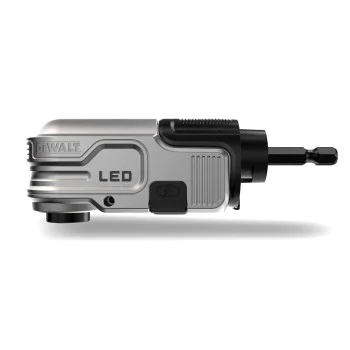
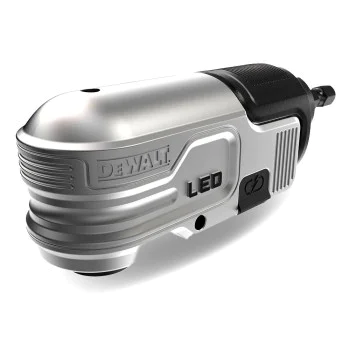
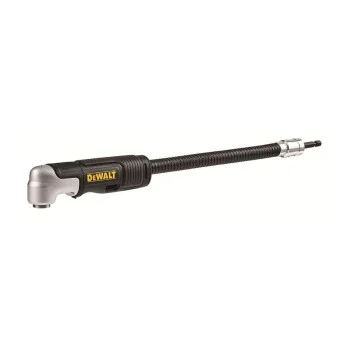
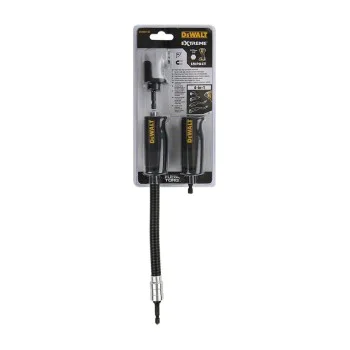
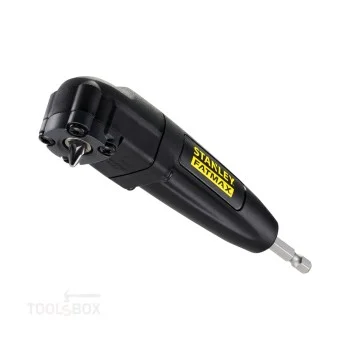
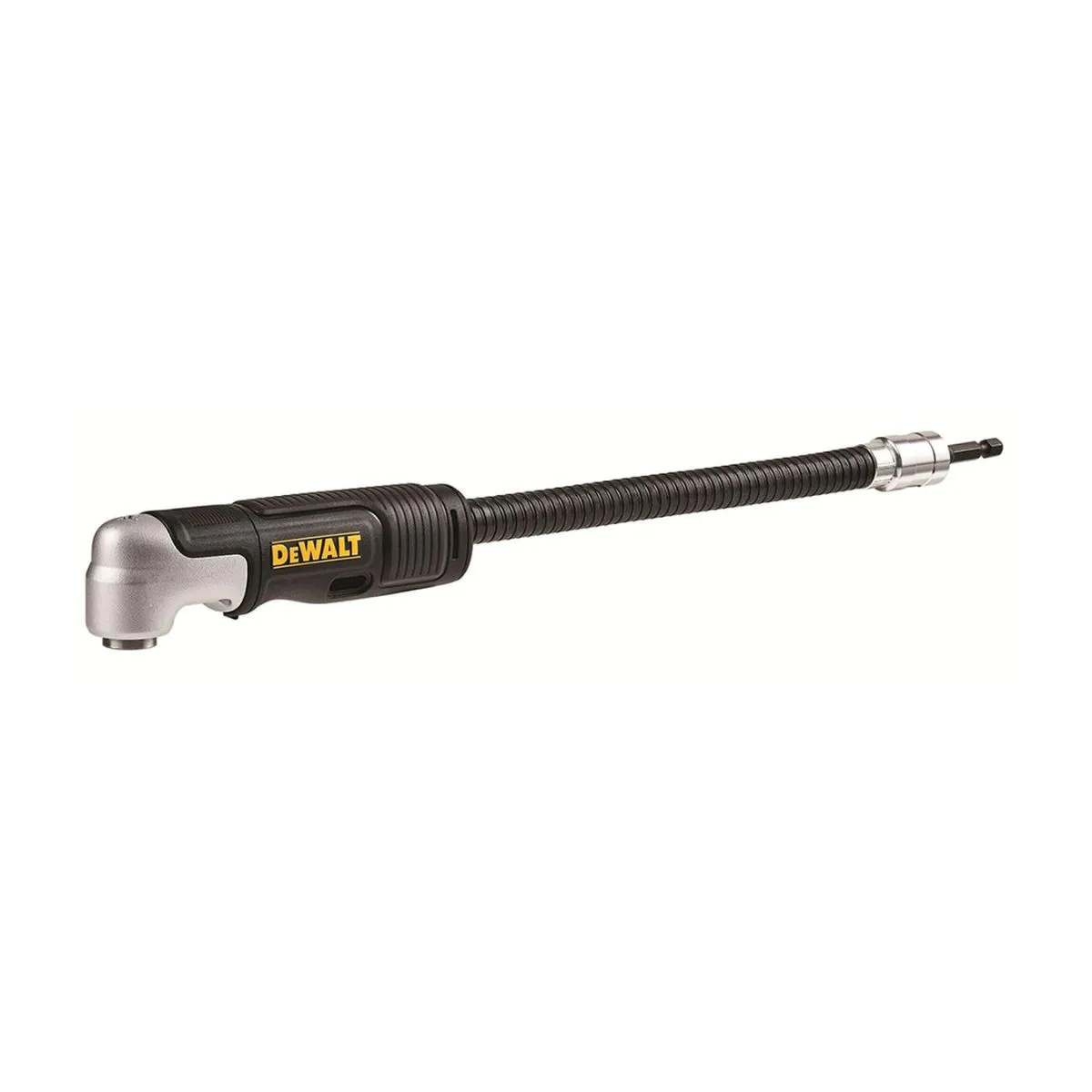
Corner attachment for screwdriver
Angle attachment for a screwdriver for working in tight and hard-to-reach areas
An angle attachment for a screwdriver is a practical adapter for tightening and loosening screws at an angle when a standard screwdriver or drill cannot reach the fastener directly. It transfers the rotation to the bit at a 90-degree angle and facilitates installation in cabinets, corners, niches, frames, metal structures, furniture components, and service areas with limited space. This section features solutions for professional use in workshops, installation and repair work, as well as for demanding home use.
The attachment works with screwdriver bits and sockets, and with a compatible chuck, it can also be used with various power tools. The angled housing allows for better control over the fastener, reduces the need to remove adjacent parts, and saves time when installing in hard-to-reach places. The angle screwdriver attachment is a valuable tool for assembling furniture, attaching hinges, installing guides, working with drywall profiles, servicing machinery, and repairing equipment.
Applications in installation, repair, and maintenance
An angle attachment for a screwdriver comes in handy wherever direct access is limited by a wall, housing, frame, or an already installed component. In furniture work, it helps when driving screws into cabinets, drawers, beds, wardrobes, and kitchen units. In construction, it is useful for installing metal profiles, cladding, decorative elements, and fasteners near the floor or ceiling. In a service environment, it facilitates work around covers, panels, racks, and machine assemblies.
During repair work, the small angle adapter often eliminates the need for manual tightening in awkward places. During prolonged work with repetitive fastening tasks, the ergonomic grip and stable bit retention are crucial for speed and precision. A well-chosen angle attachment for a screwdriver helps ensure clean installation without unnecessary pressure on surrounding surfaces.
How the different models differ
Although they perform a similar task, angle attachments differ in size, body shape, grip type, drive mechanism, and bit retention method. Compact models are convenient in very tight spaces, while bulkier versions provide more stable support during more demanding installation operations. Some models feature a magnetic bit holder, while others use a mechanical locking mechanism that prevents the bit from falling out when working overhead or in a sideways position.
The material of the housing and the internal gears affects durability under load. Metal and reinforced housings are preferred for regular professional use, while lighter versions are convenient for short installations and home repairs. Attachments with a slimmer head reach deeper into tight spaces, and models with a better-shaped handle provide a more stable grip when tightening longer screws.
Compatibility with screwdrivers, bits, and holders
When choosing an angle attachment for a screwdriver, compare the attachment's chuck with the chuck of your tool and the bits you use. Many models work with 1/4-inch hex sockets, but it is wise to check the specifications for the specific item. To work with different screws, prepare the appropriate PH, PZ, Torx, hex, or flat bits depending on the fastener.
Compatibility isn't limited to the chuck alone. For harder materials and larger screws, you'll need an attachment that can handle higher torque. For delicate installations, such as trim and decorative elements, control, smooth operation, and a secure grip on the bit are more important. The impact mode should only be used if the manufacturer explicitly states compatibility, as not every angle head is designed for such loads.
Purchase Criteria
The selection of an angle attachment for a screwdriver depends on the work environment, frequency of use, and type of fasteners. For installers, carpenters, kitchen builders, and service technicians, a more durable construction and a stable bit holder are a significant advantage. For home repairs and one-off tasks, the compact size and easy bit change are often sufficient.
| Criterion | Practical significance |
|---|---|
| Head size | Determines access to tight corners, niches, and interior cabinets. |
| Drive type | Must match the screwdriver, bits, and holders you use. |
| Bit retention | Magnetic or mechanical locking facilitates work in a sideways position. |
| Housing and gearbox | These affect stability under pressure and torque. |
| Ergonomics | A better grip helps with long runs of screws. |
Operation, safety, and maintenance
An angle attachment for a screwdriver works best with a steady feed and a properly selected bit. The bit must fit snugly into the screw head to reduce the risk of slipping and damaging the fastener. When working near painted, varnished, or visible surfaces, use a stable hand support and control the screwdriver's speed.
Do not overload the attachment with screws that require a significantly more powerful tool or pre-drilling. In hard wood, metal profiles, and solid panels, pre-drilling facilitates screwing and protects the drive mechanism. After use, clean the housing of dust and shavings, store the attachment in a dry place, and follow the manufacturer's maintenance instructions, if provided.
Choose the right attachment for the job
A properly selected angle attachment for a screwdriver turns a standard screwdriver into a more versatile tool for installation, repair, and maintenance. It is a small but very useful part of every craftsman's toolkit who works with fasteners in confined spaces. Browse the selection at Toolsbox.bg and choose an attachment based on the drive type, size, load, and the type of work you're performing.