
Borkorons for contacts
Socket bit sets for precise holes in electrical installations
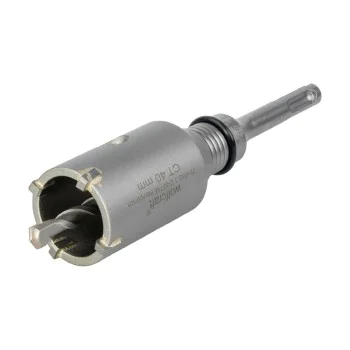
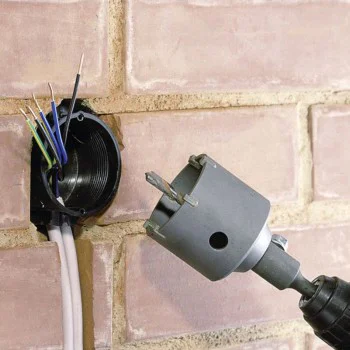
Socket bit sets are specialized cutting attachments for drilling round holes for junction boxes, electrical sockets, switches, splitter boxes, and installation components. They are mounted on a drill, hammer drill, or core drill using the appropriate adapter and help create a clean cut in walls, ceilings, partitions, or cladding. A properly selected core bit saves time during repairs, construction, and electrical installation work by reducing the need for additional finishing with a chisel.
This type of product includes solutions for drywall, brick, aerated concrete, concrete, plaster, tiles, and other building materials. The differences between the individual models relate to the diameter, working depth, type of cutting edge, chuck, need for a center drill, and drilling mode. Thus, the choice depends on the wall material, the number of holes, the available machine, and the required installation precision.
What do socket hole saws cover?
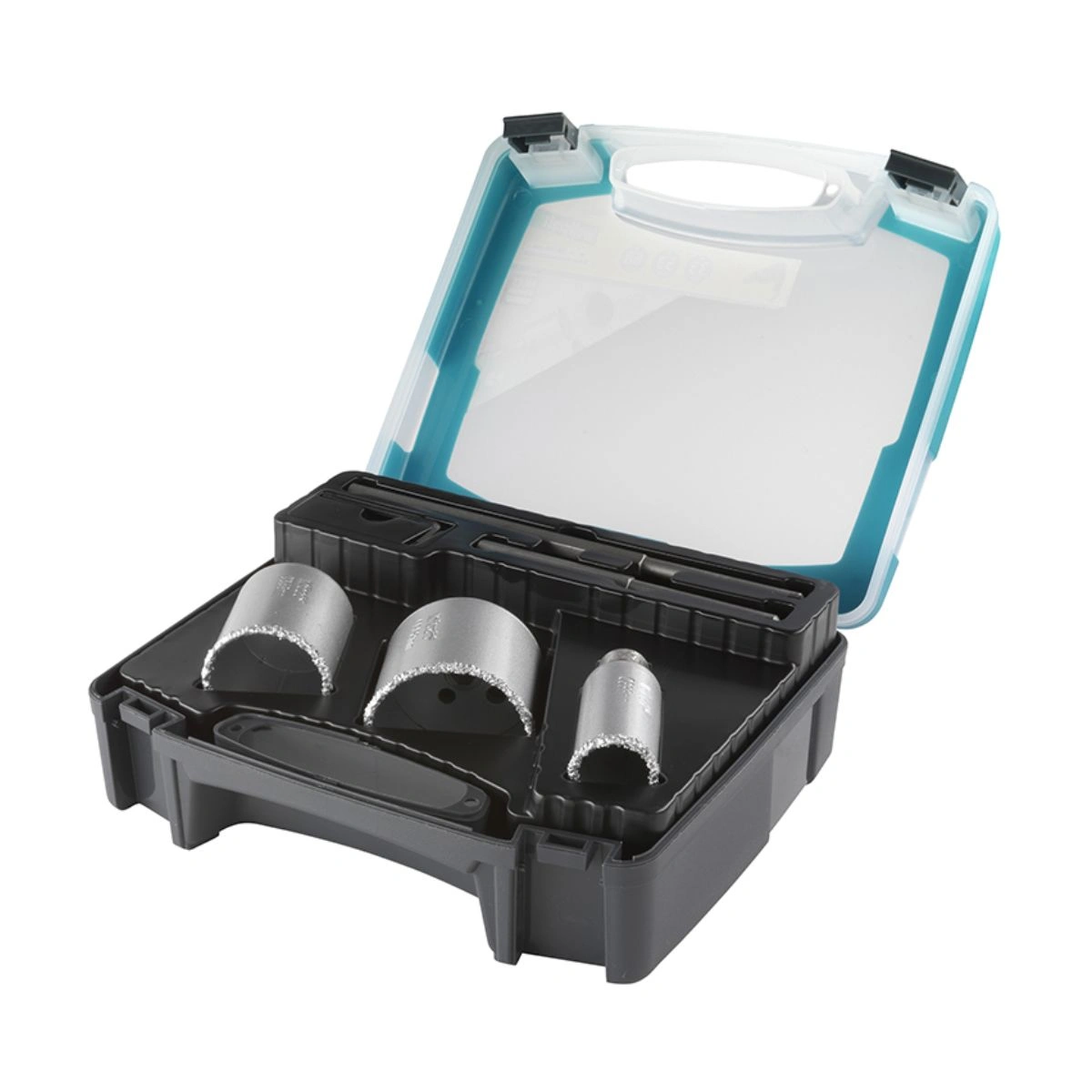
Socket hole saws are available as single saws, sets with an adapter and centering drill bit, segmented diamond saws, carbide saws, carbide cutters, and options for dry or wet drilling. In electrical installation, diameters around 68 mm are most common for standard junction boxes, but larger sizes are also used for distribution boxes, double mechanisms, special installation solutions, and pilot holes.
When working in soft and medium-hard materials, core bits with sharp teeth or carbide plates are preferred. For concrete, solid stone, and hard bricks, segmented diamond core bits are more practical, as they cut the material through abrasive action. For drywall, wood, and panels, lighter core bits are used, which leave a clean edge and do not put unnecessary strain on the machine.
The wall material determines the type of core
For drywall and lightweight partition walls, the core bit must cut quickly without tearing the surface layer. For brick and aerated concrete, models with carbide teeth are preferred, as they withstand abrasive dust and do not dull after a few cuts. For concrete and reinforced concrete, a more robust approach is needed: a diamond core bit, a sturdy adapter, and a machine with sufficient power and speed control.
Tiles and cladding require a careful start because the glaze chips easily. For such surfaces, choose diamond-coated or segmented core bits, applying pressure gradually. With wet drilling, water cools the work area and reduces dust, while dry drilling relies on proper speed, cooling pauses, and dust collection.
Sizes, Shanks, and Machine Compatibility
Diameter is the first parameter to consider when selecting a core bit for electrical outlets. Standard electrical boxes typically require a hole of about 68 mm, but the actual size must be verified against the specific box and the method of wall mounting. Smaller core bits are suitable for cable passages and auxiliary holes, while larger ones are used for junction boxes or when installing special installation components.
The chuck must be compatible with the machine. SDS-plus adapters for hammer drills, cylindrical and hexagonal shanks for drills, M16 or M22 threads on some diamond core bits, as well as adapters for various systems are available. When working with a hammer drill, select the mode based on the core bit and the material: some core bits operate with impact, while others require only rotation to prevent damage to the segments or the casing.
- Diameter: depends on the size of the junction or branch box.
- Working depth: affects the ability to create a hole in thicker walls.
- Chuck: SDS-plus, hexagonal, cylindrical, or threaded adapter depending on the machine.
- Cutting edge: teeth, carbide tips, diamond coating, or segments.
- Operating mode: dry drilling, wet drilling, hammer drilling, or non-hammer drilling.
Practical use in repairs and electrical installations
Socket drill bits are essential for installing new electrical systems, relocating outlets, adding switches, installing low-voltage outlets, preparing holes for cable runs, and renovating rooms. They are valuable not only for electricians and construction crews but also for DIY enthusiasts working on individual rooms who are looking for clean holes without unnecessary chiseling.
The clean hole facilitates the installation of the junction box, alignment with the wall surface, and subsequent spackling. When installing a series of several outlets, proper centering is crucial for maintaining a straight line between the individual sockets. The centering drill bit helps prevent the hole saw from veering off course at the start, while the stable adapter reduces vibrations and ensures a more uniform hole.
Working with Different Building Materials
With brick and aerated concrete, moderate speeds and even pressure prevent the teeth from overheating. With concrete, the machine should have sufficient torque because the core bit encounters significant resistance. If there is rebar, the cutting tool is under greater strain, so work carefully and take breaks. With drywall, the main risk is tearing the paper around the hole, so choose a sharp core bit and guide the machine steadily.
When cutting tiles, initial centering is done with light pressure, and the speed is controlled. If water is used for cooling, electrical safety remains a priority: the machine, extension cords, and work area must be protected from direct contact with moisture. When dry drilling, dust is contained using a dust collector, vacuum cleaner, or a waste collection attachment.
Criteria for selecting a core bit for sockets
When purchasing, consider not only the diameter but also the actual task. For a single repair in drywall, a lightweight core bit of the exact size is sufficient. For regular work in brick and concrete, a better choice is a core bit with a durable cutting edge, a replaceable centering drill bit, and a compatible adapter. For professional use, models with good heat resistance, evenly spaced segments, and stable body geometry are valuable.
Compatibility with the available machine reduces the risk of incorrect attachment installation. If the core bit requires a separate holder, adapter, or centering drill bit, these components should be selected together. Working depth is necessary for deeper cantilevers or walls with thick plaster. For a series of holes, it is worth preparing spare centering drills and monitoring the condition of the teeth or diamond segments.
Safety and Maintenance
Before starting work, mark the routes and drilling locations to avoid damaging cables, pipes, or other hidden installations. Safety goggles, gloves, and a dust mask protect the operator when drilling into masonry, concrete, and tiles. Hold the machine steady with both hands and apply pressure gradually. After drilling, clean the core bit of dust and debris, as accumulated material increases the temperature and reduces cutting speed.
At Toolsbox.bg, you can find hole saws for outlets in various materials, sizes, and shank types, with options for repair projects, construction sites, and service work. Choose a hole saw based on the wall, the machine, and the required hole size to achieve precise installation and a clean finish for every electrical installation task.