
Cyclone for vacuum cleaner
Vacuum cleaner cyclone for cleaner work in the workshop and on-site
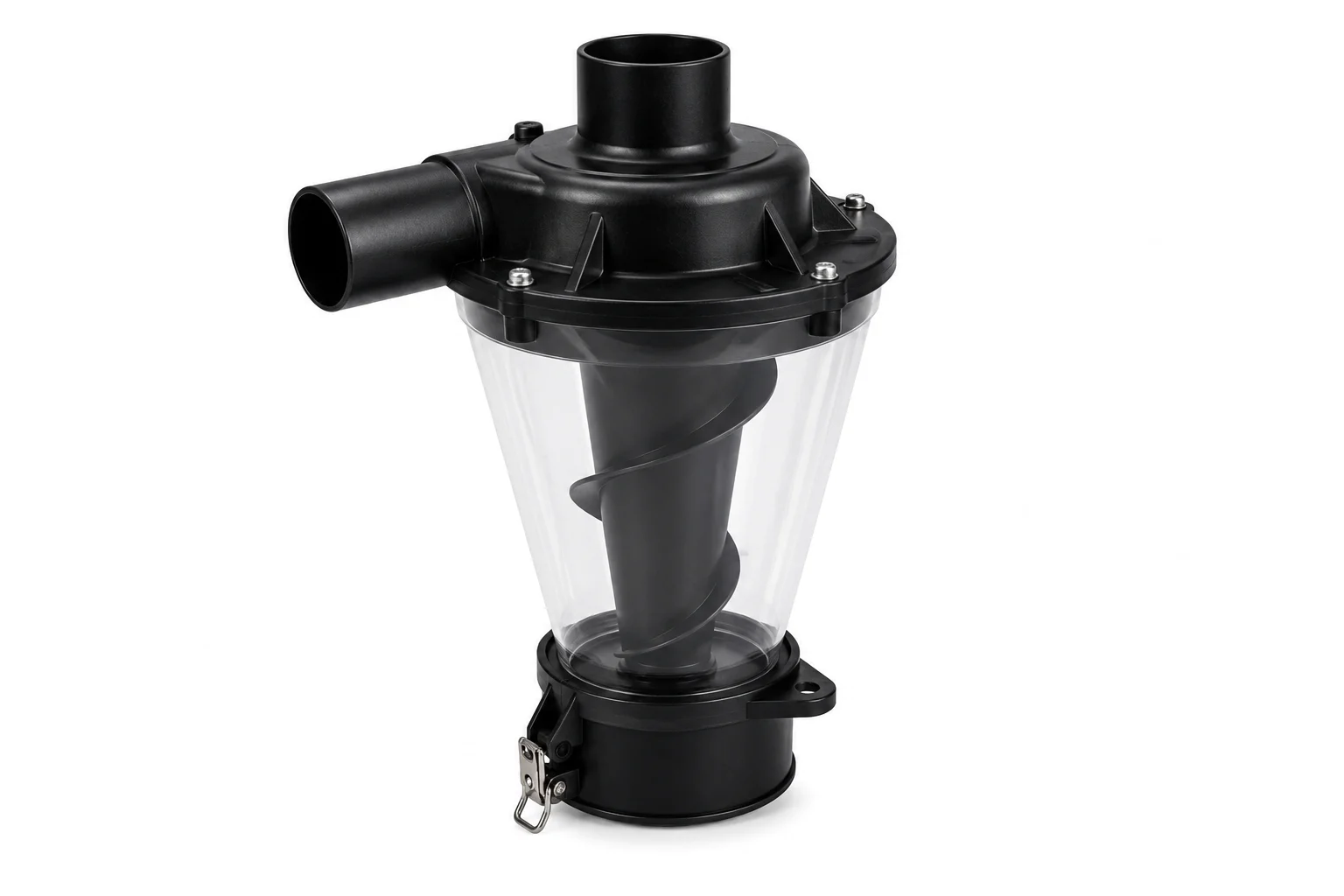
A cyclone for a vacuum cleaner is a practical separator that separates dust, shavings, ash, and larger particles before the air reaches the vacuum cleaner's container or filter. This reduces the load on the machine, the bag fills up more slowly, and suction power is maintained longer when working with wood, drywall, concrete, metal, and other materials. This type of accessory is valuable for craftsmen, installers, carpenters, service technicians, and discerning home users who value a cleaner workspace and easier equipment maintenance.
What is a cyclone separator?
A vacuum cleaner cyclone works by creating a vortex in the airflow. Particles are deflected toward the walls of the housing and fall into a separate container, while the air continues on to the vacuum cleaner. When properly connected, this principle protects the filter and reduces clogging of hoses, bags, and cartridges. During operation, the cyclone module is placed between the tool or suction hose and the vacuum cleaner.
The product range includes compact models for small maintenance tasks, larger versions for woodworking and construction repairs, and kits with flanges, adapters, or hoses when these components are included in the package. Some separators are designed for mounting on a bucket or barrel, while others are supplied as a housing that connects to an existing container.
Applications in dust extraction
A cyclone dust collector is useful wherever fine dust or dry debris is generated. When cutting MDF, solid wood, laminate, and particleboard, it collects wood shavings and fine dust. When sanding putty, plaster, or drywall, it prevents the filter from clogging quickly. In a garage, warehouse, or workshop, it is used for cleaning around machines, power tools, and repair areas.
- Woodworking: collecting sawdust, shavings, and dust from circular saws, routers, planers, and sanders.
- Construction and renovation: handling dust from plaster, brick, concrete, dry mixes, and fillers.
- Service and installation: cleaning during drilling, chiseling, cutting, and finishing work.
- Home workshop: keeping power tools, hand tools, and small machines organized.
Purchase criteria
When choosing a cyclone for a vacuum cleaner, first consider the diameter of the inlet and outlet, the type of hose, and the size of the waste container. Leaky connections lead to a loss of vacuum, so adapters, clamps, and seals are crucial for proper operation. For fine dust, a well-sealed container and secure attachment are desirable, while for coarse debris, sufficient container volume and unobstructed flow through the hose are essential.
The material of the housing affects its durability against impacts, transport, and handling of abrasive dust. Plastic models are lightweight and convenient for mobile tasks, while more robust housings are preferred for intensive professional use. For a stationary workshop, it's wise to consider how the unit attaches to a cart, stand, or container.
| Criterion | Practical guidance |
|---|---|
| Inlet and outlet diameter | Ensure compatibility with the vacuum cleaner's hose and nozzle. |
| Container | A larger container is convenient for sawdust and shavings; a smaller container is practical for mobile work. |
| Material | Plastic reduces weight, while metal offers greater durability during transport. |
| Seal | A tight-fitting lid and secure fasteners maintain the vacuum and minimize suction loss. |
| Accessories | Adapters, flanges, and hoses facilitate connection to various attachments. |
Compatibility with vacuum cleaners and tools
A vacuum cleaner cyclone is designed to match the actual dimensions of the hose, nozzle, and container. If there is a difference in diameter, adapters are used, but each connection must remain tight. A short hose run without sharp bends facilitates airflow when working with power tools, because tight bends trap dust and shavings.
Container and airtightness
The container beneath the separator bears the load from the suction. It must be vacuum-resistant, free from deformation, and have a tightly fitting lid. Metal buckets, thick-walled plastic containers, and barrels are a good choice when the size and lid fit the specific cyclone module. For fine dust, the seals should be inspected after each emptying.
Materials, Maintenance, and Safety
The selected vacuum cleaner cyclone extends the intervals between filter cleanings but does not eliminate the need for vacuum cleaner maintenance. Filters should be cleaned according to the manufacturer's instructions, the container should be emptied in a timely manner, and hoses should be checked for accumulated debris. When working with fine construction dust, personal protective equipment and a filter suitable for the task are required.
Do not wet a separator intended only for dry cleaning, and do not suck up hot ash, sparks, or flammable materials unless the manufacturer has specified such use. When dealing with dust from varnishes, chemicals, or metal particles, special care and adherence to the instructions for the specific equipment are required.
Choosing a Cyclone for a Vacuum Cleaner at Toolsbox.bg
A vacuum cleaner cyclone is a small component that makes a significant contribution to cleanliness, filter durability, and convenience in daily use. Select a model based on the diameter of the connections, the container volume, the type of debris, and the installation method. Browse the available options at Toolsbox.bg and choose a separator that fits your vacuum cleaner, workshop, and tasks.