
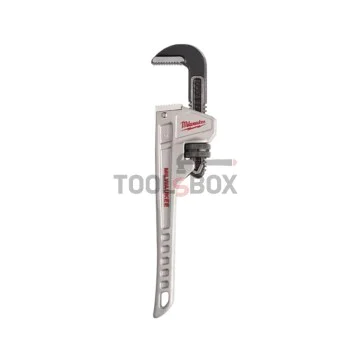
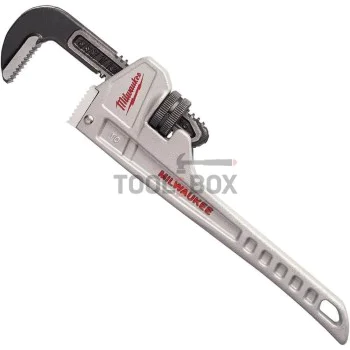
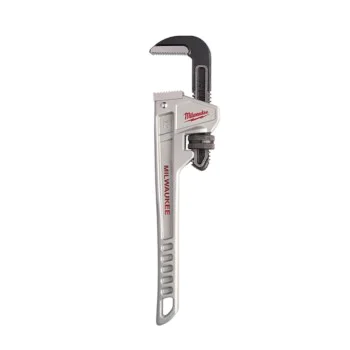
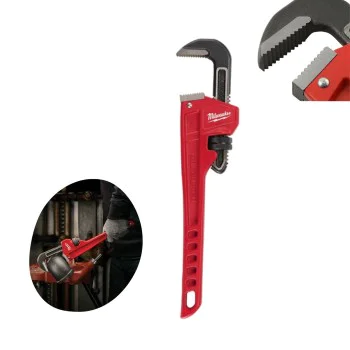
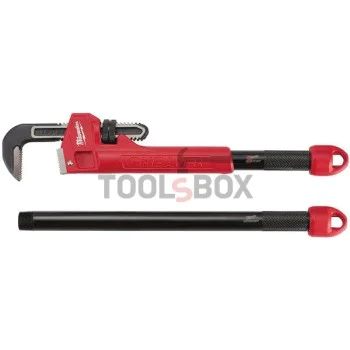
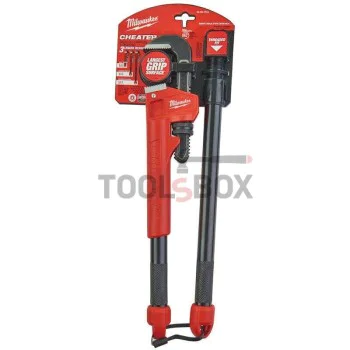
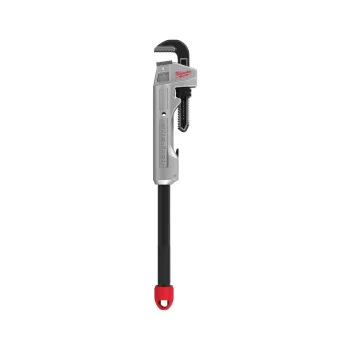
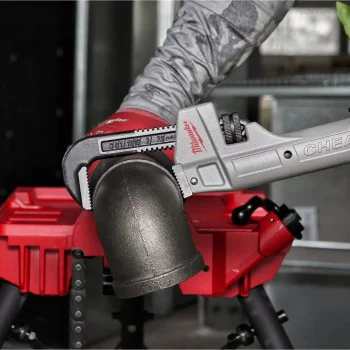
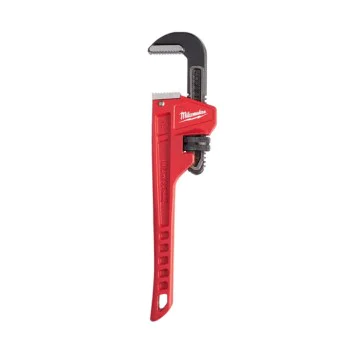
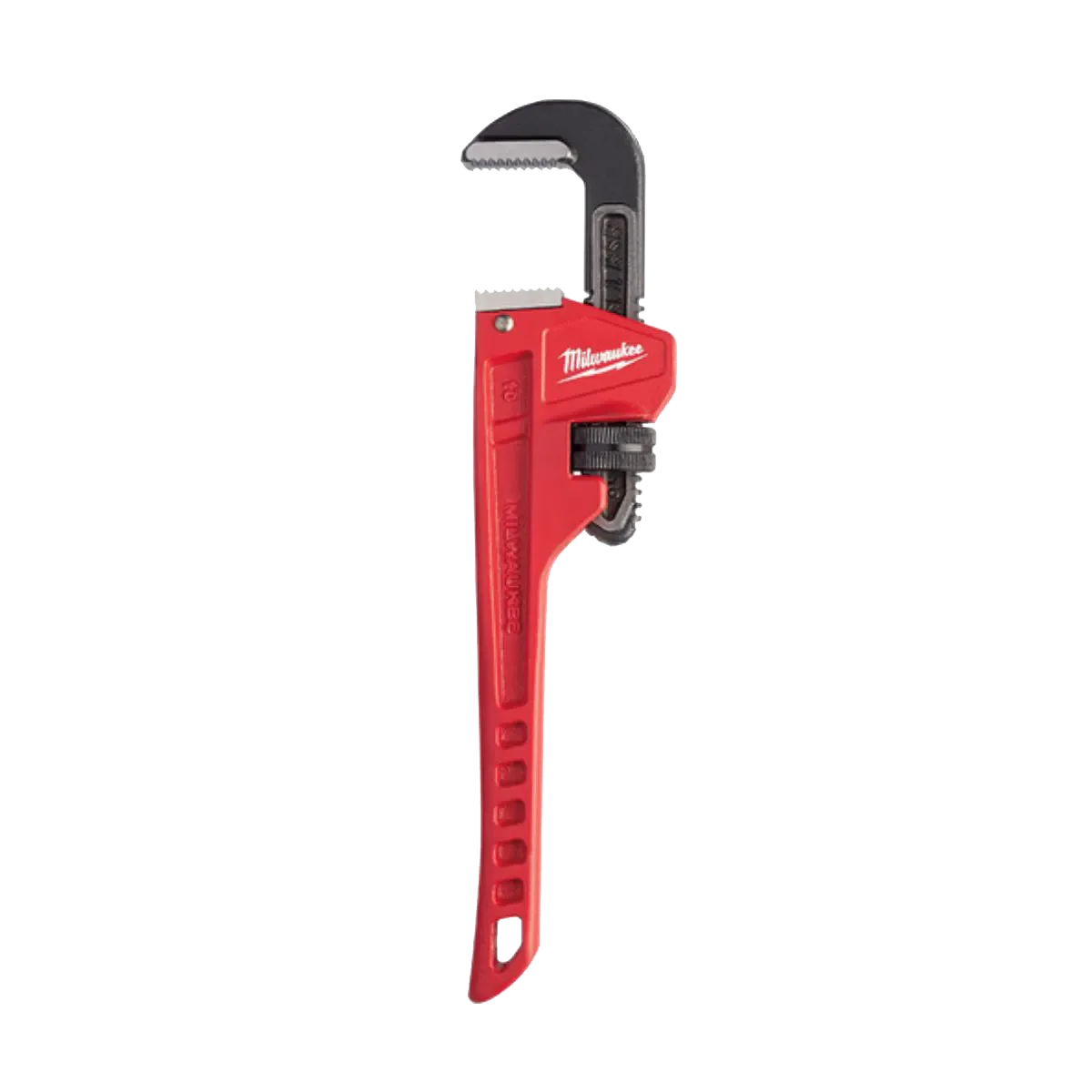
Pipe wrench
Pipe wrench - a secure grip when working with pipes and fittings
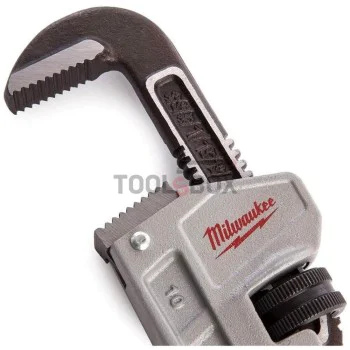
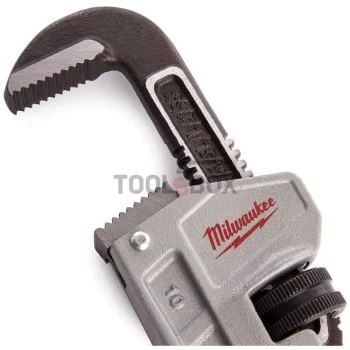
A pipe wrench is a hand tool for tightening, loosening, and holding pipes, couplings, elbows, nipples, connectors, and other cylindrical parts. It is particularly useful for plumbing installations, heating systems, service repairs, construction, machine maintenance, and work in a home workshop. Thanks to its serrated jaws and adjustable opening, the tool grips the part securely, even when the surface is smooth, dirty, or difficult to secure with a standard wrench.
Within the group of hand tools, this type of wrench holds a special place because it operates using pressure and a self-locking effect. When positioned correctly, the force of the hand is transferred to the jaws, and the grip tightens as the tool is turned. Each pipe wrench has a specific working range, handle length, jaw shape, and design of the adjustment mechanism. These characteristics determine ease of installation, usability in tight spaces, and the ability to work with larger diameters.
Types of pipe wrenches and applications
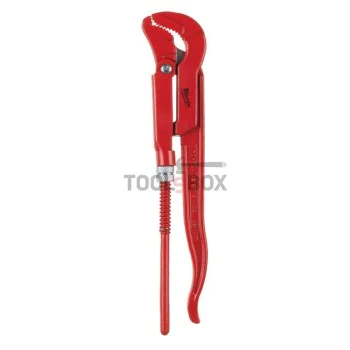
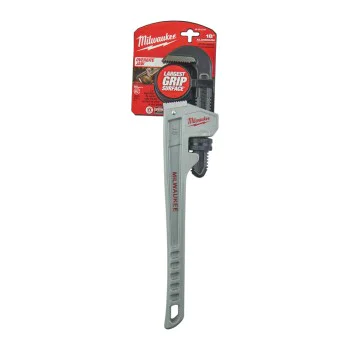
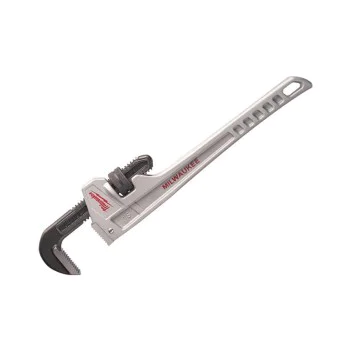
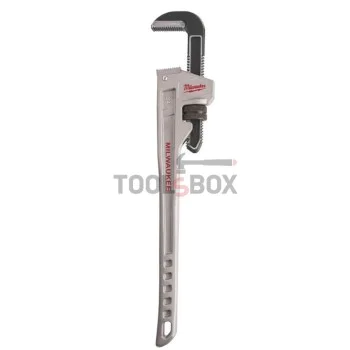
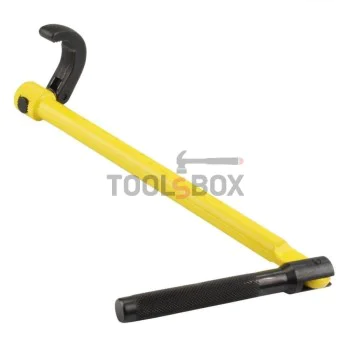
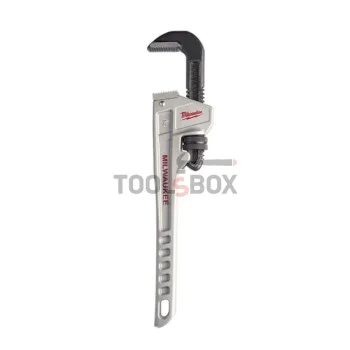
The range includes various models for repair work, professional installation, and occasional home use. The straight pipe wrench is a classic solution for general work with metal pipes and threaded connections. It offers a stable lever, easy adjustment, and good control when loosening tight joints. The angle pipe wrench is convenient for working near walls, in shafts, under sinks, around radiators, and in other areas with limited access.
There are also Swedish-style models, wrenches with a more compact body, reinforced versions for heavier loads, and tools with different jaw geometries. Shorter handles provide better maneuverability in tight spaces, while longer ones offer greater torque when removing old or tightly fastened connections. When working with chrome-plated or decorative elements, it is advisable to use a protective pad, as the serrated jaws leave marks on soft or polished surfaces.
Plumbing, Heating, and Maintenance
Pipe wrenches are used in the construction and repair of water supply lines, replacement of faucets, installation of ball valves, radiator connections, filters, reducer valves, and other plumbing components. In a service setting, they assist in disassembling pipe joints, pneumatic connections, hydraulic adapters, and round-profile components. For construction and repair crews, the tool is part of the basic equipment, and for households, it is a practical helper for emergency and scheduled repairs.
How to choose a pipe wrench based on the task
When selecting a tool, the first consideration is the working size. It must cover the diameter of the pipes and fittings you will be working with. A small model is convenient for plumbing connections, sinks, traps, and light repairs, while a larger size is needed for steel pipes, heating lines, and larger threaded connections. The length of the handle affects the effort required: a longer handle makes it easier to tighten connections, but requires more free space around the part.
The material of the body and jaws also matters. For demanding professional work, models made of hardened steel or reinforced alloys are preferred, featuring precisely shaped teeth and a stable adjustment screw. For occasional home use, a compact pipe wrench with a comfortable handle and smooth adjustment is often perfectly sufficient. The body coating protects against corrosion and makes cleaning easier after working in wet or dusty environments.
- Opening size: corresponds to the diameter of the pipe, coupling, or fitting.
- Handle length: determines the leverage and ease of use in confined spaces.
- Jaw shape: straight or angled jaws depending on access to the connection.
- Material and hardening: affect tooth wear and stability under pressure.
- Adjustment mechanism: must move smoothly and hold the set size without play.
Grip, safety, and proper operation
A well-chosen pipe wrench provides controlled force, but proper operation remains crucial for clean installation and safety. The jaws must fit snugly against the part, and the direction of pressure must follow the tool's self-tightening action. It is not advisable to extend the handle with a pipe or other lever, as this overloads the jaws, the adjusting screw, and the connection itself. For old, rusted joints, it is wiser to combine the tool with penetrating spray and carefully controlled force.
Work gloves improve grip and protect your hands from sharp edges, shavings, and dirt. When working overhead or in tight spaces, it is best to hold the tool firmly with both hands whenever possible. Every pipe wrench should be protected from falling onto hard surfaces, as the impact can compromise the adjustment accuracy or damage the teeth. After use, clean the jaws of metal particles, mud, grease, and construction dust.
Maintenance and Storage
Regular maintenance extends the tool's service life and preserves the accuracy of the grip. The adjustment screw should be cleaned and, if necessary, lubricated with a small amount of machine oil. The toothed jaws should be inspected for wear, chipping, or deformation. If the teeth are severely worn, the tool loses stability and increases the risk of slipping. Storing it in a dry place in a case, cabinet, or wall organizer protects the metal from corrosion and facilitates quick access during work.
A practical choice for workshops, repairs, and installations
The pipe wrench is a tool that saves time during installation and repair operations, especially where a standard wrench lacks the necessary grip. When the size, length, and shape of the jaws are properly matched, it serves a wide range of tasks-from replacing a fitting at home to heavy-duty work in a service shop or on a construction site. Browse the pipe wrench models at Toolsbox.bg and select a tool based on the pipe diameter, workspace, and frequency of use.