
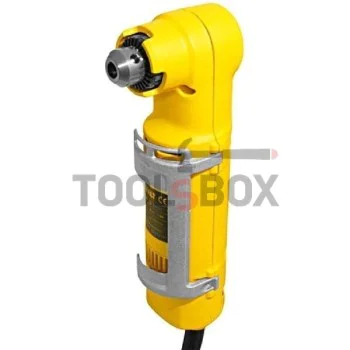
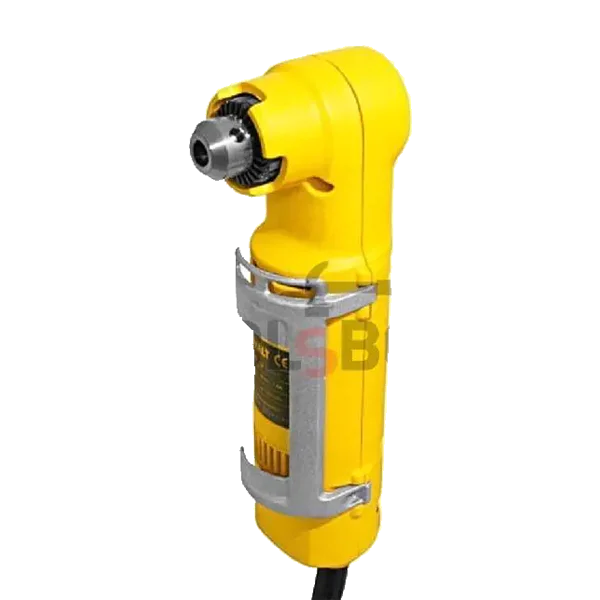
Angle drill
Angle drill for working in tight and hard-to-reach areas
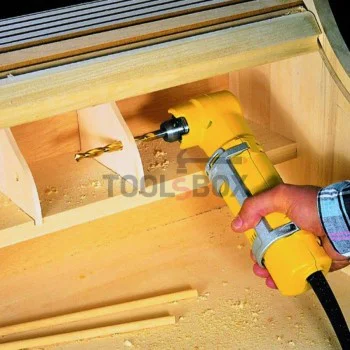
An angle drill is a power tool designed for drilling and screwing in places where a standard drill has difficulty reaching or operates at an awkward angle. The compact head, positioned at a right angle to the body, facilitates access between beams, in cabinets, behind structures, around pipes, in metal profiles, and during installation work in confined spaces. This type of tool is a valuable assistant for craftsmen, installers, carpenters, service technicians, and demanding DIYers who seek better control when working in areas with limited arm movement.
In this section, you will find angle drills for various tasks-from fine drilling in wood and plastic to working with metal, sheet metal, profiles, and fasteners. Some models are designed for installing furniture, kitchens, suspended structures, and cladding, while others are better suited for service work, machine repair, automotive maintenance, and workshop tasks. What they have in common is the low-profile head, the tight drill bit guidance, and easier access to the workpiece.
Where is the angle drill used?
The angle drill is practical for installations where the hole is located near a wall, ceiling, floor, structural edge, or internal corner. In furniture manufacturing and assembly, it helps with drilling into cabinets, drawers, shelves, and load-bearing elements. In construction and renovation work, it is used for working around wooden beams, metal profiles, drywall structures, cable runs, and installation openings.
In maintenance work, this tool saves time when accessing bolts, holes, and mounting points located behind panels, around motors, inside machine housings, or in tight technical compartments. For home use, it is convenient for assembling furniture, renovating kitchens, and installing hinges, handles, shelves, baseboards, and various fasteners where a standard drill is too bulky.
Main types and differences between models
Angle drills differ in power source, power, speed, torque, chuck size, and body shape. Corded models are a good choice for extended work in a workshop, on a construction site, or during stationary repair work. They maintain constant power and do not require monitoring of the battery charge. Cordless models offer freedom when working in various locations, on a ladder, in a vehicle, at a site without convenient access to the electrical grid, or when frequently changing work positions.
For the more compact models, ease of maneuvering is key. They are preferred for precision installations, woodworking tasks, and work in cabinets or tight spaces. The more powerful machines are better suited for drilling into dense materials, working with larger drill bits, and handling heavier loads. Some models feature speed control, reverse for tightening and loosening, electronic speed control, LED lighting, a side handle, or overload protection.
Power Source and Operating Mode
- Corded angle drill - for continuous operation, consistent power, and tasks in a workshop, service center, or construction environment.
- Cordless angle drill - for installations in various locations, mobile work, and access to hard-to-reach areas.
- Compact models-for fine work, furniture, interior installation, and overhead work.
- Higher-torque models-for harder materials, larger drill bits, and heavy-duty operations.
How to choose the right angle drill
When choosing an angle drill, start with the tasks you'll be performing most often. For wood, particleboard, MDF, plastic, and light installations, a compact machine with precise speed control is perfectly sufficient. For metal profiles, denser wood, and drilling larger holes, look for higher torque, a sturdy gearbox, and a chuck with sufficient capacity.
The head size is crucial when working in tight spaces. The lower the profile, the closer the drill bit can get to an obstacle. Consider the overall length of the body, the weight, and the shape of the handle, as these details affect control during prolonged use. When working overhead, a lighter tool reduces fatigue, and rubberized areas on the body improve grip.
The chuck also matters. A keyless chuck speeds up drill bit and bit changes, while a keyed chuck holds more securely during heavier-duty operations. Check the maximum shank diameter and compatibility with the drill bits, bits, and adapters you already use. For cordless models, consider the voltage, battery capacity, charger, and compatible battery system.
Drill bits, bits, and accessories
Working with an angle drill depends heavily on the right accessories. For wood, use twist, flat, or center drill bits depending on the diameter and depth of the hole. For metal, you need drill bits with a geometry and material suited to the workpiece. For plastic and composite panels, a more careful speed setting is recommended to avoid overheating and melting the edge.
When driving screws at an angle, select bits with the correct profile-PH, PZ, Torx, hex, or another standard depending on the fastener. Magnetic holders, extensions, and depth stops can make installation more precise, provided they do not excessively increase the total length of the tool. When working in very tight spaces, any additional extension affects stability and access.
Safety, Control, and Maintenance
The machine's angular shape requires a firm grip and careful positioning of the drill bit. The workpiece should be secured with a clamp, vise, or other support when its size allows. Wear safety goggles when drilling into metal, wood, and panels, as chips often fly off to the side of the work area. When working with metal parts, monitor the drill bit's temperature and apply appropriate pressure without overloading the gearbox.
Maintenance is easy but should not be neglected. Clean the housing and ventilation openings of dust, keep the chuck free of chips, and check the drill bit's grip before use. For cordless models, store the batteries in a dry place and charge them with the designated charger. For corded machines, monitor the condition of the cord and plug, especially when working in dusty environments or under mechanical stress.
Angle Drill for Professional and Home Use
A well-chosen angle drill expands the capabilities of a standard power tool set and tackles tasks that would otherwise take longer or require dismantling surrounding elements. It is invaluable for installation, repair, maintenance, woodworking, and technical support because it provides control where space is limited.
Browse the selection at Toolsbox.bg and choose an angle drill based on power source, dimensions, chuck, torque, and the tasks you plan to perform. This way, you'll work more precisely, more comfortably, and with a tool suited to the actual conditions of your workshop, job site, or home.