
Cable pulling probe
Cable Pulling Probe - Precise Feeding Through Pipes and Ducts
A cable pulling probe is a practical tool for electrical installation, repair, and maintenance when wires need to be run through corrugated pipes, PVC pipes, cable ducts, suspended ceilings, floor channels, or narrow installation openings. It facilitates the pulling of power, low-voltage, internet, coaxial, and signal cables, reducing stress on the insulation and saving time when working in hard-to-reach areas.
When pulling cables, the precision of movement, flexibility, and strength of the puller are directly related to the final result. A well-chosen model navigates bends, does not twist unnecessarily, maintains control under pressure, and ensures a secure grip on the cable via a suitable tip or loop. This makes the installation neater and reduces the risk of cable breakage, chafing, or jamming.
Types of cable probes and their applications
Cable probes vary in material, length, diameter, storage shape, and tip type. For short indoor runs, more flexible options that pass easily through standard conduit are often preferred. For long runs, shafts, and sections with higher resistance, models with higher compressive strength and good torsional resistance are preferred.
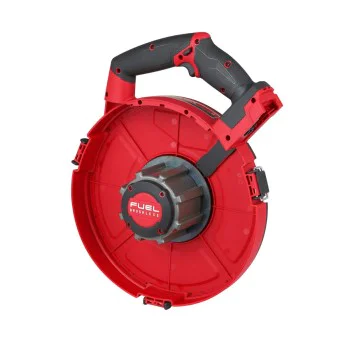
Probes are available in fiberglass, steel, nylon, and other polymer materials. Fiberglass options are valued for longer runs because they combine flexibility and stability. Steel probes provide excellent control for straight channels and heavier cables, while nylon probes are lightweight, flexible, and convenient for finer electrical installation tasks. Models with a reel or cassette keep the probe organized, protect it from kinking, and facilitate transport between sites.
| Type of probe | Characteristics | Typical applications |
|---|---|---|
| Fiberglass | Flexible, pressure-resistant, good for longer runs | Cable ducts, manholes, building installations |
| Steel | Stiffer, with good control in straight sections | Straight channels, heavier cables, maintenance work |
| Nylon | Lightweight and flexible, suitable for tight spaces | Residential electrical work, low-voltage lines, short runs |
Where is a cable pulling probe used
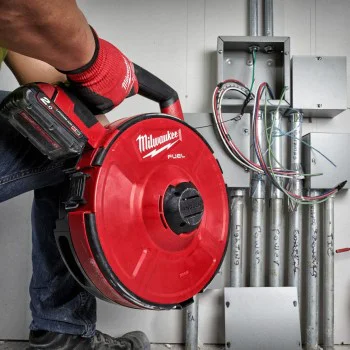
A cable pulling probe is used when installing new electrical systems, replacing old wires, adding internet and TV lines, and installing alarm, intercom, and video surveillance systems. It is useful in homes, offices, commercial spaces, workshops, warehouses, and construction sites where cable runs pass through walls, ceilings, floors, or junction boxes.
During renovations, the probe is invaluable because direct access to the entire route is often lacking. It helps locate the path through existing conduits and pull new cable without unnecessary chiseling. During maintenance work, it facilitates the quick addition of a conductor to an existing installation, and when installing network equipment, it ensures a cleaner and more controlled cable run.
How to choose the right probe
Selection starts with the length and complexity of the route. For short sections, a compact probe that's easy to store in a toolbox is sufficient. For long runs, extra length is needed to work comfortably through branches, boxes, and turns. Diameter also matters: thinner probes pass through narrow pipes, while thicker ones provide more rigidity under pressure.
- Route length: this should account for the actual path of the cable, not just the straight-line distance.
- Probe material: fiberglass for long and more difficult sections, steel for sturdier guidance, nylon for light installation work.
- Diameter and flexibility: a smaller diameter helps in tight pipes, while a larger one aids in pushing forward.
- Tip: a guide head, eye, or threaded connector makes it easier to grip the cable and navigate bends.
- Reel or cassette: convenient for frequent transport, on-site work, and storage in a service vehicle.
- Compatibility with accessories: replaceable heads, connectors, and repair parts extend the service life.
Tips, connectors, and practical details
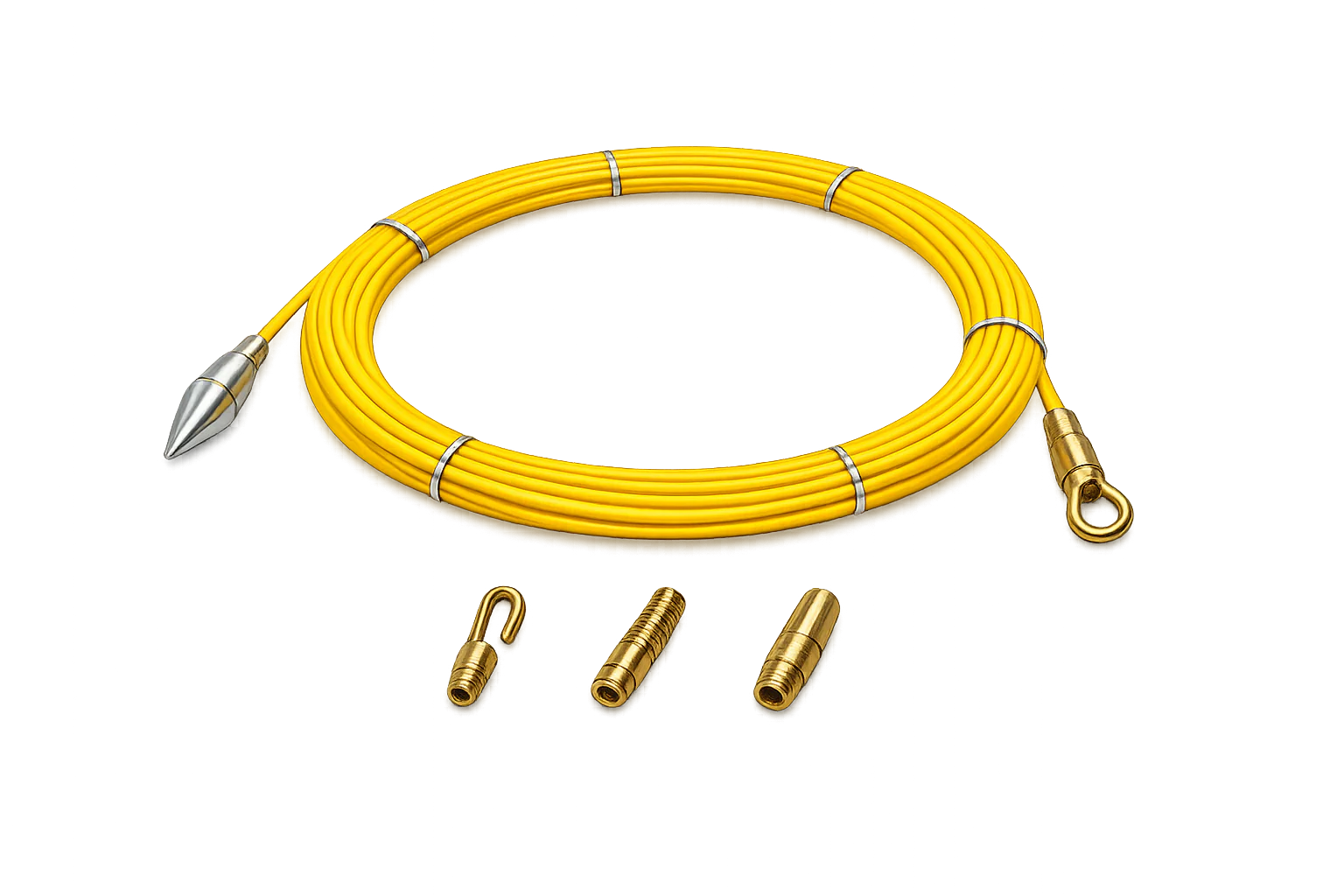
The tip is the part that first passes through the pipe and guides the probe along the route. Rounded guide heads are used for easier movement, and ears, rings, or threaded adapters are used to secure the cable. With heavier cables, a secure connection is particularly important because a loose connection leads to slipping in the pipe and the need to re-run the cable.
When working with multiple cables simultaneously, it is helpful to bundle the conductors tightly, without sharp edges and without excessive thickening at the connection point. Insulation tape, cable ties, or a suitable clamp can make the transition smoother. If there is significant resistance, it is wiser to check the route for blockages, a crushed conduit, or an overly sharp bend, rather than applying excessive force.
Safety and Maintenance
The cable probe works best when kept clean, straight, and free of surface damage. After use, it is advisable to remove dust, construction debris, and moisture, and to wind the reel evenly. Bent, delaminated, or heavily worn sections make it difficult to pass through pipes and can damage the cable insulation.
During electrical installation work, the routes should be checked for voltage before work begins, and cables should be pulled with moderate force. Sharp metal edges, coarse construction debris, and poorly cleaned openings can damage both the cable and the conductors. For a longer service life, store the tool away from heavy pressure, direct heat, and mechanical impacts.
Cable pulling probe for professional and DIY use
For electricians, low-voltage system installers, and service teams, the probe is an everyday tool that saves time during installation and maintenance. For discerning DIYers, it is useful for repairs, adding an outlet, running a LAN cable, replacing a TV line, or organizing cables in a workshop.
Browse the offerings at Toolsbox.bg and choose a cable puller based on the length of the route, material, diameter, and required attachments. This way, you'll have a tool that fits the specific installation task and helps ensure clean, safe, and organized cable routing.