
Machines for cutting granite tiles
Porcelain tile cutting machines for precise cuts in tiling projects
Porcelain tile cutting machines are essential when installing hard ceramic tiles, as clean edges and precise dimensions directly affect the final appearance of the flooring or wall cladding. Porcelain tile is a dense and wear-resistant material, so cutting it requires a stable guide system, proper pressure, a compatible cutting element, and control over chipping. This section of Toolsbox.bg features models for work on floors, walls, bathrooms, kitchens, patios, staircases, commercial spaces, and renovation projects where precision saves time and reduces tile waste.
Granite tile cutting machines are used by tiling professionals, construction crews, installers, and discerning homeowners. They facilitate straight cuts, diagonal cuts, shaping narrow strips, and making adjustments around corners, thresholds, drains, pipes, and other room elements. The right model provides a clean cut line, better control over the slab, and a lower risk of chipping on hard surfaces.
Applications in construction, renovation, and installation
When working with porcelain tiles, precision matters from the very first cut. The tiles are often large-format, high-density, and have a hard glaze, which makes processing difficult with unsuitable tools. Cutting machines facilitate the preparation of components for flooring, wall cladding, facade sections, baseboards, and decorative trim. During home renovations, they assist in adjusting individual slabs, and in professional settings, they accelerate batch work on the job site.
For straight cuts, stable guidance of the slab and uniform movement along the line are essential. For diagonal cuts, the guide line and the angle stop are crucial for accuracy. With thick porcelain tiles or textured surfaces, the choice of cutting disc, roller, or work surface affects the cleanliness of the edge. During wet cutting, water cools the cutting element and reduces dust, which is valuable during prolonged indoor work.
Types of Granite Tile Cutting Machines
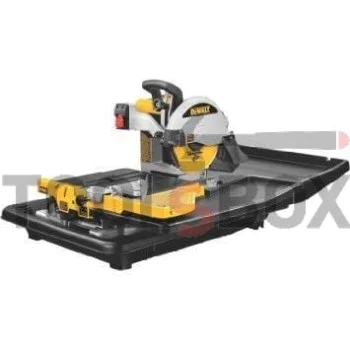
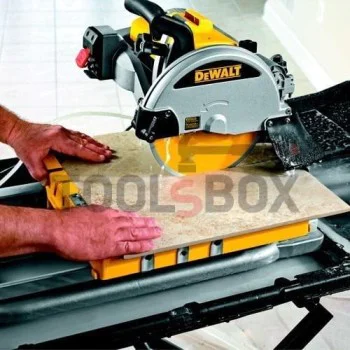
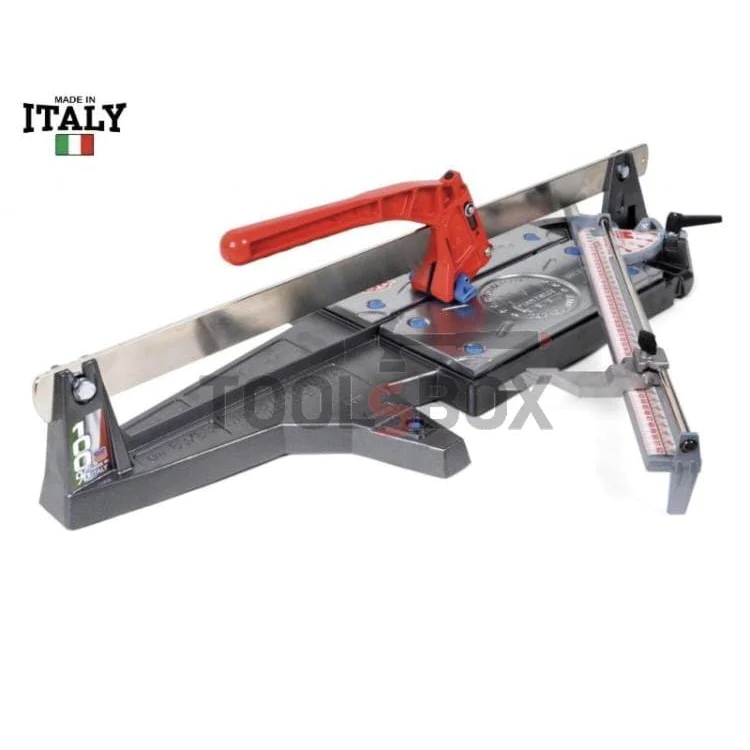
Granite tile cutting machines are available in various models, depending on the operating method and workload. Hand-held cutters are preferred for dry cutting of slabs with straight cuts. They use a cutting wheel that scores the surface, after which the slab is snapped along the line. Electric machines use a diamond blade and are suitable for harder materials, thicker slabs, long runs, and when a cleaner edge is required. Tabletop and stationary models provide better support for the workpiece, while water-cooled models reduce blade heating.
| Machine type | Typical application | Selection Guide |
|---|---|---|
| Hand-held cutter | Makes straight cuts, quick cutting, operates without a power supply | Cutting length, stability of the rails, quality of the cutting wheel |
| Electric disc saw | Hard porcelain tiles, thicker slabs, precise edges | Power, blade diameter, cutting depth, water cooling |
| Bench-top machine | Batch work, long cuts, construction sites | Table size, guides, angle adjustments, stability |
Criteria for selecting the right model
When purchasing machines for cutting granite tiles, the first considerations are the size and thickness of the slabs. Larger formats require a longer guide system or a larger worktable to prevent the material from twisting during the cut. For small adjustments during home renovations, a hand-held cutter with sufficient length is often a practical choice. For daily work on job sites, electric models with a diamond blade provide more consistent results across different series of porcelain tiles.
The next parameter is the type of cut. If the work involves mostly straight lines, handheld and bench-top models are convenient. For cuts under 45 degrees, shaping outside corners, or working with harder slabs, a model with precise angle adjustment and stable clamping is required. The blade diameter and maximum cutting depth depend on the material thickness. For water-cooled machines, it is helpful to check the water tank, water flow, and ease of cleaning after use.
Compatibility with consumables and accessories
The cutting element is crucial for a clean result. Electric machines use diamond blades for ceramics and porcelain tiles, while handheld saws use cutting wheels with the appropriate diameter and profile. An incorrect blade causes chipping, overheating, or slow cutting. Good compatibility between the machine, the blade, and the material reduces the load on the motor and protects the tile from damage. For more precise installation, guides, stops, angle gauges, spare wheels, water pumps, and support stands for large tiles are useful.
Safety, Maintenance, and On-Site Operation
Granite tile cutting machines must be used with safety glasses, gloves, hearing protection, and a dust mask during dry cutting. The slab must lie stable, without vibrations and without tension at the end of the cut. For electric models, the cable and water supply should be positioned so as not to obstruct movement. After use, the machine should be cleaned of dust, slurry, and material residue, and the cutting elements should be inspected for wear. Regular inspection of the guides, bearings, stops, and blade ensures accuracy for subsequent tasks.
At Toolsbox.bg, you can select granite tile cutting machines based on the size of the tiles, the type of cut, the workload, and the available consumables. Browse the options and choose a model that suits your needs-from a single repair at home to daily installation on a construction site.