
String for pulling cables
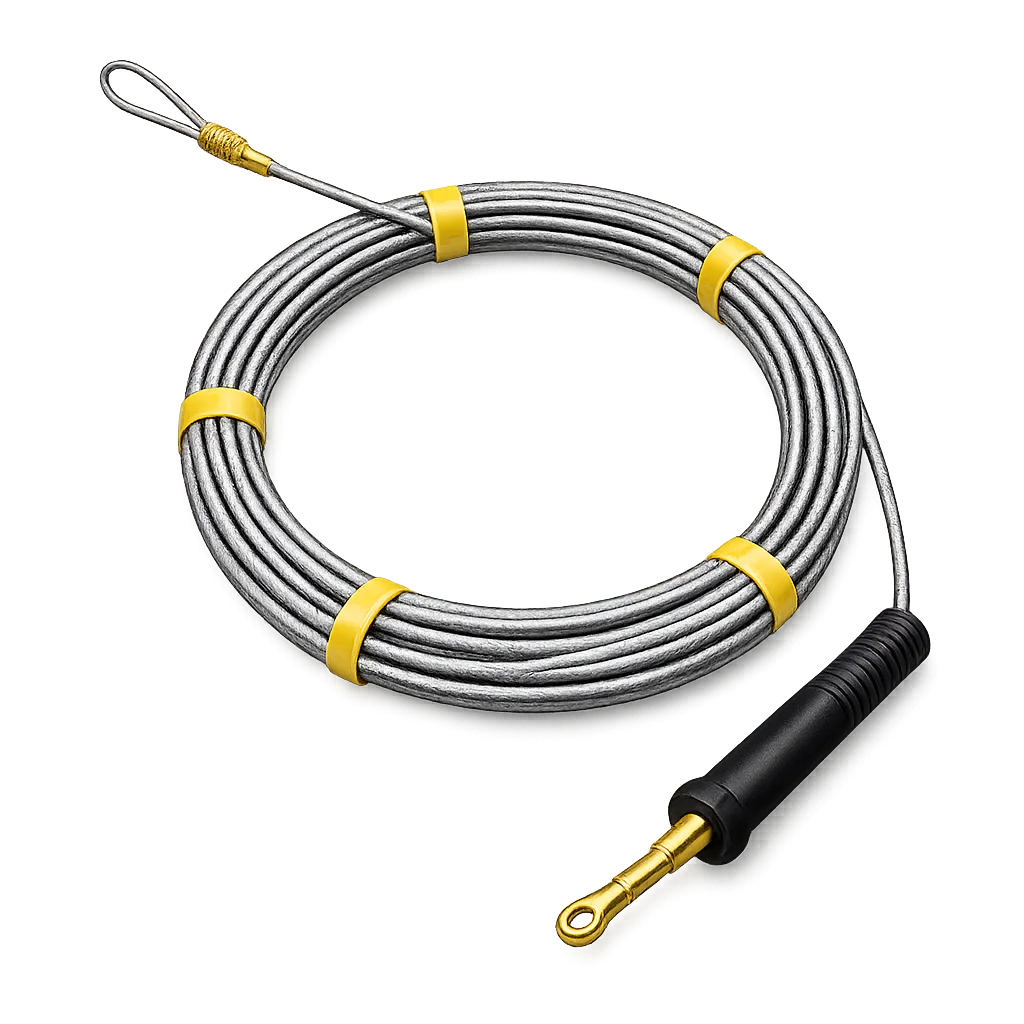
Cable pulling string - for guiding cables through pipes and conduits
A cable pulling string is a practical tool for pulling electrical wires, network cables, coaxial lines, and low-voltage installations through corrugated pipes, PVC conduits, cable shafts, and concealed routes. It guides the cable through bends, narrow sections, and longer runs where manual pulling is difficult or imprecise. Such a tool saves time during installation, repair, and maintenance of systems, reduces the risk of cable breakage, and provides better control when working in homes, offices, industrial facilities, service centers, and construction sites.
The range of cable pulling strings includes models with varying lengths, materials, flexibility, profiles, and end fittings. The selection depends on the route, pipe diameter, number of cables, pulling force, and frequency of use. For electricians, low-voltage system installers, and maintenance technicians, the stronger and longer options are a valuable tool. For home repairs and single installations, the more compact models offer convenience when running a cable to an outlet, light fixture, internet point, or junction box.
Types of cable pullers by material
The material determines how the cable puller behaves when bent, how it slides through the conduit, and its load-bearing capacity. For straight runs and greater pulling force, stiffer versions are preferred, while for many bends, more flexible options move more easily and follow the curves of the conduit.
| Material | Characteristics | Performance on the route |
|---|---|---|
| Steel wire | High stiffness, good traction, and stability under pressure | Straight lines, longer sections, pipes with less resistance |
| Fiberglass | Flexible body, good resistance to bending, and easy to coil | Corrugated pipes, bends, electrical installations in walls and ceilings |
| Polymer or nylon string | Lightweight, elastic, and convenient for precision work | Short runs, low-voltage cables, home repairs, and light installations |
Selection based on length, flexibility, and tensile load
The length of the string is selected according to the actual cable route, with a margin for maneuvering and securing the cable. Shorter options are convenient when working around junction boxes, outlets, lighting fixtures, and local cable channels. Longer pull strings are needed when pulling cables between rooms, along ceilings, through shafts, or in installation conduits with multiple bends.
Flexibility is crucial for passing through corrugated tubing and navigating bends. A very stiff string moves steadily forward but struggles in tight curves. A very soft string follows bends more easily but loses some of its thrust over long runs. In professional use, a balanced option is often preferred-one with sufficient stiffness for pushing and sufficient elasticity for navigating installation curves.
The pulling load is directly related to the number and cross-section of the cables. A single conductor in a free conduit requires less force, while a bundle of cables, a thicker power cable, or a conduit that is already partially filled places a greater load on the cable. During heavy pulling, a sturdy puller head, a secure grip, and smooth movement through the conduit protect the cable from damage.
Fittings, Reels, and Ease of Use
The end fittings are crucial for securing the cable. Models with an eye, hook, or flexible guide head make it easier to tie, secure with electrical tape, or attach to a cable sleeve. For more delicate cables, the grip should be smooth and compact to prevent snagging on sleeves, edges, or joints along the route.
Cables on a reel or drum are stored more neatly and unwind in a controlled manner. This is convenient when working in a workshop, on a construction site, or during frequent electrical installations. Hand-wound reels are more compact and easy to carry, making them ideal for tool bags, small repairs, and confined spaces.
Compatibility with cables, pipes, and accessories
Before purchasing, consider the pipe diameter, the type of conduit, and the cables to be pulled. In tight pipes with many bends, a thin and smooth wire moves more easily. For larger cables and longer runs, a more robust construction with a securely fastened guide is required. For low-voltage lines such as internet, video surveillance, intercom, and alarm systems, smooth pulling is particularly valuable, as these cables are sensitive to kinking and excessive tension.
For difficult runs, cable lubricant can be used to reduce friction inside the conduit. Electrical tape, cable sleeves, and compact connections between the string and the cable help ensure smooth passage without snagging. Abrupt pulling damages the insulation, loosens the tip, or jams the cable, so movement should be smooth, with short, even pulls and control from both ends of the route when access is available.
Safety and Maintenance
Working with a cable-pulling string requires a clear route and attention to electrical safety. Installation is performed on a de-energized system, with no voltage in the sections where conductors are being pulled. The string does not replace a measuring device and is not intended for testing for the presence of current. With metal versions, extra caution is required around panels, terminals, and existing lines.
After use, the cable puller is cleaned of dust, plaster, cable grease, and sharp particles. Coiling it without kinks extends its service life and preserves its elasticity. The ends are inspected for loosening, deformation, or sharp edges that could damage the cable during subsequent pulling.
Browse the selection of cable pulling strings at Toolsbox.bg and choose a model based on the route, length, material, and type of cables. This makes the installation of electrical and low-voltage lines more precise, cleaner, and more convenient for both professional work and precise home repairs.