
Tyre inflation gun
Tire Inflator for Precise Pressure Control
A tire inflation gun is a practical automotive tool for quickly inflating, topping off, and checking the pressure in car, motorcycle, bicycle, trailer, and other pneumatic tires with a standard valve. It connects to a compressor or pneumatic system and combines airflow control with a pressure gauge reading. This makes work in a garage, auto shop, tire shop, or workshop more precise, more convenient, and better controlled.
At Toolsbox.bg, you'll find tire inflators for service and home use, featuring various types of pressure gauges, hoses, nozzles, and connectors. Choosing the right model depends on the compressor, frequency of use, type of tires, and the required precision in pressure measurement.
What is a tire inflator?
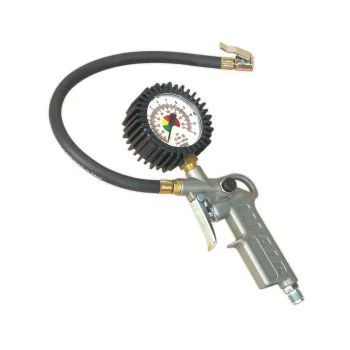
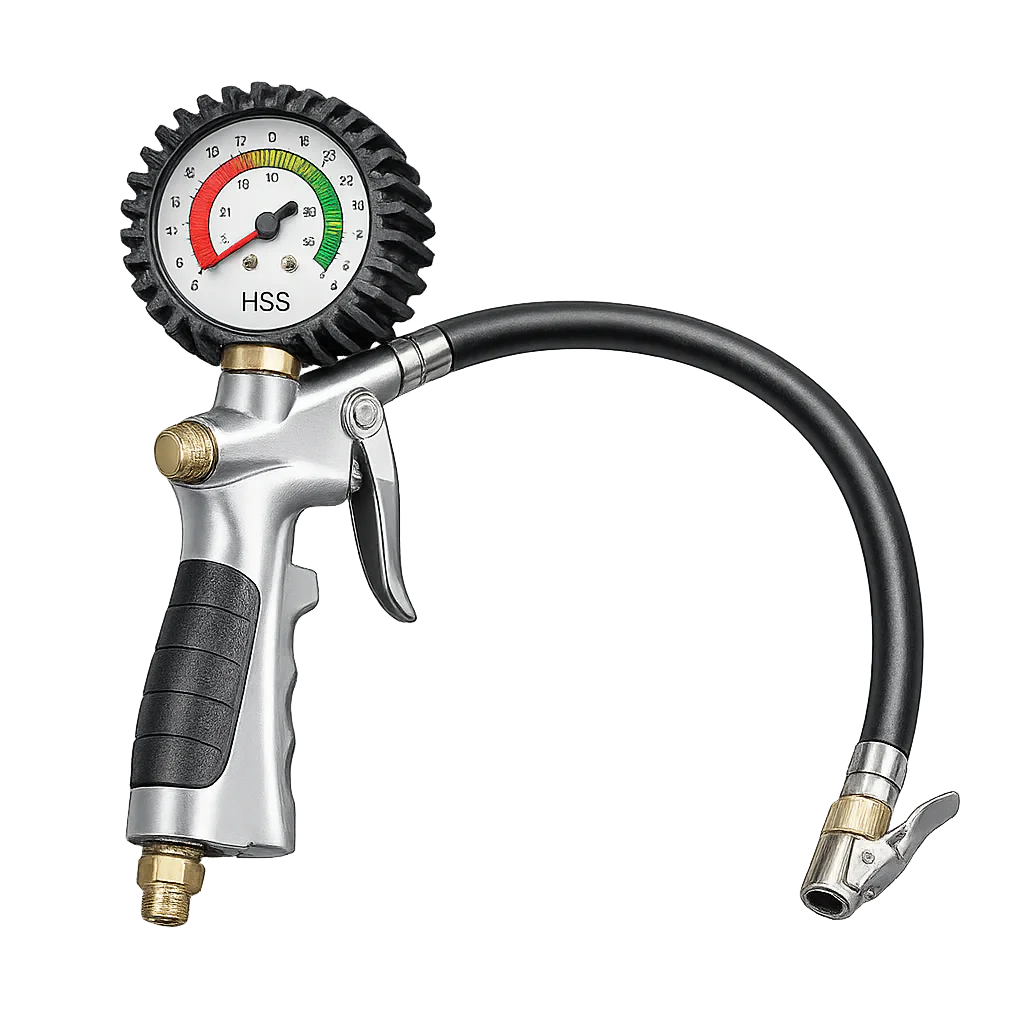
A tire inflator is a handheld pneumatic tool that delivers compressed air to the tire valve. Standard components include a trigger-operated handle, a pressure gauge, a hose, a valve nozzle, an air inlet, and a button or valve for releasing excess pressure. The pressure gauge allows you to monitor pressure levels during inflation without a separate measuring device.
Precise pressure adjustment is important for even tire wear, stable vehicle handling, and normal fuel consumption. In a service setting, the gun saves time because the operator measures, inflates, and adjusts the pressure with a single tool. For home use, it is convenient for seasonal tire changes, pre-trip checks, and maintenance of trailers, RVs, garden equipment, and small vehicles.
Types of tire inflators
Different models vary in their pressure display, nozzle design, hose length, and ease of use. The most common are pumps with an analog pressure gauge. They feature a dial that is easy to read and requires no batteries. This design has proven itself in daily service and garage maintenance.
Models with a digital display make it easier to read the values, especially in low light or when a more detailed reading is needed. Some models operate with different units of measurement, such as bar and PSI, which is convenient for vehicles with different markings on the pressure label.
The nozzles also matter. The locking nozzle secures to the valve and frees the operator's hand, while the standard push-on nozzle is easy for a quick check. The flexible hose facilitates access to valves on complex-shaped rims, dual wheels, motorcycles, and trailers.
Applications in service stations, garages, and workshops
Tire inflation guns are used for routine maintenance of passenger cars, vans, motorcycles, bicycles with a suitable valve, trailers, carts, workshop compressor systems, and fleet maintenance. In tire shops, the tool is part of the daily equipment, as every tire change or repair ends with pressure adjustment.
For the home garage, the air gun is a useful accessory for the compressor. It helps maintain proper tire pressure throughout the seasons, when temperature changes affect tire pressure levels. When traveling with a load, trailer, or RV, checking tire pressure becomes even more important, as the load requires proper pressure according to the vehicle manufacturer's instructions.
Criteria for choosing a tire inflator
A well-chosen tire inflator must be compatible with the compressor, operating pressure, and type of tasks. Check the connection to the air line, the thread or quick-connect fitting, the hose length, and the readability of the pressure gauge. For a high-volume service shop, look for a comfortable grip, a clear pressure gauge, and a durable body. For garage use, prioritize easy connection, compact size, and convenient storage.
| Item | What to Look For | Practical Use |
|---|---|---|
| Pressure Gauge | Analog or digital, clear scale, units of measurement | More accurate readings during inflation and adjustment |
| Hose | Flexibility, length, kink protection | Easier access to hard-to-reach valves |
| Nozzle | Lock-on or clamp-on type | Faster connection and less air loss |
| Connection to compressor | Compatibility with the pneumatic system | No unnecessary adapters or interruptions during operation |
Compatibility and safe operation
Before use, inspect the hose, nozzle, and pressure gauge. A damaged hose, loose fitting, or dirty nozzle makes measurement difficult and leads to air loss. The connection to the compressor must be secure, and the system pressure must comply with the permissible values for the tool and the tire.
When inflating, follow the values specified by the manufacturer of the vehicle, trailer, or equipment. Do not exceed the recommended pressure. When tires are hot, the reading changes, so for accurate adjustment, it is better to measure when the tires are cool. The release valve helps with fine-tuning when the pressure is higher than needed.
Maintenance of the air gun
After use, the tool must be depressurized and stored in a dry place, protected from dust and mechanical impact. The pressure gauge must not be struck or squeezed, as the accuracy of the readings depends on its condition. Periodically clean the nozzle of dust, sand, and rubber valve debris. When working in a service shop, it is advisable to monitor the condition of the seals and quick-connect fittings.
Browse the available options on Toolsbox.bg and choose a tire inflation gun that suits your compressor, work environment, and required measurement accuracy. This way, you'll equip your garage or service shop with a convenient tool for regular maintenance of tires and pneumatic wheels.