
Edge milling cutter
Edge router for precise machining of wooden components
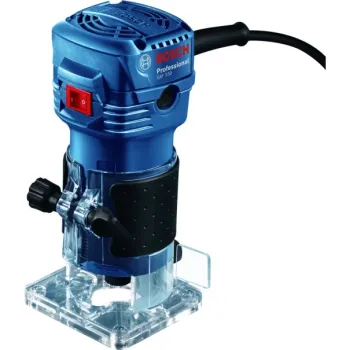
An edge router is a compact woodworking machine for shaping, leveling, and finishing edges on countertops, furniture, doors, decorative elements, and parts made of solid wood, MDF, particleboard, plywood, or laminated panels. This type of power tool is valued for edging, trimming edge banding, rounding sharp edges, chamfering, small profiles, and precise adjustments after cutting or assembly. Thanks to its compact body and stable base, the machine is easy to guide along the edge of the material and ensures uniform removal of material when working in a workshop, on a job site, or during home renovation projects.
Unlike larger routers, the edge router is lighter and more maneuverable. It is convenient for batch processing of narrow parts, for kitchen and furniture installation, for shaping openings, for template-based work, and for fine operations where control is more valuable than high power. The Toolsbox.bg product range includes models for professional use and for discerning DIYers looking for a clean edge, precise adjustment, and good compatibility with wood routers.
Applications for edging, profiling, and finishing
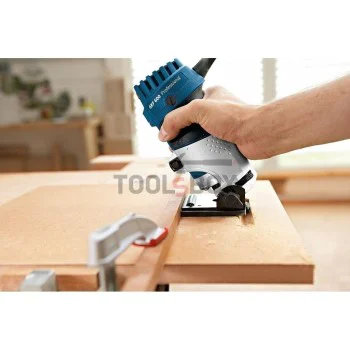
The edge router is used in furniture manufacturing and assembly, woodworking repairs, interior finishing, and fine surface finishing. When edging particleboard or MDF, it is used to flush protruding edge banding with the surface of the tabletop or side panel. When working with solid wood, the machine creates chamfers, radii, and decorative profiles that enhance the appearance and reduce the risk of edge chipping.
With the appropriate router, the edge banding machine is also used for template-based copy routing, for shaping small grooves, for cleaning up edges after rough cutting, and for finishing laminated surfaces. During installation work, the compact size is an advantage around walls, corners, finished furniture, and hard-to-reach areas. For workshops with a constant flow of orders, models with precise depth adjustment, stable guidance, and the ability to quickly change the cutting tool are valuable.
Types of edge routers by power source and design
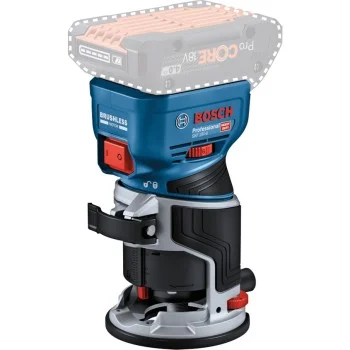
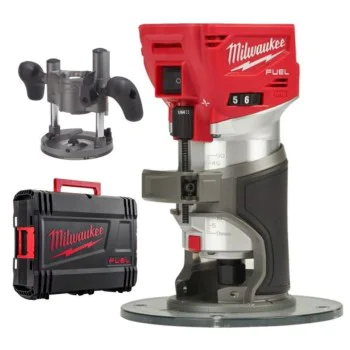
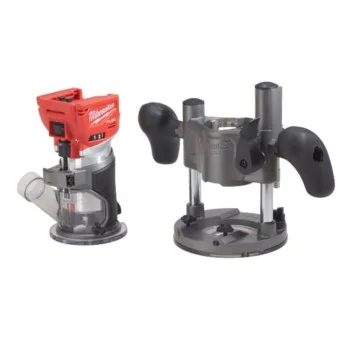
Models differ in power source, power, speed, base, adjustment, and accessories. The corded edge router is suitable for continuous workshop use where there is constant access to electricity and consistent performance is required when processing many parts. Cordless models offer freedom during installation, maintenance, and on-site work where a cord gets in the way or an outlet is not near the work area.
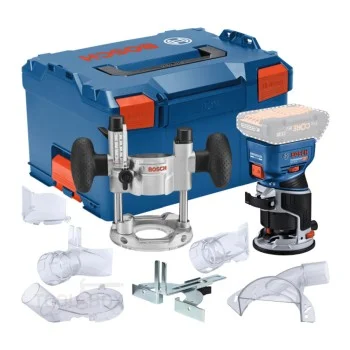
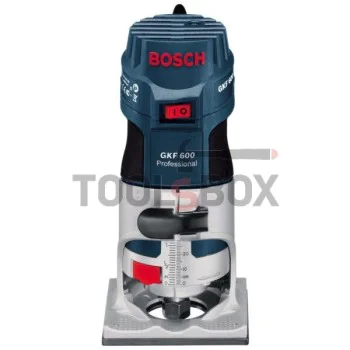
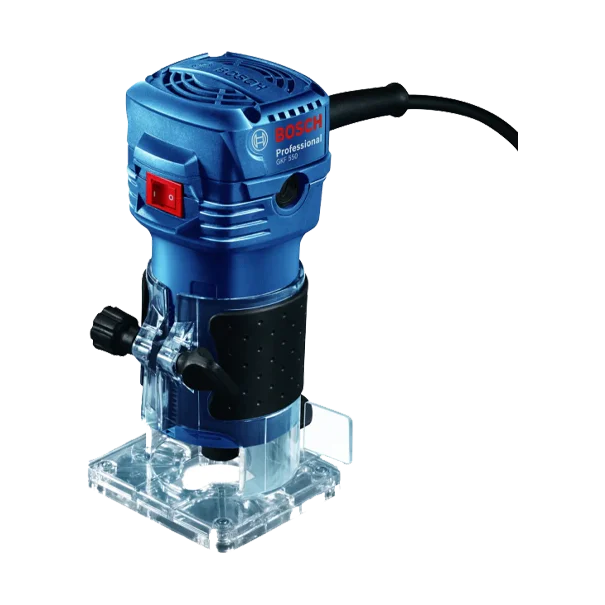
In terms of design, the shape of the housing, visibility of the router, the support surface, and the precision of the clamping mechanism are important. A transparent or well-shaped base makes it easier to monitor the cutting line. Some machines feature a parallel guide, a roller stop, a base for bevel cutting, or a dust extraction attachment. When working with laminated panels and veneer, better chip removal keeps the line clean and reduces re-scratching of the surface.
Criteria for Selecting an Edge Trimmer
Selection begins with the tasks the machine will perform. For trimming edge banding and light profiles, low weight, a comfortable grip, and fine depth adjustment are valuable. For harder wood, larger routers, or longer daily workloads, higher power, stable bearings, and good speed control are required. Adjustable speed is useful for different router diameters and materials of varying densities.
- Power and speed: affect the removal rate, edge finish, and performance in hard wood.
- Shank and compatibility: Check the shank diameter of the router bits-common sizes are 6 mm, 8 mm, and 1/4 inch, depending on the model.
- Depth adjustment: the fine scale and secure lock reduce the risk of an uneven edge.
- Base and guides: The parallel guide, roller, and tracing elements aid in achieving repeatability for serial parts.
- Ergonomics: The slim body, comfortable grip, and clear view of the cutting area make the work more controllable.
- Dust extraction: The vacuum connection maintains a cleaner work environment and better visibility.
Routers, accessories, and compatibility
The quality of the finish depends not only on the machine but also on the router bit selected. For edges, straight router bits, copy router bits, rounding router bits, chamfering router bits, and profile options for decorative edges are used. The diameter, shape of the cutting edge, and blade material are selected based on the surface, type of wood, and desired profile. A sharp bit cuts cleaner, generates less heat, and reduces strain on the motor.
Compatibility between the collet and the router shank is essential for secure clamping. A router with an unsuitable diameter should not be secured using improvised sleeves or unintended adapters. When working on laminated panels, it is advisable to monitor the feed direction to minimize chipping of the decorative layer. When working with solid wood, a test cut on a scrap piece helps adjust the depth and feed speed.
Safety, Maintenance, and Precision
The edge router operates at high speeds, so secure clamping of the workpiece and proper tightening of the router are essential for a clean and safe result. Safety goggles, hearing protection, and dust extraction are essential equipment for woodworking. The machine should only be turned on after it is securely positioned, and the feed should be smooth, without forcing the tool or making sudden deviations from the edge.
Regular cleaning of the base, ventilation openings, and collet maintains guidance accuracy and reduces wear. For cordless models, it is advisable to store the batteries in a dry place and charge them according to the manufacturer's instructions. For corded machines, check the condition of the cord and the clamping mechanisms. A well-adjusted router, a sharp bit, and a steady hand result in a smooth edge with minimal need for additional sanding.
Choose an edge router from Toolsbox.bg
At Toolsbox.bg, you'll find edge routers for furniture manufacturing, installation work, repairs, and hobby woodworking. Compare models by power source, power, RPM, collet, depth adjustment, guides, and accessories to select a machine that suits the material, workload, and routers available in your workshop. This ensures more precise edge processing, a cleaner finish, and more comfortable operation for every task involving wood and panels.