
Telescopic struts
Telescopic props for construction, repair, and installation
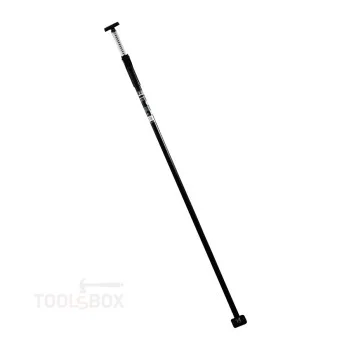
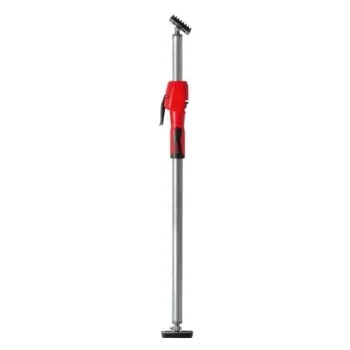
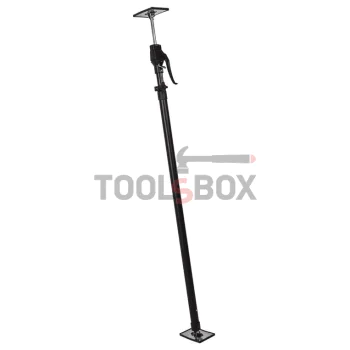
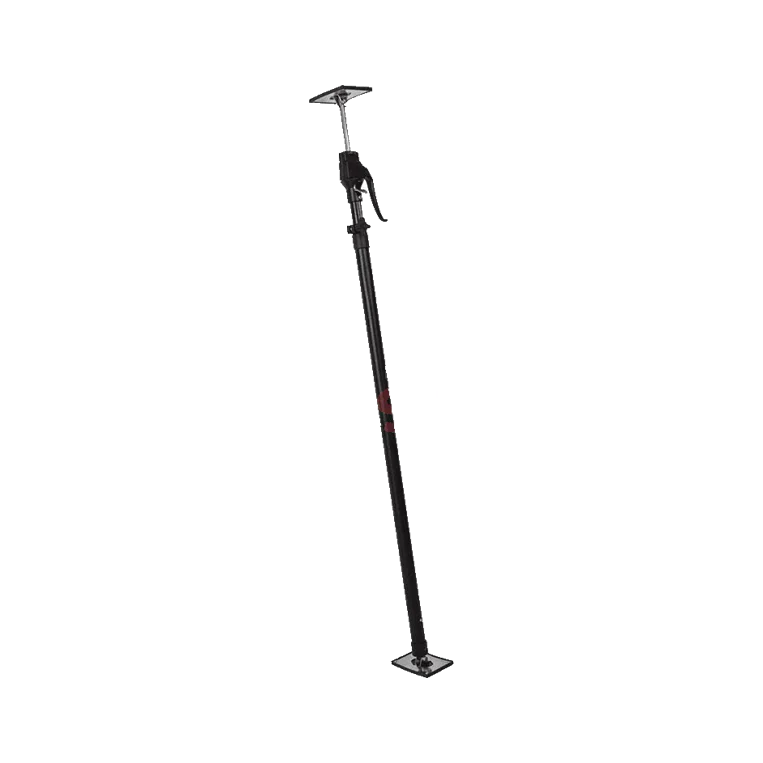
Telescopic props are practical equipment for temporarily supporting, securing, and leveling structural elements during work. They are used in formwork, drywall construction, panel installation, positioning of formwork, reinforcement of beams, ceiling panels, and other components that must remain stationary until they are permanently secured. The adjustable length allows for quick adjustment to the working height, and the sturdy metal construction ensures safe load-bearing during construction and renovation tasks.
Toolsbox.bg offers telescopic props for professional teams and discerning DIYers who seek precision, stability, and ease of installation. The various models differ in working range, load capacity, mounting type, base plate shape, material, and surface protection. These characteristics determine whether a particular prop is more suitable for ceiling installation, formwork, interior renovations, or as a temporary support during component replacement.
Main applications of telescopic props
Telescopic props are used where controlled support of a component is required without constant manual effort. In drywall construction, they facilitate the positioning of drywall panels against a ceiling or sloped surface. In formwork and concrete work, the sturdier models can handle temporary vertical loads until the construction phase is complete. When installing doors, windows, and frames, the props help with precise alignment before securing with fasteners or construction foam.
- Drywall construction: holding panels, profiles, and ceiling elements in place during installation.
- Formwork: Temporary support of formwork, beams, and horizontal structures.
- Repair and finishing work: stabilizing casings, frames, panels, and cladding.
- Workshop and service: supporting parts during assembly, adjustment, or position control.
Types and differences between models
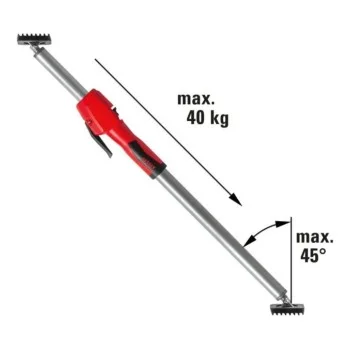
With telescopic props, the design appears similar, but the technical differences have a direct impact on performance. Lightweight assembly models are typically suitable for interior work and can be quickly adjusted via a telescopic mechanism. Construction formwork props are more robust, with larger pipe diameters and locking mechanisms designed for heavier loads. Some models feature a screw-based fine-tuning mechanism that allows for more precise control of the pressure applied to the supported surface.
| Support type | Application | What to look for |
|---|---|---|
| Lightweight construction | Drywall, panels, frames, interior renovation | Working height, rubber tips, convenient locking mechanism |
| Construction telescopic | Formwork, beams, temporary support in construction | Load capacity, tube thickness, support plates, locking pin |
| With screw adjustment | Precise leveling and pressure control | Screw travel, smoothness of adjustment, stability under load |
Criteria for selecting telescopic props
The correct selection starts with the working height. The specified range must cover the minimum and maximum distance between the support points without the mechanism operating in the end position at all times. For ceilings, high-ceilinged rooms, and formwork systems, a longer length is required, while for installing window frames and interior panels, a compact prop with a lower dead weight is often more convenient.
Load capacity is the next parameter. It must account for the actual load, the number of supports, and the method of weight distribution. In construction work, it is prudent to select a model with sufficient reserve capacity, without exceeding the specifications provided by the manufacturer. For installation tasks involving lightweight panels, convenient adjustment, stable end caps, and quick release after the job is complete are more important.
Material, base plates, and locking mechanism
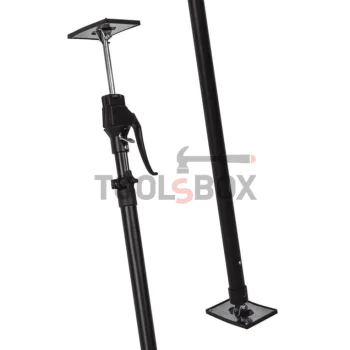
Telescopic props are typically made of steel, and their surface is painted, powder-coated, or galvanized depending on the series. The coating protects the metal when working in a construction environment where there is dust, moisture, and contact with rough surfaces. The base plates affect stability: wider plates distribute pressure more effectively, and rubber contact elements protect finished surfaces during indoor installation.
The clamping mechanism must operate tightly, without play or jamming. For heavier tasks, a clear pin position, sturdy threads, and the ability for fine adjustment are valued. When frequently changing workstations, a comfortable grip, easy portability, and a clear adjustment scale save the installer time.
Safety and Proper Operation
Telescopic supports should be placed on a level and stable surface, without slippery materials beneath the support point. The load must be vertical and well-centered, as lateral pressure reduces stability. When working with multiple props, ensure even weight distribution and check each fastening before continuing the installation. Do not subject the props to impact loads, extend them with non-original extensions, or use damaged tubes, deformed plates, or worn locking elements.
Maintenance is simple but crucial for a long service life. After use, clean the mechanism of dust, cement, and plaster; protect threaded parts from contamination; and inspect moving parts for wear. Storing the unit in a dry place minimizes corrosion and preserves smooth adjustment.
A practical choice for construction sites, workshops, and repairs
Telescopic props are a valuable aid for tasks where the precise positioning of the workpiece and stable temporary support affect the final result. When selecting, compare the working range, load capacity, locking mechanism, type of support plates, and ease of transport. Browse the offerings at Toolsbox.bg and choose telescopic supports based on the specific job, load, and site conditions.