
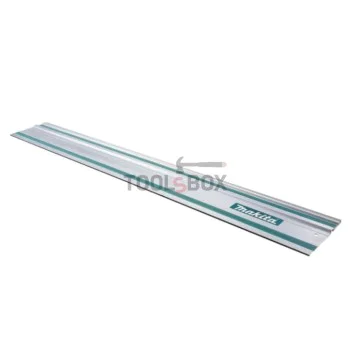
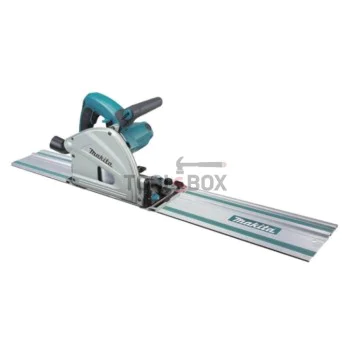
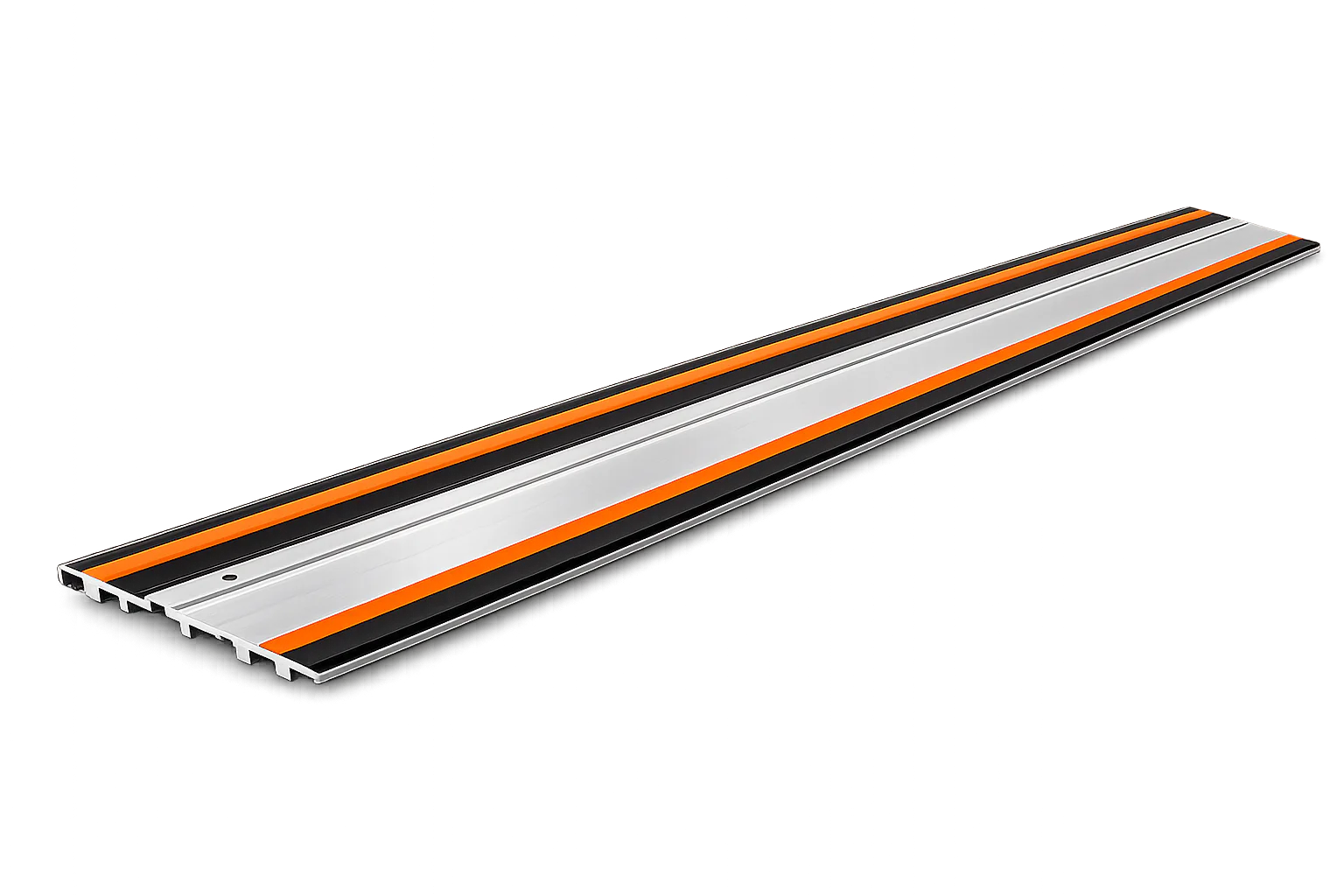
Lineal for circular saw
Circular Saw Guide - Precise Control for Straight Cuts
A circular saw guide is a practical tool for cutting panels, boards, laminated panels, plywood, OSB, and other sheet materials. It guides the saw in a straight line and reduces the deviations that occur when cutting by hand. Whether for construction work, furniture making, home repairs, or workshop projects, a high-quality circular saw guide ensures clean cuts, consistent lengths, and better control over the power tool.
This section features rip guides, guide rails, parallel stops, and related accessories for hand-held circular saws. They vary in length, profile, material, mounting method, and compatibility with specific machines. A circular saw guide is selected based on the type of cuts, the size of the workpiece, and how the tool is secured to the rail or the edge of the material.
What is a circular saw guide used for?
The main purpose of the guide is to keep the cutting line stable from the start to the end of the cut. This is valuable when cutting large panels, shortening doors, building shelves, installing kitchen countertops, paneling, flooring, and building panels. A circular saw guide rail provides better repeatability for serial cuts and reduces the need for additional adjustments with hand tools.
When working with laminated or veneered surfaces, stable guidance also results in a cleaner edge. When the machine doesn't "wobble" sideways, the blade runs more predictably, and the cut line stays closer to the pre-marked line. For professional use, this saves time during installation and finishing operations, and for home use, it helps achieve a more precise result even when using a circular saw less frequently.
Types of circular saw guides
A circular saw guide can be a standalone guide rail, a parallel stop attached to the machine, or part of a kit with clamps and connecting elements. The different solutions behave differently during short, long, and repetitive cuts.
| Type | Usage | Practical features |
|---|---|---|
| Guide rail | Makes straight cuts along the length of workpieces | Stable support, allows for working with larger workpieces |
| Parallel stop | Cuts to a uniform width from the edge | Compact size and quick setup for repetitive operations |
| Modular ruler | Longer cuts | Connecting individual sections with connectors |
| Set with clamps | Work on smooth or large materials | More secure clamping to the workpiece during cutting |
How to choose the right size and design
Length is one of the key parameters. A short circular saw guide is convenient for small workpieces, cross cuts, and working in confined spaces. Longer guides are practical for cutting large-format panels, where interrupting the guide in the middle of the cut would result in inaccuracy. With modular versions, the individual sections allow for extension depending on the specific task.
The profile material affects weight, torsional rigidity, and portability. Aluminum guides are preferred for their good balance of weight and stability. For more intensive work, pay attention to the profile, straightness, clamping channels, anti-slip strips, and the ability to position the guide precisely relative to the cutting line.
Compatibility with the circular saw is crucial when making a purchase. Some machines work directly on a specific profile, while others require an adapter or a special base. Check the width of the base plate, the guide method, the permissible cutting depth when working on a rail, and the ability to mount a stop. This way, the circular saw guide will fit the machine and will not restrict its movement.
Securing, Safety, and Precision
A securely fastened circular saw guide reduces the risk of the guide rail slipping on the workpiece. For longer cuts or smooth surfaces, clamps are a useful accessory because they hold the guide rail steady without hindering the machine's movement. When working with delicate surfaces, it is important that the contact areas do not leave marks on the material.
Precise adjustment begins with clearly marking the cutting line and correctly positioning the guide rail relative to the blade. Different circular saws have different distances between the blade and the edge of the base, so this must be taken into account when aligning. On systems with a rubber guide rail, the first cut can establish a precise reference line for the specific blade and machine.
Safe operation requires stable support of the workpiece, a straight cutting blade, appropriate speed for the material, and free movement of the cord or cordless tool. A circular saw guide does not replace personal protective equipment, but it improves control over the power tool and makes it easier to maintain a consistent cutting direction.
Accessories and Maintenance
Clamps, connectors, adapters, stops, spare anti-slip strips, and anti-chipping inserts can be used with the guide rails. These additions expand the working range and make adjustments more convenient for different materials. If you already own a circular saw, your choice of a circular saw guide should take into account the available accessories and future tasks in the workshop, on the construction site, or in your home workshop.
Maintenance is easy but important for accuracy. The guide must be protected from impacts, contamination with glue, resin, and metal shavings. The guide channels should be cleaned regularly, and the grip strips should be replaced when worn. Storing the guide on a flat surface or in a protective case protects it from bending and scratching.
Choosing a circular saw guide from Toolsbox.bg
A circular saw guide is a small but very useful accessory for precision, repeatability, and smoother operation with a hand-held circular saw. Browse the models at Toolsbox.bg and choose the length, mounting type, and compatibility based on your machine, the material, and the tasks you're performing.