
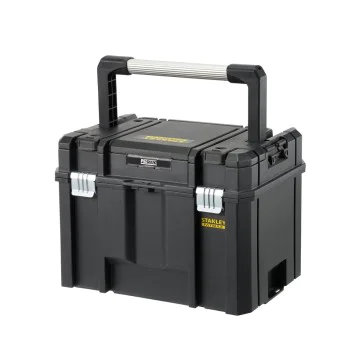
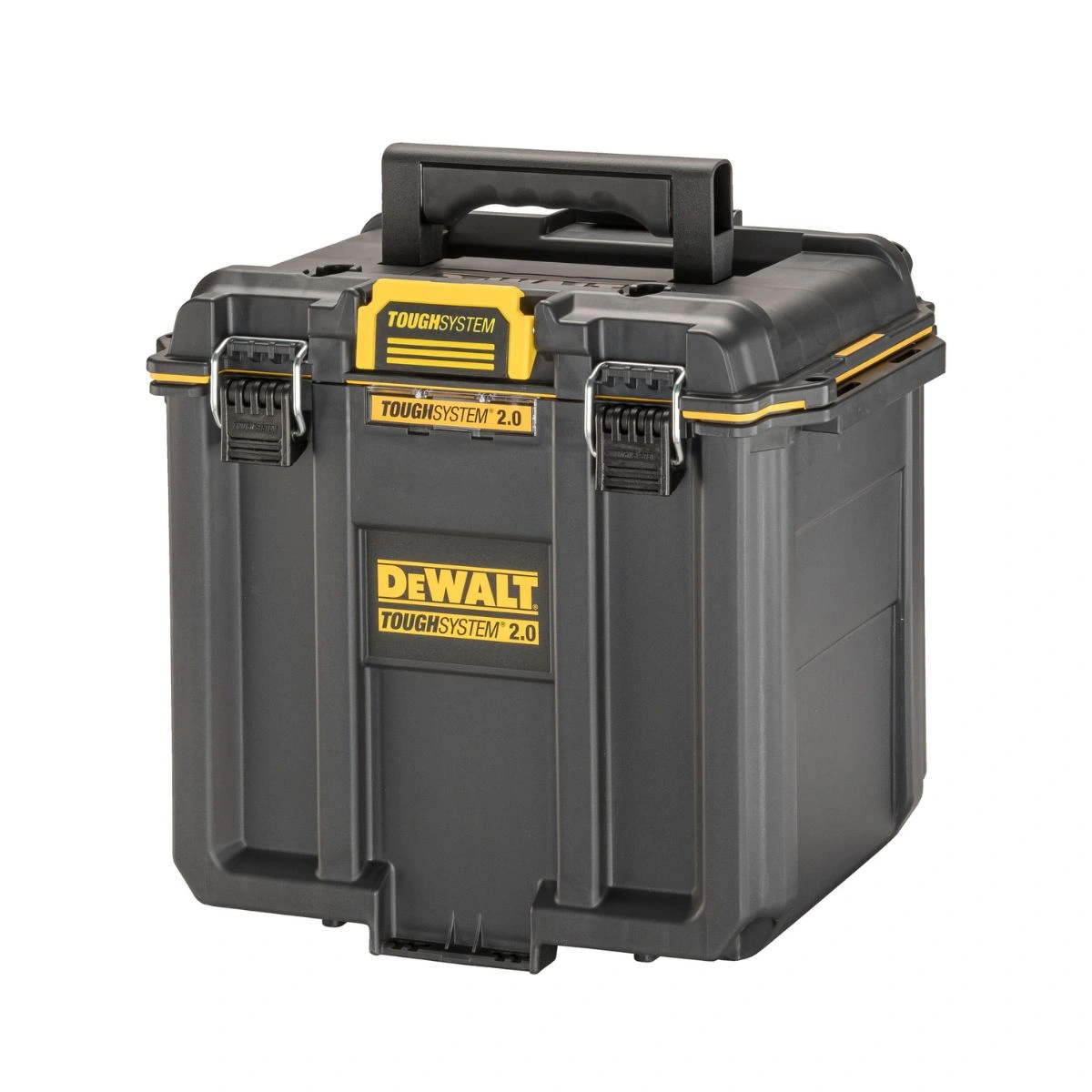
Large toolbox
Large tool case for organized and safe work
A large tool case facilitates storage, transport, and quick access to hand tools, power tools, bits, drill bits, fasteners, and small accessories. It is a valuable helper in workshops, service centers, construction sites, service vehicles, and home garages, where tools are often numerous and require clear organization. The larger capacity allows the set to stay in one place, without being scattered across drawers, bags, or separate boxes.
For high-capacity cases, practicality comes from the combination of interior space, a sturdy body, secure fasteners, and a comfortable handle. Some models are designed for heavy hand tools, while others are intended for combined sets with power tools, chargers, batteries, and accessories. Good organization saves time during repairs, installation, and maintenance because the necessary tool is found quickly and remains protected during transport.
What fits in a large tool case
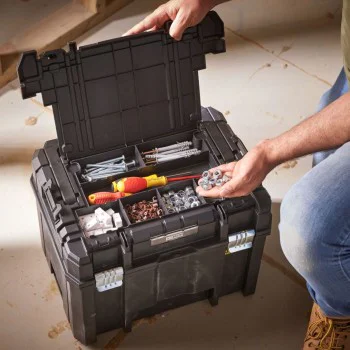
A large tool case offers more space than a standard box and allows for the organization of a variety of equipment. The internal layout matters for how you work: the deep main compartment is convenient for larger tools, while removable trays and dividers help sort small items. Models with compartments in the lid can hold screws, dowels, bits, knives, washers, and other small parts.
- Hand tools: pliers, screwdrivers, wrenches, ratchets, hammers, knives, tape measures, and levels.
- Power tools: screwdrivers, drills, multi-tools, chargers, and batteries, when space allows.
- Accessories and consumables: drill bits, bits, discs, blades, tips, fasteners, and replacement parts.
- Service kits: tools for maintenance, installation, plumbing, electrical work, furniture, and auto repairs.
Size, layout, and load capacity
A large tool case is selected based on the kit's volume, the weight of the tools, and the method of transport. For long tools, internal length is the key factor, while for small parts, compartments, dividers, and trays are more valuable. For heavy sets, a wider handle, reinforced hinges, and sturdy locking mechanisms are useful. For daily work at different locations, a model with wheels and a telescoping handle reduces the strain of carrying.
| Criterion | Practical significance |
|---|---|
| External and internal dimensions | Determine whether the case can hold long tools, machines, and bulkier accessories. |
| Number of compartments | Helps organize hand tools, consumables, and fasteners. |
| Case material | Affects weight, durability, and protection against impact or pressure. |
| Latches and hinges | Ensure a secure closure during transport and on-site use. |
| Handle, wheels, telescopic handle | Improve comfort when carrying a heavy set. |
Materials, body, and locking mechanism
The case body must protect the contents from dust, light impacts, and shifting. Plastic models are lightweight and convenient for everyday home use, while the more robust versions with reinforced areas better withstand the strain of service and installation work. Metal latches are preferred for heavier sets, while plastic latches reduce weight and are practical for moderate loads.
A large tool case with well-shaped internal ribs, a sturdy tray, and secure dividers keeps tools organized and reduces the risk of damage to blades, bits, and measuring tools. Some models allow for a padlock, which is useful when working in shared spaces, warehouses, and construction sites. For power tools, it's a good idea to leave space for a charger, batteries, and essential supplies without pinching cables or sensitive parts.
Applications in service, construction, installation, and home repairs
A large tool case is practical for craftsmen, technicians, installers, mechanics, and discerning DIYers. In a service setting, it keeps tool sets organized by task-electrical repairs, mechanics, plumbing, furniture assembly, or general maintenance. On a construction site, it helps transport tools between rooms, floors, and work areas with a lower risk of loss.
For a home workshop, the large case is convenient when tools aren't kept permanently on a wall panel or in a cabinet. After a repair, everything is stored in one place, and for the next task, the set is ready to go. For mobile teams, good internal organization facilitates a quick check before heading to a site and reduces the likelihood of forgetting small but necessary accessories.
Practical tips before buying
When comparing models, it's helpful to consider not only the total volume but also the actual internal layout. A large tool case with too few compartments can hold a lot of items, but small parts may get mixed up. A model with too many dividers, on the other hand, limits space for larger machines and tools. The best results come from a combination of a main compartment, a tray, and small boxes or slots for accessories.
- Compare the interior length to the longest tool in your set.
- Consider the total weight when full, not just the empty weight of the case.
- Choose a handle and fasteners based on how often you'll be carrying it.
- Check whether the compartments are suitable for bits, drill bits, fasteners, and small accessories.
- When working on job sites, pay attention to secure closure and the ability to lock the case.
Organization, Maintenance, and Safety
To extend the case's lifespan, do not overload it beyond its reasonable capacity and distribute heavy tools evenly. Sharp knives, chisels, and drill bits should be stored in separate slots or cases to prevent damage to the case and other accessories. After working in a dusty environment, clean the interior, as sand and construction dust can hinder the movement of hinges, trays, and locking mechanisms.
A large tool case is more than just a storage space-it keeps things organized, protects your equipment, and makes your daily work more efficient. Browse the models at Toolsbox.bg and choose the size, layout, and construction that best suit your tool set, how you carry it, and the workload during use.