
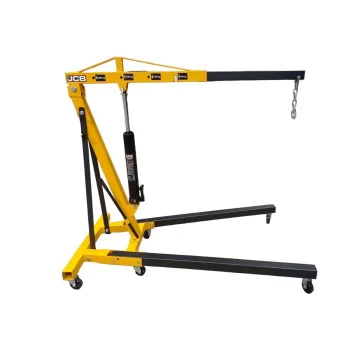
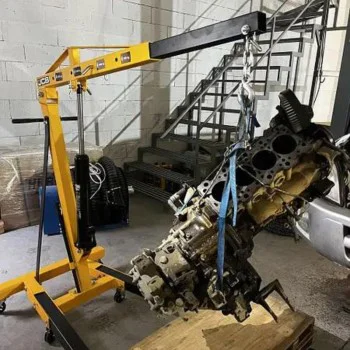
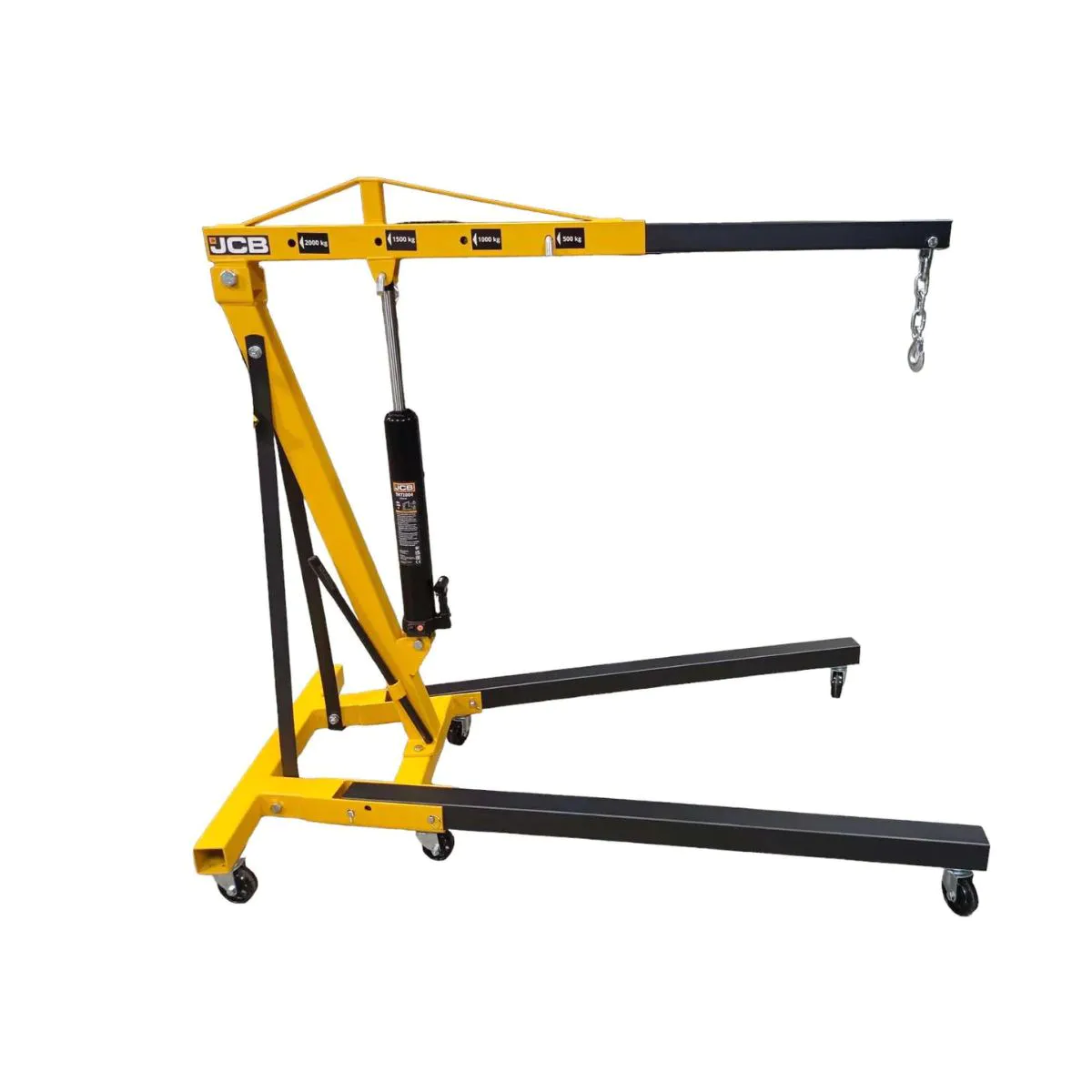
Giraffe for engine
Engine Crane for Lifting and Servicing Automotive Components
An engine jib is a specialized automotive service crane designed for lifting, removing, positioning, and installing engines, transmissions, and other heavy components. It facilitates work during the repair of cars, vans, and light commercial vehicles by providing control over the load and reducing the physical strain on the mechanic. In a service center, workshop, or well-equipped home garage, this type of equipment saves time on operations that are difficult to perform with hand tools alone.
Toolsbox.bg offers solutions for automotive service where load capacity, boom reach, hydraulic type, and frame stability are key parameters. A properly selected engine lift assists in removal without unnecessary twisting of the engine, ensures more precise positioning when reinstalling, and facilitates work around the vehicle's engine bay.
Application in auto repair shops and garages
An engine jib crane is used for major engine overhauls, clutch replacement, transmission servicing, shock absorber replacement, work on hard-to-reach front suspension, and other operations requiring controlled lifting. When disassembling a vehicle component, the jack holds the unit securely in place while the mechanic loosens fasteners, cables, hoses, and other components.
For professional use, models with higher load capacity, a reinforced frame, smooth hydraulics, and wheels that move securely on the workshop floor are preferred. For home use, a foldable design is often preferred because it takes up less space once the repair is complete. In both scenarios, the load must be lifted slowly, using a well-centered chain or balancer, and with sufficient clearance around the vehicle.
Types and Design Differences
The most common is the hydraulic engine jack with a hand pump and a telescopic boom. The hydraulic cylinder lifts the load smoothly, and the boom locks into various positions. With a more extended boom, the permissible load decreases, so the markings on the arm must be observed. Some models have a folding base, while others feature a more robust stationary frame for intensive service work.
There are also differences in the wheels, the width of the base, the length of the legs, the lifting height, and how the boom is locked in place. A wider base provides greater stability, while the low profile of the legs makes it easier to maneuver under a vehicle or lift. In tight workspaces, compact dimensions are an advantage, but you shouldn't compromise on load capacity and balance.
Load Capacity and Lifting Height
When selecting a crane for an engine, the first consideration is the weight of the unit to be serviced. Small gasoline engines are lighter, while diesel engines, V-type engines, and engines with a mounted transmission require a larger capacity reserve. It is good practice not to operate the crane at the limit of its rated capacity. Working with a margin in the load capacity ensures smoother control and less stress on the hydraulic system.
Lifting height is also critical for vehicles with a higher cargo bed or when removing an engine over the front crossmember. The length of the boom determines how far the hook reaches into the engine compartment. If you frequently work with different vehicles, a telescopic arm with multiple positions helps ensure a more precise fit for the specific task.
Compatibility with accessories and safe operation
An engine crane is often combined with chains, hooks, slings, and an engine balancer. The balancer facilitates adjusting the angle when removing and reinstalling the engine, which is useful for vehicles with limited space around the passenger compartment and radiator frame. Chains and fasteners must be sized for the actual load and attached to sturdy mounting points.
The work area must be level, clean, and free of obstacles around the wheels. Moving a lifted load over long distances is not recommended, and if positioning is necessary, movement must be slow and controlled. Before loading, inspect the hydraulic cylinder, bolts, locking pins, hook, wheels, and welds. If there are signs of leakage, deformation, or loosening, stop work until the problem is resolved.
Maintenance and Practical Considerations When Purchasing
Every engine giraffe requires periodic inspection and proper storage. The hydraulic system must be protected from impacts and contamination; the joints and wheels must be cleaned; and the fasteners must be checked after heavy-duty operations. For foldable models, the locking mechanisms must be securely fastened before loading.
When purchasing, pay attention to the load capacity at different boom positions, the maximum height, the base dimensions, the folding function, the type of wheels, and whether a hook or chain is included in the set. For a service shop with daily engine work, more robust solutions with a convenient hydraulic pump are more suitable. For periodic repairs in a garage, a folding crane that can be stored away after use is a practical choice.
Browse the options at Toolsbox.bg and select an engine lift based on load capacity, lifting height, and available space in the work area. This will ensure more precise control during the removal, repair, and installation of heavy automotive components.