
Attachments for screwdriver
Screwdriver bits for precise installation and comfortable use
Screwdriver attachments expand the scope of the tool's capabilities for tightening, loosening, and installation in hard-to-reach areas. They are placed between the screwdriver and the working tip or bit, altering the angle, length, grip, or method of torque transmission. This makes a standard tool more versatile for repairs, furniture assembly, finishing work, maintenance tasks, and workshop operations.
These accessories are invaluable for tasks where direct access to the screw is limited by a wall, housing, profile, cabinet, pipe, or other element. Screwdriver attachments are used by installers, construction technicians, furniture makers, auto mechanics, and DIY enthusiasts who value better control and a cleaner finish when tightening screws.
What Do Screwdriver Attachments Include?
The range of screwdriver attachments includes various types of adapters and holders designed for use with bits, sockets, and extensions. Some are designed to change the working angle, others to reach deep holes, to magnetically hold the bit, or to switch from a hexagonal drive to a square drive for sockets. What they all have in common is that they facilitate installation and protect the fasteners from damage when used correctly.
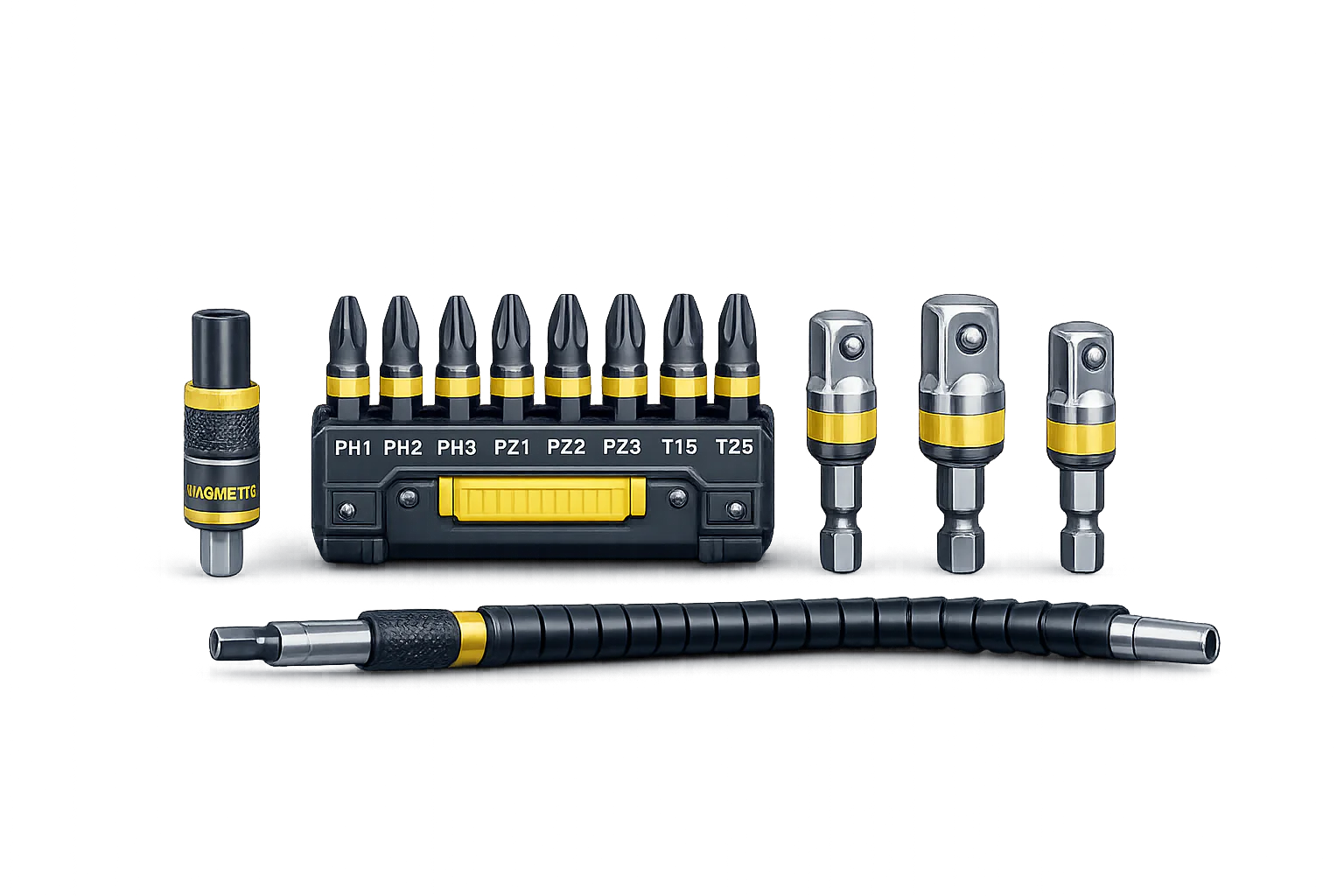
Among the most sought-after options are angle attachments, flexible extensions, magnetic holders, socket adapters, depth stops, and extended bit holders. Each type has a specific purpose and should be selected based on the type of fastener, the work location, and the screwdriver's specifications.
| Type of attachment | Practical application | Suitable for |
|---|---|---|
| Angle attachment | Transfers torque at an angle | Installation against walls, in cabinets, around profiles and beams |
| Flexible extension | Follows a curved path to the fastener | Service, furniture, appliances, hard-to-reach openings |
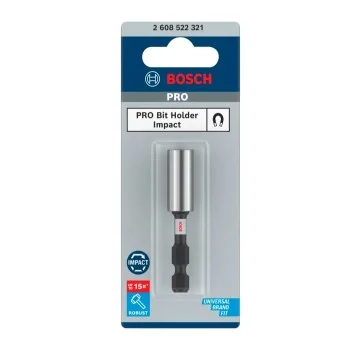
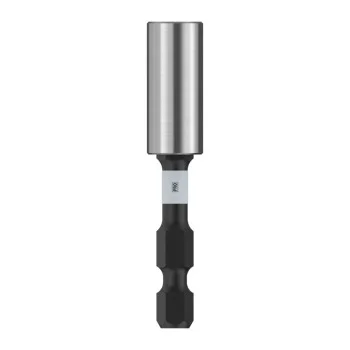
| Magnetic bit holder | Holds the bit and fastener more securely | Batch fastening, overhead installation, working with small screws |
| Bit adapter | Connects the screwdriver to square-drive sockets | Assembly, light maintenance tasks, bolt installation |
| Depth stop | Controls screw penetration | Drywall, wood, panels, and delicate surfaces |
Applications in repair, installation, and maintenance
Screwdriver bits are used for furniture assembly, kitchen installation, working with drywall, fastening metal profiles, installing trim, minor auto repairs, and machine maintenance. For furniture assembly, the corner bit allows for screwing close to side panels and cabinet bottoms. When working with drywall, the depth stop prevents the drywall from tearing and helps the screw sit evenly.
Flexible extensions are valuable when working behind appliances, inside cabinets, around pipes, and in tight spaces. Magnetic holders are convenient for serial screwdriving, as the bit remains stable and the risk of dropping the fastener is reduced. Socket adapters turn the screwdriver into a handy tool for light assembly work with nuts and bolts when the machine's torque is appropriate for the task.
How to Choose Screwdriver Bits
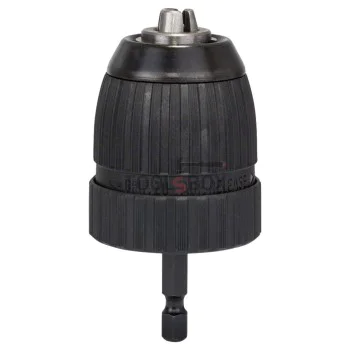
When selecting screwdriver bits, first check compatibility with the chuck. Common 1/4" hex sockets are used for screwdriver bits, as well as square adapters for sockets. The size must match the bit, socket, and fastener to prevent play, slipping, or edge wear.
Material and construction are important under heavy use. For regular professional use, look for attachments made of hardened steel, with precise geometry and a stable locking mechanism. For lighter home use, the focus is on comfort, compact size, and compatibility with existing bits. When working with an impact driver, you need a bit designed for impact loads, because standard holders do not always withstand the impact mode.
Criteria that facilitate selection
- Drive - 1/4" hex, square drive, or other size depending on the tool.
- Length-short holders for control, extended versions for deep access.
- Working angle-angle models for areas where the machine cannot reach directly.
- Magnetic retention-useful for small screws and one-handed operation.
- Load capacity: standard screwing, heavy-duty installation, or impact mode.
- Fastener type-screws for wood, metal, drywall, bolts, or furniture hardware.
Compatibility, safe operation, and maintenance
Screwdriver attachments work best when paired with the right bit and the correct torque setting on the tool. Excessive force on small screws leads to head deformation or material damage, while insufficient pressure causes slippage. A well-centered bit, a stable grip, and a smooth start protect both the fastener and the attachment itself.
With angle and flexible models, it is important that the load does not exceed their intended use. They are designed for access and maneuverability, not to replace a direct, rigid connection in heavy-duty bolted joints. After use, the attachments should be cleaned of dust, shavings, and construction debris. Moving parts must be protected from impact, and magnetic holders from the accumulation of metal particles that interfere with precise positioning.
Screwdriver bits for the workshop and job site
Well-chosen screwdriver attachments save time on repetitive tasks and reduce the need for improvisation on the job site. An angle adapter, a high-quality magnetic holder, and a few bit adapters cover most assembly tasks in a workshop, service center, or at home. For more specialized tasks, there are extension bars, limiters, and flexible shafts that provide more precise access to fasteners.
Browse the selection at Toolsbox.bg and choose screwdriver bits based on your tool, the fasteners, and the work location. This makes your bit set more practical, and your screwdriver remains ready for more installation and repair tasks.