
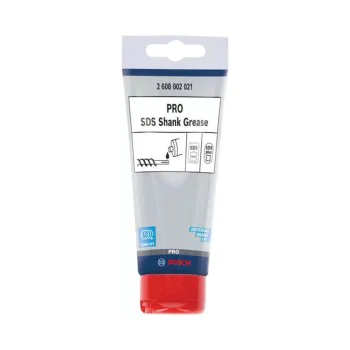
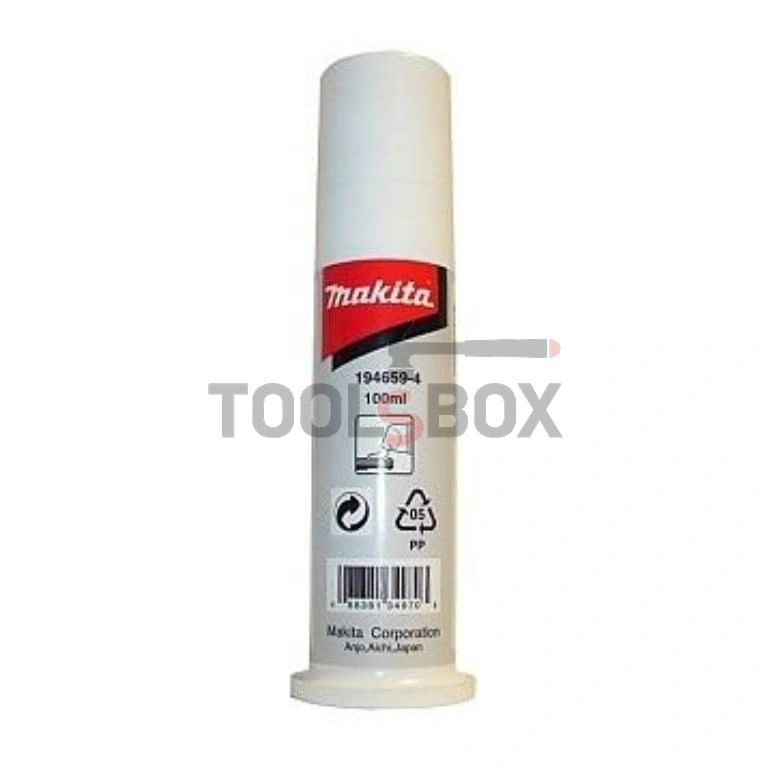
Grease for drill bits
Drill bit grease for hammer drilling and bit protection
Drill bit grease is a special lubricant for the shanks of drill bits, chisels, chipping hammers, core bits, extensions, and other accessories used with hammer drills and jackhammers. It is applied to the shank area, where metal surfaces move under load, impact, and vibration. This reduces dry friction, overheating, and premature wear of channels, shanks, and holders. When working in concrete, brick, stone, and masonry, drill grease facilitates the smooth insertion and removal of the tool from the chuck, while the machine maintains a more stable impact transmission.
This type of lubricant differs from standard machine oils in terms of consistency and behavior under impact loads. Oil spreads more easily and does not remain on the contact area long enough, whereas drill grease adheres to the shank and creates a durable lubricating layer. This makes it a practical consumable for construction, repair, installation, and maintenance of power tools.
Applications for hammer drills, jackhammers, and SDS chucks
Drill bit grease is primarily used in tools with SDS-plus and SDS-max chucks, where the accessory is not rigidly fixed but has controlled axial movement. It is precisely this movement that requires lubrication of the shank, because the hammer mechanism puts stress on the channels and locking elements of the chuck. Without lubrication, increased wear, difficulty inserting the bit, unpleasant noise, and excessive heating of the chuck occur.
- For SDS-plus drill bits-for mounting holes, anchoring, and drilling in concrete and brick.
- For SDS-max drill bits-for heavier drilling tasks and use with more powerful hammer drills.
- For chisels and breakers-for chiseling plaster, concrete, mortar, and masonry.
- For core bits, adapters, and extensions-when the contact area is subjected to higher loads and vibrations.
The lubricant is not applied to the cutting tip of the drill bit, but to the shank that enters the chuck. This protects the machine's mechanism, while the working part of the consumable remains clean for drilling.
Differences between lubricants
Drill grease is available in various sizes and formulations, tailored to the frequency of use and type of load. Some greases have a thicker consistency for longer retention on the shank, while others are easier to apply in cold weather or during maintenance operations. There are variants with a lithium base, molybdenum disulfide, or heat-resistant additives, designed for contact between metal surfaces under pressure.
Packaging size also matters. Small tubes are convenient for power tool toolboxes and mobile installation crews. Larger packages are practical for workshops, service centers, construction crews, or job sites where hammer drills are used daily. Tubes with a narrow nozzle are convenient for clean application, while cans allow for easy removal of small amounts with a spatula or glove.
Selection based on the machine, chuck, and load
When choosing drill grease, it is important that the lubricant matches the operating conditions, the machine's power, and the type of accessories. For light installation work with compact hammer drills, standard grease for SDS shanks is sufficient. For chiseling, deep drilling, and continuous use, a more durable formula is needed that maintains its consistency under heat and vibration.
- Compatibility with the chuck-SDS-plus, SDS-max, chisels, breakers, core bits, and adapters.
- Working environment-dust, moisture, concrete slurry, and abrasive particles require regular cleaning and fresh lubrication.
- Temperature resistance-useful for prolonged hammer drilling and intensive work.
- Consistency-thicker greases adhere better, while softer ones are easier to apply.
- Packaging-a tube for mobile work, a can, or a larger container for workshops and service centers.
Compatibility with the machine and accessories is key when selecting a lubricant. Lubricant should be applied sparingly, as excessive amounts trap dust and can contaminate the interior of the chuck. A thin layer on the tailstock grooves is usually sufficient for normal operation.
Practical Use and Maintenance of Accessories
Before application, the drill shank is cleaned of dust, metal particles, and old lubricant. Then, a small amount of drill grease is applied to the grooves and smooth contact surfaces. When changing consumables during operation, it is advisable to wipe off the contaminated grease, especially when drilling in a highly dusty environment. This prevents abrasive particles from entering the chuck and accelerating wear.
When storing, keep the lubricant tightly sealed, away from dust and shavings. A clean container reduces the risk of introducing contaminants into the chuck. For service teams, it is practical to keep a separate tube in the hammer drill's case and store a spare supply in the workshop.
Drill bit grease at Toolsbox.bg
Drill grease is a small consumable with a real impact on the lifespan of accessories and the normal operation of power tools. The right grease protects the chuck, makes changing drill bits easier, and aids in machine maintenance for both professional and home use. Browse the selection at Toolsbox.bg and choose a lubricant based on the chuck type, workload, and frequency of use.