
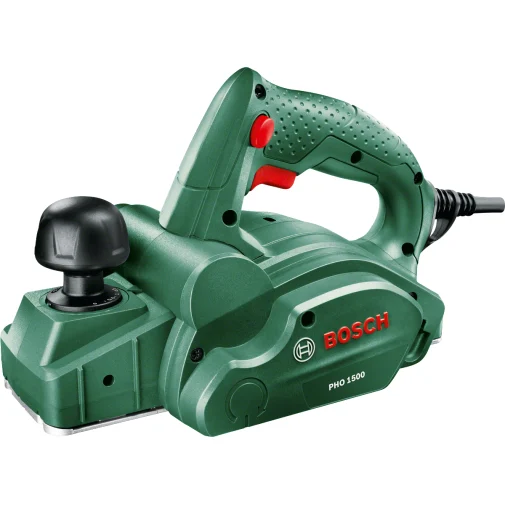
El planers for wood
Electric wood planers - precise planing, shaping, and trimming
Electric wood planers are used for rapid material removal, surface leveling, edge trimming, and preparing parts for assembly. They are a valuable tool in carpentry, furniture manufacturing, renovations, installation work, and home workshop projects. Electric planers are used to process boards, beams, slats, doors, frames, countertops, and other wooden elements that require a smooth surface or precise sizing.
In this section, you will find wood planers with varying power ratings, working widths, planing depths, and body designs. Some models are designed for intensive professional use, while others are suitable for occasional repairs, finishing work, and hobby projects. A properly selected electric planer reduces manual labor, speeds up processing, and delivers a more even finish compared to a traditional hand planer, especially when working on longer pieces or a series of identical elements.
What Do Electric Wood Planers Entail
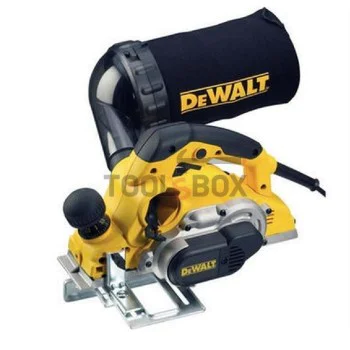
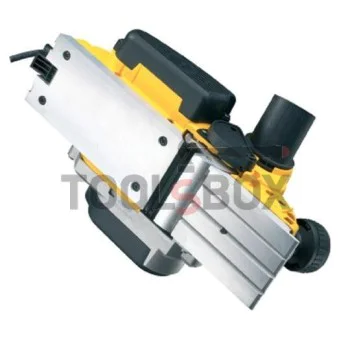
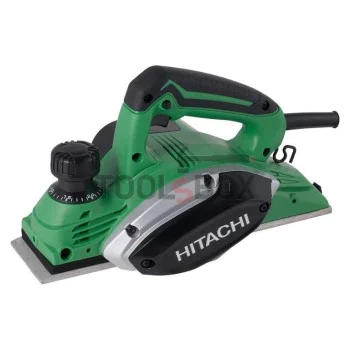
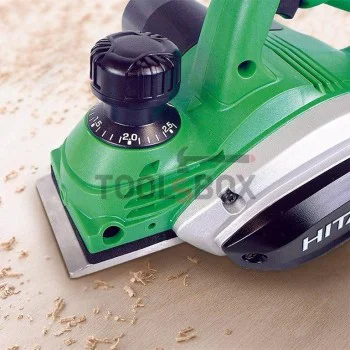
An electric planer is a machine with a rotating cutter head that removes a thin layer of wood as it moves across the surface. It features an adjustable planing depth, allowing for rough material removal or finer adjustments before sanding. Different models feature depth adjustments, guide stops, V-grooves for chamfering, the ability to work along a rebate, and chip collection into a bag or vacuum cleaner.
Models differ primarily in power, RPM, blade width, maximum cutting depth, and ergonomics. More powerful machines handle hardwood and longer jobs with greater confidence, while more compact electric planers are lighter, easier to guide, and convenient for on-site installation. With corded models, the focus is on stable performance under continuous load, while cordless models offer the advantage of freedom of movement around the worksite and the absence of a power cord.
Applications in woodworking, renovation, and installation
Electric wood planers are used for many tasks where dimensional accuracy and a good fit of the components are crucial. When installing doors, for example, the planer facilitates the adjustment of the bottom or side edge when the door leaf rests against the floor or the door frame. When working with beams and boards, the machine removes unevenness, saw marks, and slight warping on the surface.
In furniture and interior carpentry, the electric planer is useful for preparing surfaces, trimming edges, shaping bevels, and smoothing joints. In construction and renovation, it is used on wooden substructures, cladding, steps, railings, and other solid wood components. For home use, the machine is convenient for refurbishing doors, shelves, fences, pergolas, garden structures, and small woodworking projects.
Selection based on power, width, and planing depth
When choosing an electric wood planer, it is advisable to compare the machine's specifications with your actual tasks. For finer adjustments on doors, moldings, and small details, a lightweight model with convenient depth adjustment is sufficient. For rough material removal, working with beams, or harder wood, look for higher power, a stable base, and blades with good geometry.
| Criterion | What to look for | Practical significance |
|---|---|---|
| Power | Motor power and performance under load | Easier planing of hardwood and longer workpieces |
| Working width | Blade and base width | Faster surface coverage on wide boards and panels |
| Cutting depth | Adjustment range and precision | Control between rough removal and fine adjustment |
| Chip removal | Ejection direction, bag, or connection to a dust extractor | Cleaner work area and better visibility of the workpiece |
| Ergonomics | Weight, handles, base stability | More comfortable handling and less fatigue during prolonged use |
Depth adjustment is one of the most practical features. Smaller settings are suitable for final adjustments, while larger ones are used for initial leveling. When working with visible details, it is better to make several lighter passes rather than a single cut that is too deep. This reduces the risk of tearing the fibers and results in a smoother surface.
Blades, Consumables, and Compatibility
The quality of planing depends directly on the condition of the blades. Dull or improperly installed blades leave marks, cause vibrations, and result in an uneven cut. When replacing blades, you must consider the size, mounting type, and compatibility with the specific model of electric planer. There are double-sided blades, high-speed steel blades, and carbide-tipped options designed for different work intensities and various types of wood.
Practical accessories for planing include rip guides, rebate stops, chip bags, dust collector adapters, and spare belts when the design requires them. For more frequent professional use, having spare blades prevents downtime and maintains consistent machining quality. To keep the work area clean, it is helpful to connect the machine to a construction dust vacuum or an extraction system, when the model allows for such a connection.
Operation and Safety When Planing
Planing requires a securely clamped workpiece, a clean support surface, and smooth movement of the machine. Before starting work, check the wood for nails, screws, staples, or other metal elements that could damage the blades. Place the front of the machine's base on the workpiece, then guide it evenly in the direction of the cut. Do not apply excessive pressure, as the motor and cutter shaft must remove the material without forcing it.
For safer operation, safety goggles, ear protection during prolonged planing, and appropriate work clothing without loose hanging parts are required. After the cut is complete, the blades continue to rotate briefly, so the machine should only be released after it has come to a complete stop. Regular cleaning of the base, the chip ejection port, and the cutter shaft prevents the machine from jamming and ensures smooth operation.
Electric planer for professional and home workshops
For professionals in construction, installation, and carpentry, the electric planer is a machine for daily adjustments, preparing parts, and precise finishing operations. For discerning DIYers, it is a practical tool for repairs, maintenance of wooden structures, and the creation of furniture or decorative elements. The difference between individual models is evident not only in power but also in the ease of adjustment, stability of operation, chip removal, and the availability of useful accessories.
Browse the selection of electric wood planers at Toolsbox.bg and choose a model based on your tasks, the material, and how often you'll be using it. This way, you'll have a machine that planes accurately, helps with fitting details, and ensures a clean surface for the next stages of processing.