

Delta Grinder
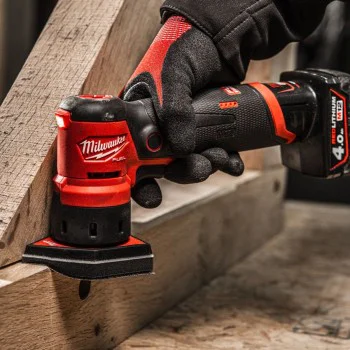
Delta sander for precise sanding in corners, along edges, and in tight spaces
The delta sander is a compact sander with a triangular work plate, designed for detailed work in areas that are difficult to reach with standard orbital or random-orbit sanders. The shape of the pad allows for controlled sanding around inside corners, edges, joints, profiles, frames, steps, furniture elements, and small surfaces. These types of power tools are invaluable for repairs, restoration, finishing work, installation, and maintenance in the workshop or at home.
Unlike larger sanders, the delta sander operates with a small contact area and provides better control during fine finishing. The machine can be held steadily with one hand, and the oscillating motion removes material evenly without aggressive penetration into the workpiece. This ensures a clean surface preparation before painting, varnishing, oiling, or gluing, especially on wood, painted surfaces, putty, and certain plastics.
Main Applications of the Delta Sander
The Delta Sander is primarily used for fine and finishing tasks. The triangular pad reaches sharp internal corners of cabinets, doors, window frames, and decorative details. When working on furniture, the machine facilitates the removal of old varnish, the smoothing of minor imperfections, and the preparation of difficult profiles for a new finish.
In construction and renovation work, the Deltaschleifer is useful for processing spackled areas, smoothing around outlets, door frames, baseboards, and making small wall repairs. In installation work, it helps with finishing edges, making adjustments to wooden elements, and finely cleaning up paint or glue residue. For DIY enthusiasts, the machine is convenient for making decorative items, small wooden structures, and renovating interior elements.
Types of machines and differences between models
Delta sander models differ in power source, power, pad size, vibration frequency, sandpaper attachment method, and dust extraction system. Corded models are preferred for extended use in a workshop or on a job site, as they provide continuous power without interruptions for recharging. Cordless machines offer freedom of movement and are convenient for installation, maintenance tasks, and work away from a power outlet.
| Delta Sander Type | Practical use | Strengths |
|---|---|---|
| Corded | Workshop, repair, continuous operation | Constant power and stable operation |
| Cordless | Installation, service, work in hard-to-reach places | Mobility and convenience without a power cord |
| Compact design | Details, tight corners, furniture components | Easy control and good maneuverability |
For more intensive professional use, models with a sturdier work plate, a comfortable handle, and good dust extraction deserve attention. For home use, a compact machine with easy sandpaper replacement and a comfortable body shape is often sufficient. Speed or vibration adjustment is valuable when working with different materials because it allows for finer control over the removal rate.
How to Choose the Right Delta Sander
When choosing a delta sander, it is wise to consider the material, frequency of use, and required precision. For wood and painted surfaces, good control and the right abrasive are important. When applying putty and paint, dust extraction is crucial for visibility and a clean workspace. For tight areas, decorative moldings, and small details, a compact machine with a comfortable grip reduces fatigue and the risk of over-sanding the edges.
- Power and vibrations: higher power enables faster processing, while the smooth operation protects the surface from marks.
- Plate size: the smaller plate is convenient for details, while the larger one processes limited flat areas more quickly.
- Sanding pad attachment: The hook-and-loop system allows for quick abrasive changes and secure fastening during operation.
- Dust collection: a dust bag, cartridge, or vacuum adapter keeps the work area cleaner and protects the mechanism.
- Ergonomics: a rubberized handle, low weight, and balanced body provide better control during fine work.
Consumables and compatibility
The result of working with a delta sander depends directly on the right sanding pad. Abrasives vary in shape, size, dust extraction holes, and grit size. Coarse grits are for removing paint, varnish, or more visible imperfections. Medium-grit sheets are used for intermediate sanding, while fine-grit sheets are for finishing before applying a coating. Aligning the holes in the sanding sheet with the plate is important for effective dust extraction.
When working with wood, it is best to sand in the direction of the grain, applying moderate pressure. Excessive pressure does not speed up the process; instead, it heats the abrasive and may leave marks. On painted surfaces and spackled areas, move the machine evenly without lingering in one spot. Regularly replacing worn-out consumables protects the motor, reduces vibrations, and improves the finish of the treated area.
Safe and Clean Operation
The delta sander operates at a high vibration frequency and generates fine dust, so safety goggles, a mask, and appropriate gloves are essential parts of your equipment. The workpiece must be securely clamped, especially for small items. Before changing the sanding pad, the machine must be unplugged or the battery removed. The ventilation slots should be cleaned regularly, and the cord, battery, and base plate should be inspected for damage before use.
At Toolsbox.bg, you can browse delta sanders for professional use, home use, repairs, installation, and fine finishing work. Compare power source, power output, pad shape, compatible accessories, and ease of use to select a machine that meets the needs of your workshop or job site.