
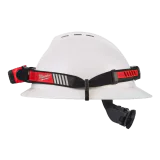
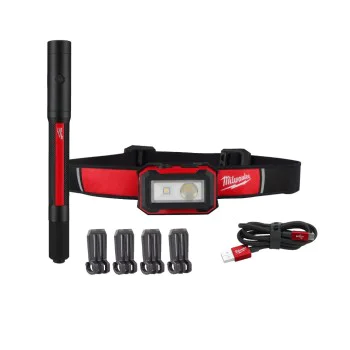
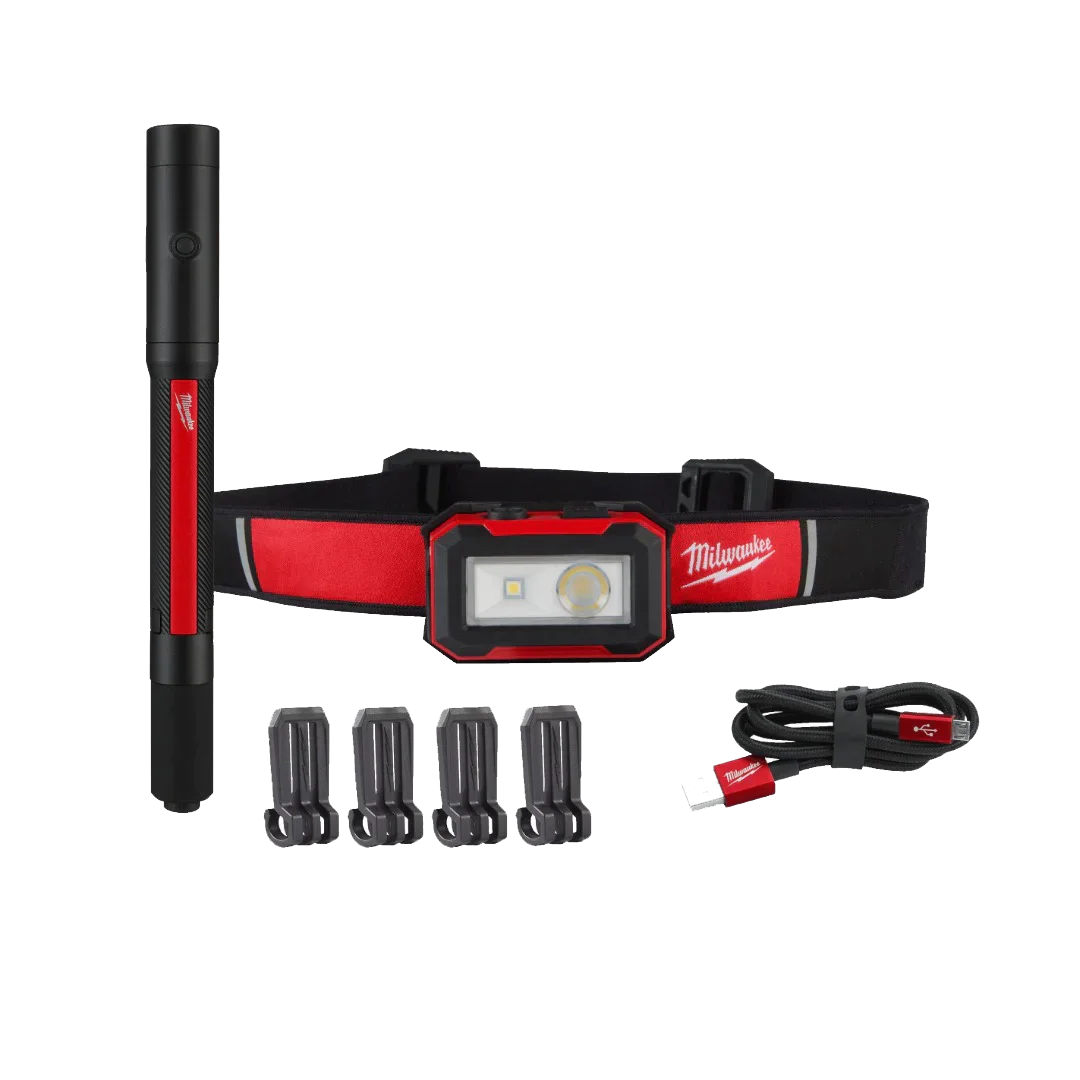
Headgear
Headlamps for work, repairs, and hands-free lighting
Headlamps are practical lighting tools for situations where your hands remain free and the light follows the direction of your gaze. They are invaluable for repairs, installation, maintenance, construction, workshop work, car maintenance, navigating dark areas, camping, and emergency situations. Among lighting fixtures, the headlamp stands out for its compactness, ease of wear, and focused beam, which facilitates work in tight spaces, shafts, attics, basements, engine compartments, and areas without permanent lighting.
Headlamps are selected based on brightness, power source, headband comfort, housing protection, and lighting modes. For short home projects, a lightweight model with basic modes is sufficient, while for prolonged professional use, a more durable construction, longer runtime, and more precise light beam control are required.
What features do headlamp models include
Modern headlamps primarily use LED lights, as they provide bright light with low energy consumption. Some models feature a fixed beam for clearly illuminating a specific area, while others have an adjustable head angle that directs the light toward the work surface without changing body posture. There are versions with a wide beam for close-up work and models with a more concentrated light for viewing distant points.
Headlamps can be powered by disposable batteries or a rechargeable battery. Disposable battery models are convenient in field conditions where battery replacement is quick. Rechargeable headlamps are practical for regular use because they charge via a cable and reduce the need to constantly buy batteries. When selecting a headlamp, it is helpful to consider the actual lighting modes, runtime, charging port type, weight, and mounting method.
Main Applications
Headlamps are used in installation work, electrical work, plumbing repairs, working with machinery, car and bicycle maintenance, loading and unloading operations in dimly lit areas, and inspecting roofs and attic spaces. In construction and repair, the headlamp helps with marking, screwing, drilling, cutting, and assembly when the work area is obscured by the body or the tools themselves.
For home use, these lights are useful for small repairs, changing fuses, troubleshooting, and working in a garage, basement, or yard at night. For hiking, fishing, and camping, compact models with energy-saving modes, red light, or a dim mode for reading and moving around without being blinded are highly valued.
Key differences between headlamps
Different headlamps vary in light output, beam shape, construction, and power source. Brightness is usually specified in lumens, but when purchasing, it's also important to consider the light distribution. A wide beam illuminates a larger area in front of the user, while a concentrated beam reaches farther and is convenient for inspection. Some models offer multiple brightness levels, a flashing mode for signaling, or a separate low-light mode for energy-efficient operation.
- Battery-powered headlamps-lightweight, easy to maintain, and convenient for infrequent use or when working far from a power source.
- Rechargeable headlamps-ideal for regular work, maintenance, and installation when recharging between tasks is more practical than changing batteries.
- Models with adjustable tilt - make it easier to direct the light toward a detail, fastener, cable, pipe, or work surface.
- Headlamps with additional protection-sought after for use in dusty or damp conditions, outdoor work, and heavy-duty applications.
Criteria for selecting headlamps
When selecting headlamps, the actual work environment is the first consideration. For precision assembly work, uniform light without harsh shadows is valuable. For outdoor movement, patrols, and emergency operations, models with a wider beam range and clearly defined modes are more suitable. For overhead work or in confined spaces, the weight and stability of the headlamp directly affect comfort.
The power source affects costs and operational readiness. Batteries are easy to replace and practical as a backup, while rechargeable solutions are convenient for daily use. The housing can be compact and lightweight or more rugged for industrial environments. The strap should hold securely without excessive pressure; for heavier lights, the top strap provides better weight distribution.
It is also helpful to consider the button size, usability with gloves, ease of switching modes, the ability to tilt the light, and the charging method. For activities involving dust, moisture, or outdoor terrain, look for models with appropriate housing protection and a tightly sealed battery compartment.
Comfort and Safety at Work
Headlamps improve control over the work area when handling hand tools, power tools, fasteners, cables, or small consumables. A properly directed beam reduces eye strain and makes it easier to read markings, measurement scales, and details. When working in a service center, workshop, or construction site, a secure fit is especially valuable because the light stays in place when bending over, climbing a ladder, or moving around equipment.
In high-intensity modes, the light should not be directed directly into other people's eyes. For precise work at close range, a lower light level is often more comfortable than maximum brightness, as it reduces glare from metal, plastic, tiles, or painted surfaces.
Maintenance and Accessories
To extend the headlamp's lifespan, clean the housing of dust and dirt, and dry the headband after use in damp conditions. For battery-powered models, it is advisable to remove the batteries during long-term storage. For rechargeable models, regular charging and keeping the port free of dust extend the convenience of use. Spare batteries, a charging cable, and a tool case or carrying case facilitate storage and transport.
Headlamps are a small but very practical piece of equipment for repair, installation, maintenance, and outdoor work. Browse the available models at Toolsbox.bg and choose a light based on your tasks, frequency of use, required brightness, and preferred power source.