
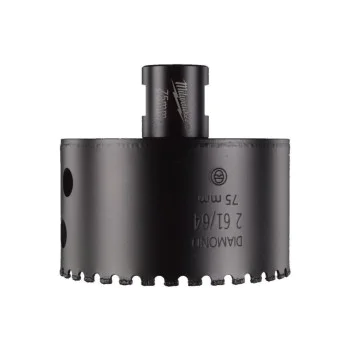
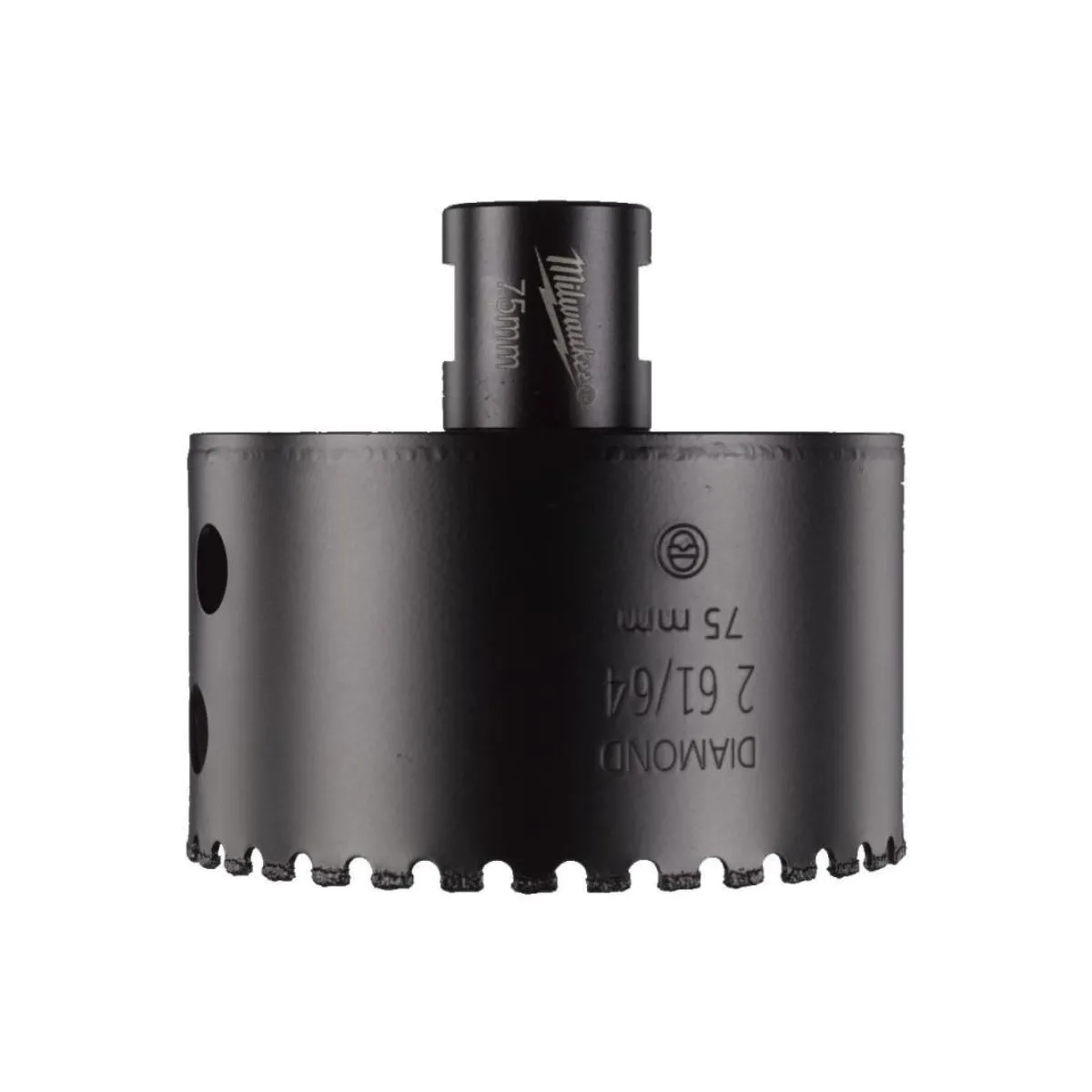
Diamond Borkorona for granite tiles
Diamond core bit for porcelain tiles - precise drilling in hard tiles
A diamond core bit for porcelain tiles is a specialized tool for creating clean and precise holes in hard tile materials. Porcelain tiles, porcelain stoneware, and dense ceramics require a diamond-coated cutting tool because standard drill bits wear out quickly, overheat, and pose a risk of cracking. Such a core bit is used when installing faucets, drains, pipe outlets, electrical outlets, shower systems, bathroom accessories, railings, fasteners, and other elements where the hole must be precise and have a clean edge.
Toolsbox.bg offers a selection of diamond core bits in various diameters, shank types, and operating modes, designed for professionals, installers, construction crews, and discerning DIYers. Choosing the right size and type of core bit saves time, protects the tile, and makes drilling in high-hardness materials easier.
What materials and tasks is it used for
The diamond core bit for porcelain tile works by grinding the material rather than by impact. This makes it the preferred choice for tiles already installed on walls or floors, as well as for pre-cutting tiles before installation. The best results are achieved with a smooth start, steady guidance, and appropriate machine speed.
This type of core bit is used for:
- drilling holes for water and heating pipes;
- installing faucets, shower sets, traps, and plumbing connections;
- holes for electrical boxes, cables, and fasteners;
- working with granite tiles, ceramic tiles, terracotta, dense ceramics, and porcelain slabs;
- repair, finishing, and installation work in bathrooms, kitchens, hallways, patios, or workrooms.
Types of diamond core bits for granite tiles
The different models differ in their cooling method, machine attachment, cutting edge shape, and whether they are designed for dry or wet drilling. Dry drilling offers greater convenience when working on a site where there is no easy access to water. In wet drilling, cooling reduces heat build-up and facilitates smoother cutting, especially during prolonged work or with larger diameters.
| Core bit type | Characteristic | Application |
|---|---|---|
| For dry drilling | Diamond coating, operates without water cooling | Installations and repairs at sites with limited access to water |
| For wet drilling | Operates with cooling, reduces cutting temperature | Longer runtime, hard porcelain tiles, and larger holes |
| With vacuum-bonded diamond | Uniform cutting edge for a quick start to the hole | Precision work on tiles and cladding |
| With various shank types | M14, hex, cylindrical, or other connection types | Compatible with angle grinders, drills, or other power tools |
Criteria for selecting a core bit
The first criterion is diameter. Smaller sizes are used for fasteners, anchors, and cables, while larger ones are used for pipes, faucets, outlets, and installation holes. The size must match the component that will pass through the tile, with sufficient clearance for installation and grouting.
The second criterion is the shank. Diamond core bits with an M14 thread connect to an angle grinder and are suitable for dry drilling. Models with a hexagonal or cylindrical shank are used with drills and screwdrivers when the tool allows for speed control and stable guidance. Compatibility between the core bit and the power tool is crucial for safe operation and a clean hole.
The third criterion is the drilling mode. With dry core bits, it is advisable to work in short intervals to limit overheating. With wet models, water removes dust and cools the cutting edge. This extends the life of the diamond coating and facilitates work in very dense porcelain tiles.
Other important factors include drilling depth, tile thickness, the presence of glaze, material hardness, and the method of tile installation. When working on already installed tiles, it is best to keep the machine steady, without using the hammer mode and without applying excessive pressure.
Practical guidelines for a clean cut
Porcelain tile is a hard and often slippery material, so starting the hole requires control. For core bits without a centering drill bit, start at a slight angle until the diamond edge grips the surface, then gradually straighten the tool. For models with a guide or template, positioning is easier, especially for multiple holes.
Pressure should be moderate. Excessive pressure does not speed up cutting but raises the temperature and strains the machine. Better results are achieved with constant speed, smooth movement, and periodic dust removal. When dry drilling, short pauses protect the diamond layer, and when wet drilling, a constant flow of water aids cooling.
For safety, it is advisable to wear safety goggles, gloves, and a dust mask. The work area must be stable, and the tile must be well supported when the hole is drilled before grouting. The hammer mode on the drill should not be used on porcelain tile, as it increases the risk of cracks and chipping.
Compatibility, maintenance, and long life of the cutting edge
When selecting a diamond core bit, it is helpful to check the machine attachment, the recommended operating mode, and the hole diameter. The same size may be available with different shanks, so compatibility with your existing power tool saves you from needing additional adapters and avoids on-site inconveniences.
After use, clean the core bit of dust and material debris. If wet drilling was performed, it is advisable to dry it to protect the metal body. Storing it in a box or a compartment for consumables protects the cutting edge from impacts. This ensures the diamond layer remains suitable for future installations and repair work.
Choose a diamond core bit for porcelain tile from Toolsbox.bg
The diamond core bit for porcelain tile is a small but very important consumable for tiling, plumbing, electrical, and finishing work. The precise diameter, correct shank, and appropriate drilling mode help ensure a clean hole, fewer defects, and smoother operation. Browse the selection at Toolsbox.bg and choose a drill bit suited to the material, the machine, and the specific task at hand.