
Vacuum paws
Vacuum grippers for secure gripping and handling of smooth parts
Vacuum grippers facilitate the lifting, positioning, and handling of materials with smooth, solid surfaces. They operate by creating a vacuum seal and are useful for installing glass, ceramic and granite tiles, sheet metal, PVC panels, laminated countertops, furniture panels, and other non-porous items. A well-chosen vacuum gripper provides a more stable grip, better control during work, and less strain on the hands during construction, repair, maintenance, or home installation.
These tools are part of the suction cup family but are designed with more ergonomic handles, a larger contact area, and a higher load capacity. They are used by window and glass installers, flooring and tiling professionals, furniture makers, auto repair shops, workshops, and home users who want more controlled handling of heavy or awkward-to-grip surfaces.
What vacuum grippers consist of and where they are used
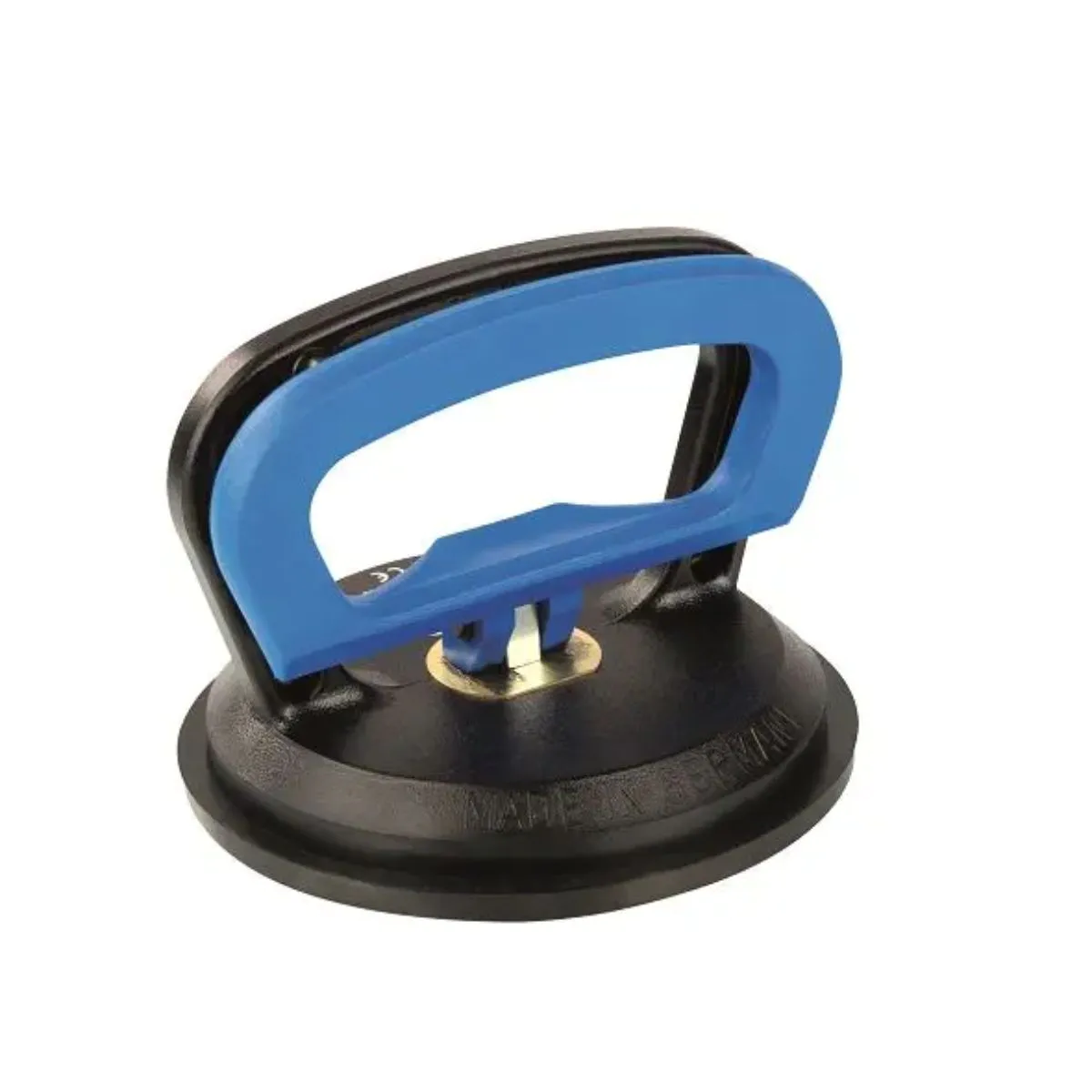
A vacuum gripper consists of a body, a handle, one or more rubber suction cups, and a vacuum-generating mechanism. In standard models, the vacuum is activated by a lever, while in more precise versions, it is activated by a hand pump. Some models feature an indicator or pressure gauge that helps monitor the grip during operation.
The best grip is achieved on clean, dry, and smooth surfaces. Glass, smooth tiles, lacquered panels, sheet metal, and polished stone are gripped more securely than rough, porous, highly textured, or dusty materials. When installing large slabs, vacuum grippers help with precise positioning without pulling directly on the edges, which is valuable for expensive cladding, display cases, mirrors, and furniture fronts.
Types of vacuum grippers based on grip and design
The different models vary in the number of suction cups, handle shape, working load capacity, body material, and activation method. The lightweight single-cup versions are suitable for smaller items, while double and triple vacuum grippers distribute the load over a larger area. For heavier panels or when working with two people, it is advisable to choose models with higher capacity and a stable, ergonomic handle.
| Type of vacuum gripper | Characteristic | Application |
|---|---|---|
| Single gripper | Compact, lightweight, and easy to carry | Small tiles, glass parts, panels, and service tasks |
| Double gripper | Larger contact area and more stable grip | Glass, countertops, sheet metal, larger cladding panels |
| Triple claw | Distributes the load across three points | Large tiles, display cases, smooth stone and composite elements |
| Clamp with pump | Allows for finer vacuum control | More precise installation and longer holding time |
Criteria for purchasing vacuum grippers
When selecting a vacuum gripper, it is advisable to compare several technical and practical parameters. Load capacity is a key indicator, but it is not the only criterion. The actual stability of the grip depends on the surface condition, the diameter and elasticity of the rubber pad, the number of suction cups, and how the weight is distributed during lifting.
- Working capacity: select a model with a margin relative to the weight of the part, without exceeding the specified value.
- Number of suction cups: single-cup models are more maneuverable, while double and triple-cup models provide a more stable grip on large surfaces.
- Body material: plastic bodies are lightweight, while metal ones offer greater durability for heavy-duty professional use.
- Rubber pad: Smooth, elastic, and clean rubber adheres better and protects the surface.
- Handle: A comfortable grip reduces fatigue during prolonged installation and improves control.
- Vacuum mechanism: lever-operated models are quick to use, while pump-operated models are suitable for more precise positioning.
Compatibility with materials and work environment
Vacuum grippers work best with non-porous materials and smooth surfaces. With textured tiles, rough stone, untreated wood, or concrete, the grip weakens and you should not rely on the full load capacity. Dirt, dust, moisture, grease stains, or construction residue also impair adhesion. Before gripping, the surface and the rubber part must be clean; if in doubt, the item should be secured additionally.
When working with glass and large-format panels, it is recommended to distribute the load among several grippers or between two workers. This maintains control during rotation, transport through narrow passages, and placement onto an adhesive layer or mounting frame. The vacuum gripper does not replace lifting equipment for heavy loads, but it is a valuable aid for manual positioning and short-distance movement.
Maintenance and Safe Operation
The condition of the rubber suction cup directly affects the grip. A cracked, deformed, or dirty rubber cup reduces the contact area and makes it difficult to create a vacuum. After use, the gripper should be cleaned of dust and construction debris, dried, and stored without pressure on the rubber part. For models with replaceable pads, it is advisable to monitor wear and replace them in a timely manner.
Safe operation requires smooth lifting, controlled movement, and avoiding sudden jolts. The load should not be carried over people, and when carried vertically, a stable body position must be maintained. During prolonged holding, the vacuum should be checked periodically, especially with heavy panels or when changing the angle of the load.
Vacuum Grippers for Professional and Home Use
For professional installers, models with higher load capacity, a durable housing, a comfortable handle, and a mechanism that is easy to operate with one hand are suitable. For home renovations and one-off tasks, a compact vacuum gripper is often sufficient for tiles, glass shelves, mirrors, or small panels. For planned installations with large-format tiles, work in bathrooms, kitchens, or display cases, a more stable model saves effort and improves placement accuracy.
At Toolsbox.bg, you'll find vacuum grippers for various installation tasks, materials, and load capacities. Browse the available models, compare load capacity, number of suction cups, construction, and grip type to select a practical solution for your workshop, construction site, or home renovation.