
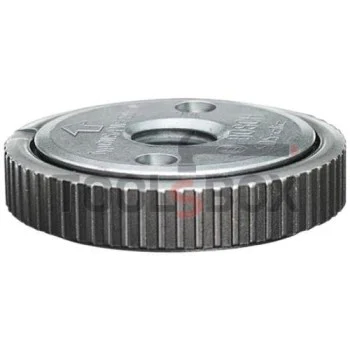
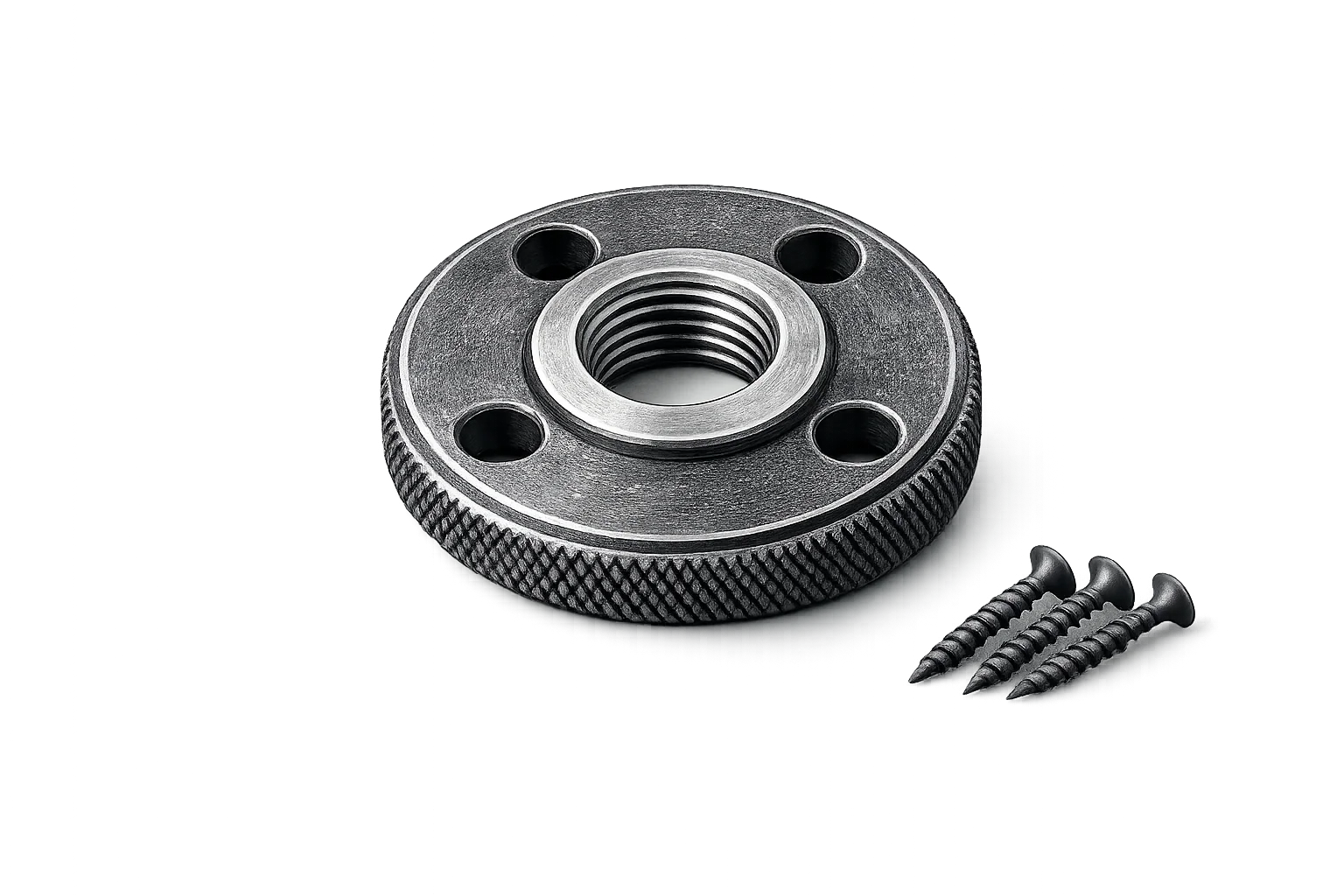
Nut for angle grinder
Angle Grinder Nut - For securing discs, washers, and attachments
An angle grinder nut is an essential fastener for securing cutting, grinding, flap, diamond, and cleaning discs to the machine's spindle. It works in conjunction with the inner flange to hold the accessory securely in place during cutting, grinding, or cleaning of metal, stone, concrete, ceramics, and other materials. A properly selected nut reduces unwanted vibrations, limits disc slippage, and facilitates the replacement of consumables in a workshop, on a construction site, or during home repairs.
The section on angle grinder nuts includes standard clamping nuts, quick-release nuts, self-locking models, flange nuts, and options for specific discs. They differ in thread type, outer diameter, height, profile, tightening method, material, and compatibility with specific machines. The correct selection is based on the spindle size, disc type, and operating method.
Types of angle grinder nuts
Standard tightening nut
The standard angle grinder nut is tightened with a two-jaw wrench. This is a widely used option for machines with a classic disc clamping system. It is used for cutting and grinding when the consumable is changed relatively infrequently or when a stable mechanical clamping is required. With this type, the holes in the nut and the tightening wrench must align.
Quick-release nut
The quick-release nut allows the disc to be changed without a standard wrench or with minimal effort. It is convenient when working with different discs at short intervals-for example, alternating between cutting, trimming, and sanding. This type of nut saves time during installation, maintenance, and repair operations where frequent replacement of consumables is part of the workflow.
Self-tightening and low-profile nut
Self-tightening nuts secure the disc in a way that facilitates subsequent release after use. Low-profile variants are valuable for discs with limited working space around the chuck or for attachments where a standard nut would get in the way. When working with cup brushes, diamond discs, or specific grinding accessories, the low profile can provide better access to the work area.
Compatibility with angle grinders and discs
Compatibility is a key criterion when purchasing a nut for an angle grinder. Most angle grinders use an M14 thread, but small, specialized, or older machines sometimes use a different size. Before ordering, check the marking on the machine, the old nut, or the angle grinder's technical specifications. The thread must match the spindle exactly to prevent wobbling, jamming, or damage to the chuck.
The disc diameter, the thickness of the accessory, and the type of inner bore are also important. Thin cutting discs, thick grinding discs, flap discs, and diamond discs place different loads on the chuck. Some accessories require a specific flange or nut with a larger contact area to distribute the pressure evenly.
| Nut type | Application | Practical application |
|---|---|---|
| Standard | Tightening with a wrench | Cutting and grinding with standard discs |
| Quick-release | Faster tool change | Installation and service tasks with frequent disc changes |
| Self-tightening | Easy release after use | Intensive use in a workshop or on-site |
| Low-profile | Lower clamping height | Working in tight spaces and with specific attachments |
Materials, construction, and durability
The angle grinder nut operates at high speeds, under vibrations, and with pressure loads on the disc. Therefore, the material and precision of the thread are directly relevant to stable tightening. The most popular options are made of steel or other metal alloys with good mechanical durability. Some nuts feature a protective coating against corrosion, which is useful when working in damp environments, on construction sites, or in a garage with fluctuating temperatures.
Well-formed contact surfaces protect the disc from uneven pressure. The flat contact area and precise threading help keep the disc centered, which contributes to the machine's smooth operation. If the nuts are heavily worn, the wrench openings are deformed, or the threads are damaged, it is advisable to replace the part rather than risk loosening during operation.
How to choose the right nut for an angle grinder
Selection begins with the spindle thread and the diameter of the discs used. Next, consider the method of replacement-a standard nut with a wrench for less frequent replacement or a quick-release nut for working with multiple types of accessories. For professional use in a repair shop, metal workshop, or construction crew, ease of replacement and thread durability are highly valued. For home use, a standard nut is often sufficient, as long as it fits the machine and discs precisely.
- Thread: Check the spindle size, such as M14 or another size depending on the machine.
- Disc type: cutting, grinding, flap, diamond, wire brush, or attachment.
- Clamping method: wrench, quick-release, or self-tightening mechanism.
- Profile: standard height or low-profile version for limited space.
- Flange condition: if the flange is worn, it is advisable to replace the entire set to maintain proper grip.
Safety, Installation, and Maintenance
Before changing the disc, the angle grinder must be unplugged from the power source, and for a cordless tool, the battery must be removed. Place the disc on a clean flange, free of chips, dust, or residue from the old disc. Hand-tighten the nut until it makes contact, then tighten it according to the nut type. Over-tightening can make it difficult to unscrew the disc and put excessive strain on it, while under-tightening can cause the disc to shift.
After use, inspect the threads, keyways, and contact surface. If there are cracks, severe wear, deformation, or thread jamming, the nut should not be used further. Keep the component clean and dry, and store it together with the wrench and flange so it is ready for the next disc change.
Angle Grinder Nuts for Workshops, Construction, and Repairs
Angle grinder nuts are small accessories, but their importance is felt during every cutting, grinding, and cleaning task. They are essential for craftsmen, installers, welders, construction crews, and DIY enthusiasts who keep their tools in working order. Browse the selection of angle grinder nuts at Toolsbox.bg and choose an option compatible with your machine, discs, and work style.