
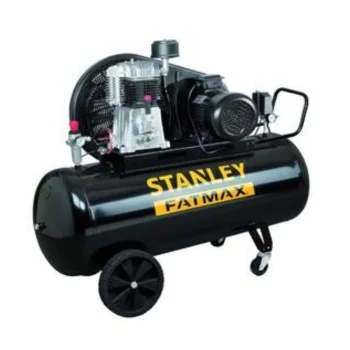
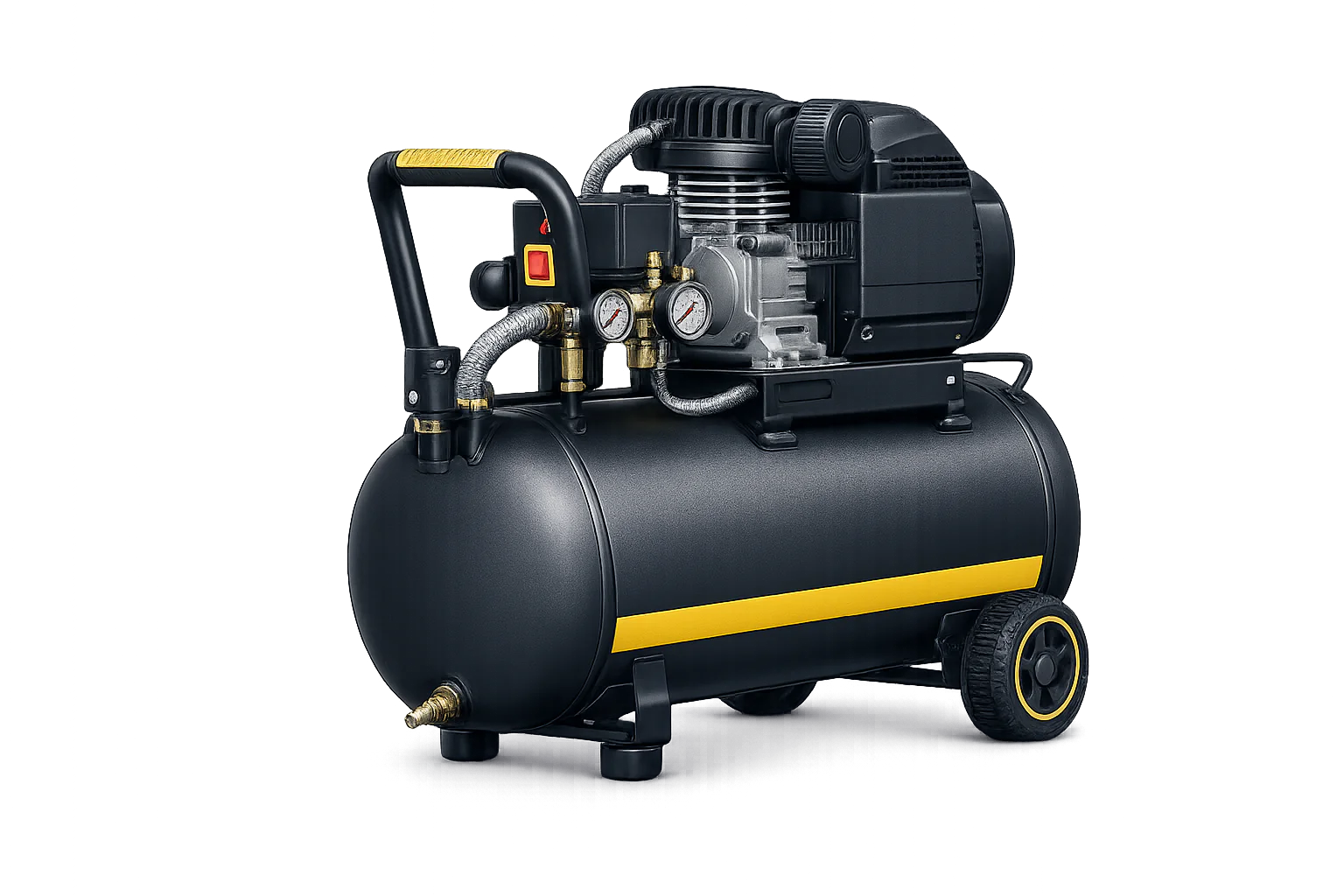
Professional Air Compressors
Professional air compressors for workshops, service centers, and installation
Professional air compressors are essential equipment for supplying compressed air to pneumatic tools, machines, and production lines. They are used in auto repair shops, manufacturing facilities, construction sites, installation teams, woodworking and metalworking workshops, painting operations, and equipment maintenance. A properly selected compressor ensures stable pressure, sufficient flow rate, and operational capacity for heavy-duty use without unnecessary interruptions to the process.
This section features models for professional use with varying receiver capacities, air flow rates, maximum pressures, motor power, and drive types. The differences between individual compressors are not limited to size. The pump design, cooling, lubrication, noise level, power supply, and ability to operate continuously are directly relevant to service, industrial, and installation tasks.
What Professional Air Compressors Entail
Professional compressors are designed for more intensive use than standard machines intended for occasional home use. They power pneumatic wrenches, nail guns, paint spray guns, grinders, blow guns, tire pumps, plasma cutting machines, and other compressed air tools. In larger systems, the compressor supplies multiple workstations or a stationary air network.
Popular solutions include reciprocating compressors with direct or belt drive, oil-lubricated models for heavier loads, oil-free variants for cleaner air and lower maintenance requirements, mobile units on wheels, and stationary compressors with large receivers. Screw compressors are also used for continuous industrial operation when a steady flow rate is required for long operating cycles.
Main applications in professional settings
In auto repair shops, compressors power impact wrenches, pneumatic ratchets, air guns, and tools for cleaning, sanding, and painting. Such activities require models with a sufficiently large receiver and stable pressure to prevent performance drops under load.
In construction and installation work, compressed air is used for driving nails and staples, blowing out debris, cleaning surfaces, powering pneumatic tools, and performing auxiliary tasks on-site. Here, mobility, a sturdy frame, easy transport, and a power supply compatible with the available electrical grid are important.
In woodworking, metalworking, and machine repair shops, a stable operating cycle, good air filtration, and the ability to connect regulators, hoses, quick-connect fittings, moisture separators, and other accessories are sought. For painting applications, attention is paid to uniform airflow, air purity, and proper pressure regulation.
Criteria for selecting a professional compressor
When selecting a compressor, first compare the air consumption of the tools with the machine's actual flow rate. Nominal values do not always reflect the air that reaches the tool during operation, so it is wise to allow for a margin. Pneumatic wrenches, grinders, and paint spray guns consume more air than blow guns or tire pumps.
- Air flow rate-measured in liters per minute-indicates the volume of compressed air delivered by the compressor.
- Maximum pressure-this is typically selected based on the requirements of the pneumatic tool and the specific application.
- Tank capacity-a larger tank reduces the frequency of motor cycling and provides a reserve during short peak loads.
- Power and power supply-single-phase models are suitable for small service shops and workshops, while three-phase models are used for heavier loads.
- Pump type-oil-lubricated compressors are preferred for heavy-duty work, while oil-free models are practical when cleaner air is required.
- Noise level-this is important when working in enclosed spaces, service areas, and near workstations.
- Mobility-wheels, handles, and a compact design make it easy to move between different workstations.
Comparison of main compressor types
| Compressor type | Characteristics | Where it is used |
|---|---|---|
| Piston, oil-lubricated | Long service life, suitable for heavy-duty service work | Auto repair shops, workshops, repair facilities |
| Butane oil-free | Cleaner air and easier maintenance | Installation, blow-out, light painting, and precision work |
| Belt-driven piston | Lower pump speeds and better cooling | Continuous operation with multiple pneumatic tools |
| Screw compressor | Consistent flow rate during long operating cycles | Manufacturing, service lines, stationary air systems |
Compatibility with tools, accessories, and consumables
The compressor performs best when paired with the right hoses, couplings, regulators, and filters. A narrow or excessively long hose restricts air flow, while unsuitable quick-connect fittings cause pressure losses. When painting and performing precision work, the moisture separator and filter are crucial, as moisture and oil particles in the compressed air can affect the final result.
For pneumatic tools with higher air consumption, a compressor with sufficient actual flow rate and a receiver capable of maintaining the operating cycle are required. For stationary systems, the diameter of the air line, the number of workstations, and line losses must be taken into account. For mobile use, compact dimensions, sturdy wheels, and easy transport are preferred.
Maintenance and Safe Operation
Regular maintenance extends the compressor's service life and ensures stable operation. For oil-lubricated models, monitor the oil level and adhere to the oil change intervals. Condensate from the receiver should be drained periodically, as accumulated moisture affects internal surfaces and air quality. Air filters should be cleaned or replaced depending on usage, and belts, fittings, and valves should be inspected for wear.
Safe operation requires stable placement of the machine, proper electrical connection, adherence to the maximum pressure, and the use of serviceable hoses. Overfilling the receiver, operating with a faulty pressure gauge, or connecting incompatible accessories must be avoided. When working indoors, ensure good ventilation and sufficient space around the compressor for cooling.
Choose a professional compressor based on your needs
Professional air compressors vary in performance, design, and operating mode, so the right choice starts with your actual tasks-number of tools, duration of use, need for mobility, and air purity requirements. Browse the offerings at Toolsbox.bg and select a compressor that suits your service center, workshop, installation team, or production line.