
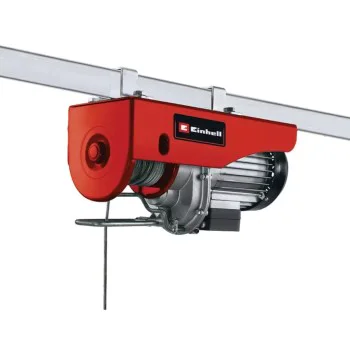
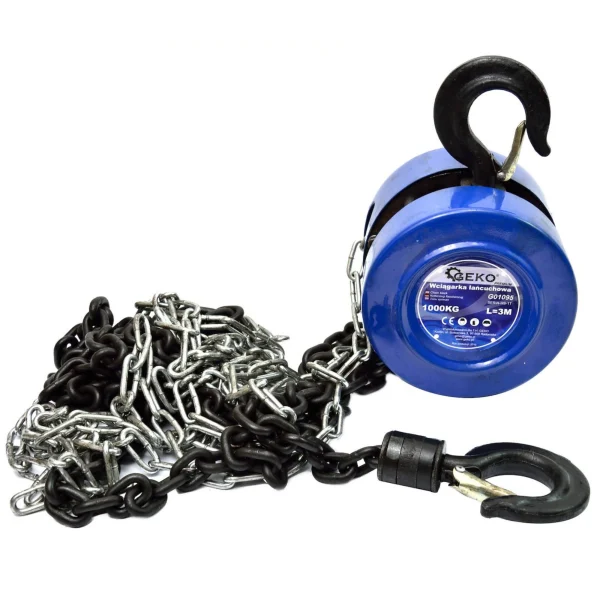
Winches
Winches for auto repair shops, workshops, and loading/unloading operations
Winches are practical equipment for the controlled pulling, lifting, or moving of loads, vehicles, trailers, and machinery. They are used in auto repair shops, garages, warehouses, construction sites, farms, and off-road preparation, where a reliable mechanism for handling heavy loads is needed. A properly selected winch saves effort, provides better control over the movement of the load, and reduces the risk of damage to vehicles, equipment, and components.
The product range includes manual, electric, and hydraulic models, which differ in load capacity, drive type, rope length and type, mounting, winding speed, and intended use. In service operations, winches are used to lift vehicles onto platforms, tow immobilized vehicles, position heavy equipment, and assist with repair operations. For home use, they are convenient for trailers, yard work, small workshops, and equipment maintenance.
Main Types of Winches and Their Applications
Manual winches operate via a crank, ratchet, or lever mechanism. They are compact, easy to transport, and valued for tasks without access to a power source. They are often chosen for trailers, boats, garage work, light assembly operations, and emergency towing. Their advantage lies in their simple mechanics and easy maintenance, while their limitation is slower operation under heavier loads.
Electric winches are preferred for more intensive loads and when quick pulling is needed. They are powered by a battery or the electrical grid, depending on the model, and are commonly used on off-road vehicles, platforms, for service work, and for loading and unloading tasks. Key considerations for these include motor power, duty cycle, control system, housing protection, and rope specifications.
Hydraulic winches are designed for harsh conditions, specialized vehicles, and professional equipment. They use a hydraulic system and are valued for continuous operation, heavy machinery, roadside assistance, and industrial applications. Their installation requires compatible hydraulics and a precise assessment of operating pressure and flow rate.
How to Choose the Right Model
When selecting a winch, the key parameter is the load capacity. This is compared to the actual weight of the object, friction, the incline, and the method of attachment. For automotive use, it is wise to allow for a margin of safety, as mud, inclines, locked wheels, or uneven terrain increase the load on the mechanism. For service and workshop tasks, it is necessary to consider not only the weight of the load but also the frequency of use.
The next criterion is the type of rope. Steel rope is resistant to abrasion and heat, but it is heavier and requires careful handling to prevent kinks and damage to the strands. Synthetic rope is lighter, easier to maintain, and convenient for off-road use, but it must be protected from sharp edges, heavy contamination, and high temperatures. For both types, regular inspection is part of safe operation.
Other important factors include the rope's length, diameter, transmission mechanism, brake, control method, and mounting base. For electric models, check the voltage, power consumption, cables, relays, and remote control. For manual models, the handle length, mechanism travel, and hook quality are examined. For stationary installation, the load-bearing capacity of the base is assessed, and for mobile use, the ease of transport and securing is evaluated.
Comparison of the main variants
| Type | Typical use | What to look for |
|---|---|---|
| Manual | Trailers, garage, light-duty tasks | Load capacity, mechanism, rope length, hook |
| Electric | Cars, platforms, off-road, auto repair | Power, voltage, control, duty cycle |
| Hydraulic | Heavy equipment, roadside assistance, professional use | Hydraulic compatibility, pressure, installation |
Safety, installation, and maintenance
Working with winches requires a stable anchor point, a properly coiled rope, and control over the direction of pull. Hooks, shackles, straps, and pulleys must be rated for the load. Do not use a damaged rope, a deformed hook, a worn drum, or questionable fasteners. When towing a vehicle, avoid sudden jerks, side loading, and standing in the danger zone around the taut rope.
To extend service life, it is helpful to periodically clean the rope, lubricate the mechanical parts on models that require it, check the electrical connections, and inspect the mounting plate. After use in mud, water, or dust, clean the mechanism and wind the rope evenly onto the drum. For steel cables, check for broken strands and rust; for synthetic cables, check for fraying, cuts, and contamination with oil or abrasive particles.
Accessories for safer operation
Winch accessories often include roller guides, sliders, mounting plates, remote controls, hooks, shackles, straps, pulleys, and protective sleeves. These accessories expand the equipment's applications and facilitate work at various pulling angles or for heavier tasks. Compatibility between the winch, the mounting, and the auxiliary components is crucial for stability and safety.
Browse the offerings at Toolsbox.bg and select winches based on load capacity, drive type, mounting, and the actual working environment. This way, the equipment will meet the demands of the service station, workshop, garage, or off-road use, without unnecessary complications and without compromising load control.