
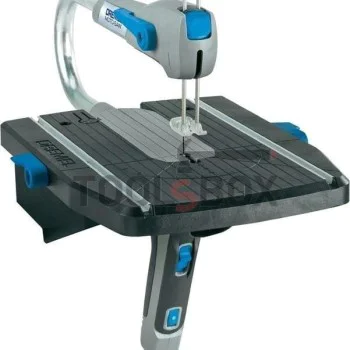
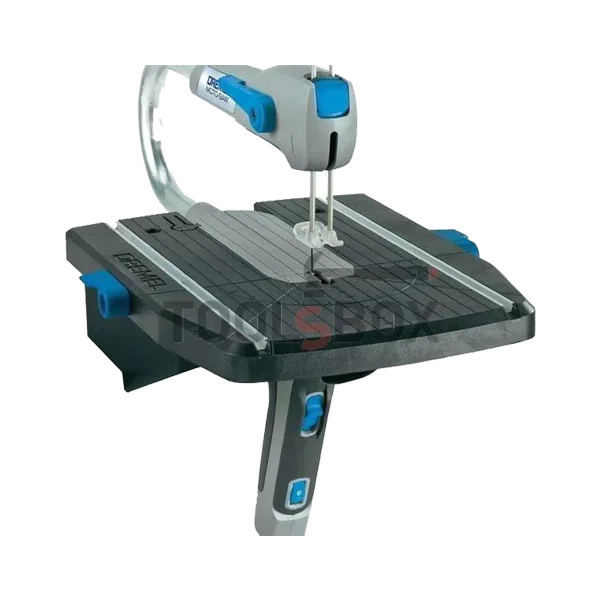
Banzig for wood
Wood band saw for precision cutting in workshops and manufacturing
A wood band saw is a stationary woodworking machine for making straight, curved, and longitudinal cuts in solid wood, panels, slats, beams, and workpieces of various thicknesses. The machine operates with a continuous band saw blade stretched between two wheels, allowing for smooth movement of the cutting tool and precise control over the cutting line. This type of equipment is valued in woodworking shops, furniture workshops, training centers, repair shops, and home workshops, where precision and repeatability are critical to the final result.
Within the group of woodworking machines, the band saw occupies a place between the circular saw, the jigsaw, and heavier production machines. It allows for template cutting, shaping curves, cutting boards to size, preparing parts for assembly, and processing non-standard shapes. When working with a properly selected blade, you can achieve a narrow kerf, less material waste, and good control when working with delicate workpieces.
What do band saws for wood include?
Models vary in size, power, construction, cutting height, kerf width, and adjustment capabilities. More compact machines are suitable for hobby workshops, repairs, crafting small parts, and occasional work with slats or thin panels. Larger band saws are designed for intensive professional use, cutting thicker material, and extended work cycles.
A typical wood band saw includes a work table, upper and lower wheels, band guides, a tensioning mechanism, safety guards, a motor, and a system for tilting or adjusting the table for miter cuts. On some models, the table is made of cast iron or steel, which improves stability during cutting. Others rely on a lighter construction, convenient for moving and installation in smaller spaces.
Main Applications
The wood band saw is valuable for operations requiring precise control over the cutting line. It is used in the manufacture of furniture, decorative elements, wooden toys, frames, models, templates, steps, cladding, and structural components. With the appropriate blade, the machine can cut softwood, hardwood, plywood, MDF, particleboard, and other wood-based materials, provided the size and load are within the capabilities of the specific model.
- Makes longitudinal cuts when cutting boards, slats, and beams.
- Curved cutting for parts with arcs, radii, and decorative contours.
- Repeatable cuts using guides, stops, and templates.
- Preparing workpieces before milling, sanding, gluing, or assembly.
- Fine shaping of small details where control is more important than speed.
Criteria for selecting a wood band saw
The size of the machine depends on the type of workpieces being processed and the available space in the workshop. The cutting height indicates the maximum thickness of the material that can pass under the guides. The throat width determines how large a workpiece can be processed between the table and the machine's arm. These two parameters are particularly important when working with countertops, wide boards, or bulky shapes.
The motor power affects performance when working with harder wood and thicker workpieces. For occasional tasks and lightweight materials, a compact machine with moderate power is sufficient. For daily cutting of solid wood and prolonged use, it is wise to opt for a model with a more stable frame, a more powerful motor, and better adjustment of the band mechanism.
The worktable is important for comfort and precision. A larger surface area keeps the workpiece stable, and a tilting table allows for angled cutting. The stops, rip fence, and adjustment scales facilitate repeatable work. For clean cuts without excessive vibration, it is important that the blade runs smoothly on the wheels, the guides are precisely adjusted, and the tension matches the width and type of the saw.
Band Saws and Compatibility
The blade is the consumable that determines the cleanliness, speed, and type of cut. Narrower blades handle curves and small radii better, while wider ones are more stable for straight and longitudinal cuts. The number of teeth, pitch, and tooth geometry are selected based on the material and the desired finish. For rough cutting, bands with coarser teeth are preferred, while for clean contours and thin surfaces, a finer saw is used.
When purchasing a new blade, check the length, width, and compatible range for the specific machine. An incompatible blade makes adjustment difficult, reduces accuracy, and can increase wear on the guides. Regularly replacing dull saw blades reduces the load on the motor and protects the workpiece from overheating, burning, or deviating from the line.
Stability, Safety, and Maintenance
A stable base and proper setup are crucial for clean and safe cutting. The machine should be placed on a level surface, and heavier models require secure fastening. The blade guards limit the exposed cutting area, and the adjustable upper guide is lowered close to the workpiece to reduce saw deflection.
When working with a band saw, it is advisable to use eye protection, ensure a steady feed of the material, and provide adequate lighting. Small workpieces should be handled with push sticks or clamps, and hands should be kept away from the cutting line. A dust collector or connection to a dust extraction system improves visibility of the cut and reduces the buildup of chips around the wheels and guides.
Maintenance includes cleaning the worktable, checking the tension, adjusting the guides, inspecting the bearings, and checking the band for cracks or missing teeth. A well-maintained machine cuts more quietly, protects the material, and extends the life of consumables. For more intensive use, it is helpful to keep several different bands on hand to switch between tasks, rather than overloading a single saw for all operations.
Wood band saw for professional and home use
For professional woodworkers, a band saw enables more flexible cutting, the creation of non-standard shapes, and the preparation of parts with precise dimensions. For discerning DIY enthusiasts, the machine expands the workshop's capabilities for repairs, furniture projects, decorations, and various woodworking tasks. The right model is chosen based on the frequency of use, the maximum size of the workpieces, available space, and the necessary accessories.
At Toolsbox.bg, you can browse wood band saws, consumables, and related woodworking equipment for various types of tasks. Compare dimensions, power, cutting capacity, and compatible bands to select a machine that fits your workshop and your work style.