
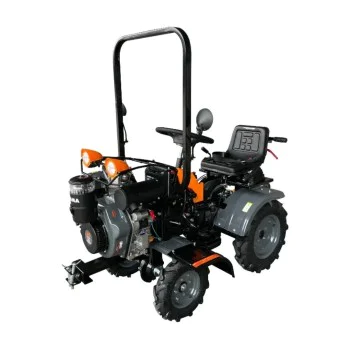
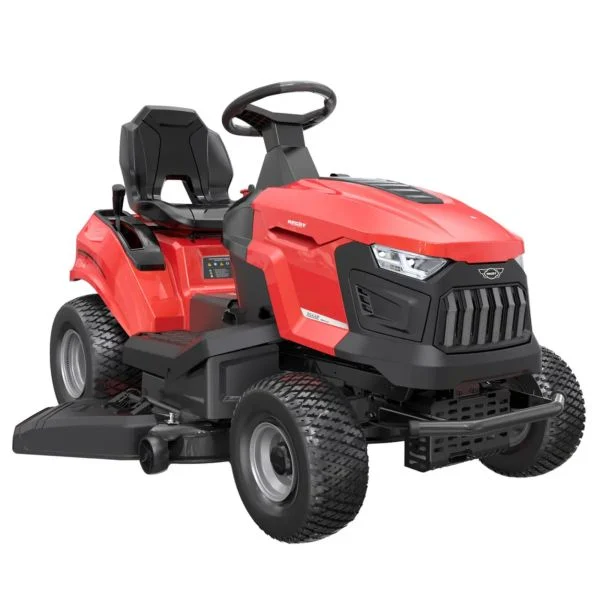
Tractor
Lawn Tractor for Mowing and Yard Maintenance
A lawn tractor is a practical gardening machine for mowing larger grassy areas, yards around houses, vacation homes, park paths, sports fields, hotel grounds, and areas around farm buildings. On large areas, working with a push mower takes more time and is more physically demanding for the operator, whereas a garden tractor reduces the time spent traversing the terrain, maintains an even grass height, and makes yard maintenance more convenient. The machine combines a seat, steering wheel, transmission, mowing deck, and a system for discharging or collecting the cut grass.
This section features garden tractors with varying cutting widths, drive types, engine power, grass discharge methods, and equipment levels. Some models are designed for home use in spacious yards, while others are engineered for more intensive work in maintaining green spaces, properties with uneven terrain, or areas with many turns and obstacles.
What is a garden tractor used for?
A garden tractor is primarily designed for mowing grass, but with the right configuration, it can also handle other property maintenance tasks. The most common uses include regular lawn mowing, tidying up a yard after rapid grass growth, maintaining grass strips along paths, working around trees, fences, and flower beds, collecting clippings in a basket, or spreading finely chopped grass through mulching.
For larger yards, the lawn tractor reduces the number of passes thanks to its wider cutting deck. In areas with numerous trees, curbs, and decorative elements, the turning radius, visibility from the seat, and ease of control are important. For sloped terrain, stability, good tire traction, and smooth acceleration are key. For flat and open areas, the working width, grass collection capacity, and constant mowing speed are the main considerations.
Types of lawn tractors based on mowing method
Side-discharge lawn tractor
Side-discharge models direct the cut grass to the side of the mower. They are practical for taller grass and areas where grass collection in a bag is not necessary. This type of machine is valued for faster coverage of large areas and for yard work where the clippings can remain on the lawn.
Ride-on mower with rear collection bag
Lawn tractors with a grass collector keep the yard looking cleaner after mowing. They collect the grass in a basket, which is emptied manually or via a mechanism depending on the model's design. Such machines are suitable for maintained lawns around residential properties, representative yards, and areas where grass clippings should not remain on paths, terraces, or decorative zones.
Mulching lawn tractor
When mulching, the grass is finely chopped and returned to the soil. This feature supports the natural fertilization of the lawn and reduces the need to remove clippings. For best results, mow the lawn regularly, without allowing too much clippings to accumulate under the mower deck. Some models use a mulching kit or plug, which must be selected based on the specific machine.
Criteria for buying a lawn tractor
When choosing a lawn tractor, it is wise to consider the size of the yard, the terrain, the method of grass collection, and the desired ease of operation. For spacious, flat areas, a wider cutting width speeds up mowing. For yards with narrow sections, trees, and turns, a more compact machine is easier to maneuver and can access tighter spots.
- Engine power: Higher power helps with thick grass, slopes, and a wider cutting deck.
- Cutting width: A wider cutting deck covers more area in a single pass but requires sufficient space to maneuver.
- Transmission: The mechanical transmission is familiar and easy to maintain, while the hydrostatic transmission offers smooth speed control with fewer gear changes.
- Cutting height: Adjustable positions help maintain the grass according to the season and ground conditions.
- Grass catcher capacity: A larger grass catcher reduces the need for emptying during a mowing session.
- Turning radius: A smaller radius makes it easier to work around trees, flower beds, curbs, and garden structures.
- Comfort: The seat, control layout, visibility, and vibration levels directly affect the ability to work for extended periods.
Compatibility, consumables, and maintenance
The lawn tractor performs best when the cutting system and drivetrain are properly maintained. When purchasing, it is helpful to check for the availability of blades, belts, filters, spark plugs, batteries, oils, wheels, and other consumables for the specific model. Compatible accessories and spare parts reduce downtime during seasonal maintenance and simplify servicing.
After mowing, the mower deck should be cleaned of clumped grass, as buildup traps moisture and hinders blade rotation. Sharp blades provide a clean cut and prevent the grass from tearing. The oil, air filter, fuel filter, spark plug, and tire pressure are checked according to the manufacturer's instructions. At the end of the season, the machine is cleaned, stored in a dry place, and prepared for the next season.
Safe Operation of a Lawn Tractor
Before mowing, clear the area of stones, branches, toys, metal objects, and other obstacles that could damage the blades or be ejected by the mower. The operator should wear sturdy shoes and watch for people, animals, and objects around the machine. On sloped areas, the manufacturer's guidelines for slope, movement, and turning must be followed. Replacing blades, belts, or consumables must be done with the engine off and the machine secured.
For best results, do not mow the grass too short, especially in hot weather or after a prolonged drought. On wet grass, traction decreases and the clippings stick to the body, so dry terrain is easier on the machine and provides a more even cut. With regular mowing, the lawn tractor runs more smoothly, the lawn looks better maintained, and the load on the engine and cutting system remains lower.
Choosing a lawn tractor from Toolsbox.bg
At Toolsbox.bg, you can select a lawn tractor based on the size of your yard, power, transmission type, cutting width, grass discharge method, and the necessary maintenance supplies. Browse the available models, compare technical specifications, and choose a machine that suits your terrain, frequency of use, and desired level of mowing comfort.