
Power Women
Welding rods for repair, installation, and metal fabrication
Welding rods for manual arc, MIG/MAG, and TIG welding are needed for joining, repairing, and fabricating metal parts in workshops, service centers, construction sites, garages, or farms. They are used for welding steel, profiles, pipes, strips, fences, doors, frames, machines, and metal structures. A properly selected welding machine provides a stable arc, a clean weld, and better control over the process, whether the job is a one-time repair or heavy-duty professional use.
This section features welding machines with different operating principles, power sources, maximum welding currents, modes, and accessories. Some models are compact inverter machines for coated electrodes, while others are designed for feed-through welding or for the TIG process with finer control. The differences between them directly affect the welding speed, the type of weld, the thickness of the metal being processed, and the required consumables.
Types of Welding Machines by Welding Process
The choice starts with the welding method. MMA welders use coated electrodes and are preferred for repair work, assembly of metal components, outdoor work, and tasks where mobility is important. They do not require shielding gas and are used with electrodes of various diameters depending on the material and thickness of the workpiece.
MIG/MAG machines use welding wire and shielding gas or flux-cored wire in models that support it. They are a good choice for longer welds, production work, automotive repairs, metal structures, and sheet metal fabrication. Their advantage lies in the uniform wire feed and higher productivity when parameters are properly adjusted.
TIG welding is preferred for more precise work, thin-walled parts, and clean welds. TIG machines are preferred for stainless steel, finer assemblies, service operations, and parts where the appearance of the joint is of great importance. Some welding machines combine two processes, such as MMA and TIG Lift, which expands the machine's applications without the need for a separate unit.
| Welding Machine Type | Application | Typical applications |
|---|---|---|
| MMA | Coated electrodes | Repair, installation, metal profiles, outdoor work |
| MIG/MAG | Welding wire and shielding gas | Auto repair, fabrications, sheet metal, longer welds |
| TIG | Tungsten electrode and shielding gas | Precision welds, stainless steel, thin parts |
Inverter and transformer welders
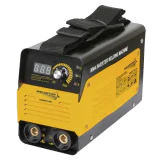
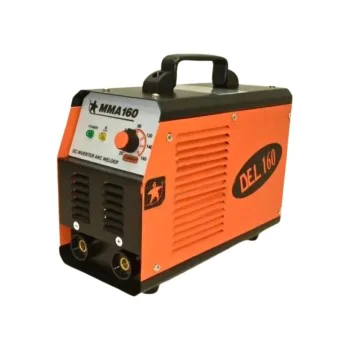
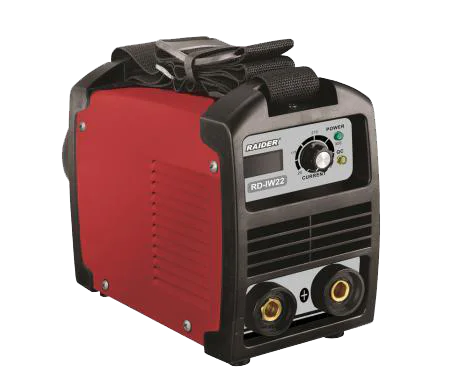
Inverter welders are lighter, more compact, and easier to transport between job sites. Their electronics maintain a more stable arc and facilitate easier ignition, and many models feature functions such as Hot Start, Arc Force, and Anti Stick. They are suitable for installers, craftsmen, service technicians, and home users who work in various locations and want a machine that is easy to set up.
Transformer-based machines are heavier and have a simpler design. They are mainly used in stationary workshops and are known for their durability under heavy use. When choosing between the two types, the frequency of use, required mobility, available power supply, and the type of welding tasks are important factors.
Parameters for selecting an electric welder
The first technical parameter is the welding current. Higher amperage is needed for thicker materials and larger electrodes, while thin parts require finer control. For standard repair work, electrodes of 2.0, 2.5, or 3.2 mm are often used, while more substantial structures may require a more powerful machine and a longer duty cycle.
The duty cycle indicates how long the machine can weld at a set current before cooling down. A lighter model is sufficient for short home repairs, while continuous welding in a service shop or workshop requires a machine with better thermal resistance and fan cooling. The power supply also matters: many machines operate on 230 V, while more powerful versions may require a 400 V three-phase power supply.
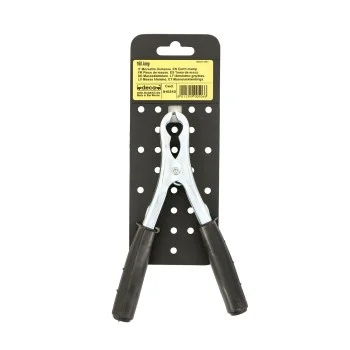
When purchasing, compare the current settings, display, cable length, type of ground clamp, electrode holder, torch, wire feed rollers, and compatible consumables. For MIG/MAG machines, checking the wire diameter, spool size, and required gas is particularly useful. For TIG work, the torch, ignition, current regulation, and available argon shielding accessories are important.
Materials, Consumables, and Accessories
Welding machines operate at full capacity only with properly selected electrodes, welding wire, nozzles, contact tips, torches, cables, and protective accessories. Electrodes vary in diameter, coating, and intended use for specific metals. MIG/MAG wire is selected based on the material, thickness, and shielding gas. In the TIG process, tungsten electrodes, filler material, and a stable argon supply are crucial.
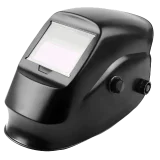
For safe operation, a welding mask, gloves, an apron or protective clothing, adequate ventilation, and a well-prepared work area are required. Cables must be in good condition, connections secure, and parts cleaned of rust, paint, and grease when the process requires it. Regular cleaning of the ventilation openings, the torch, and the contact elements extends the machine's service life and reduces the risk of interruptions during operation.
Welding Machines for Professional and Home Use
For the home, cottage, or garage, a compact MMA inverter with easy adjustment and low weight is often sufficient. Such a device is convenient for repairing doors, fences, racks, metal frames, and small structures. For auto repair shops, manufacturing workshops, or construction sites, more powerful machines with a higher duty cycle, stable cooling, and compatibility with the necessary consumables are more suitable.
When tasks involve different materials and thicknesses, combination welding machines offer greater flexibility. They save space and allow switching between MMA, MIG/MAG, or TIG modes depending on the available equipment and the specific job. For precision work and visible welds, the TIG process is a strong choice, while for quickly joining steel parts, MIG/MAG often provides a better pace.
Choose a welder based on your actual needs
Before purchasing, consider the type of welding, the thickness of the metals, the power source, the required mobility, and the consumables you'll use most often. This way, your choice will be more precise, and the machine will meet the specific tasks in your service center, workshop, or on-site. Browse the selection of electric welders at Toolsbox.bg and choose a machine, accessories, and consumables based on your work method, workload, and the requirements for the weld.