
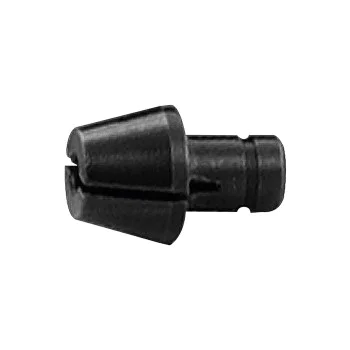
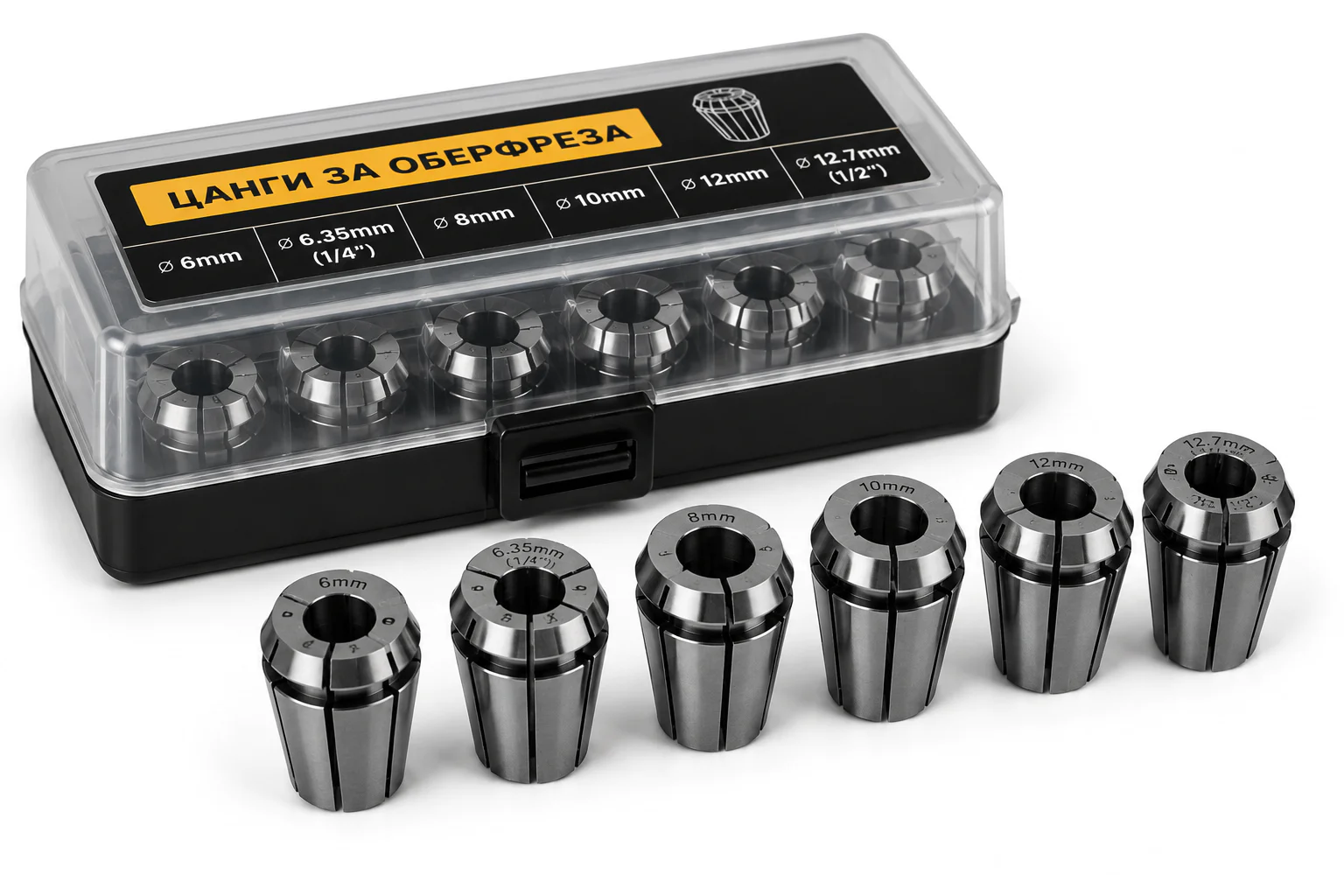
Tongs for overmilling
Router collets for secure clamping of the router
Router collets are small but very important components of the system for securing routers, router bits, and other cutting attachments. They secure the tool shank in the machine spindle and ensure stable rotation when machining wood, panels, MDF, particleboard, plywood, and other materials compatible with the specific router. A properly selected collet reduces runout, prevents the cutting tool from slipping, and helps achieve a cleaner cut when routing channels, chamfers, profiling, copying, and decorative finishing.
This section features collets with various inner diameters, designed for use with common router shank sizes. They are used with hand routers, router tables, and workshop-grade machines when replacing a worn collet, switching to a different router size, or maintaining precision during batch production.
What are collet chucks used for in router work?
A collet is a precision-machined sleeve with slots that contracts evenly around the shank of the cutter when tightened with the spindle nut. When the size matches correctly, it keeps the tool centered and reduces vibrations. This is especially important for deep milling, working with larger-diameter cutters, and operations where a smooth edge or repeatable profile is required.
Router collets are selected not only by diameter but also by shape, length, external profile, and method of attachment to the specific machine. Different router manufacturers use different spindle standards, so an identical internal size is not always sufficient for proper installation. When replacing a collet during maintenance, it is advisable to compare the dimensions of the old collet, the nut, and the machine's clamping area.
Applications in Woodworking and Repair
With the correct collet, the router operates more stably when cutting joints, grooves, rebates, decorative profiles, rounding edges, template cutting, and shaping holes. In furniture manufacturing and small workshops, clamping accuracy directly affects the quality of the joint and the wear on the cutting tool.
For home use, collets are useful for machine maintenance and for expanding your router bit collection. When working with router bits with a 6 mm, 8 mm, 12 mm, or 1/4-inch shank, you need a collet with the same inner diameter. Incorrectly clamping a smaller shank into a larger collet is dangerous and leads to poor alignment.
How to Choose the Right Collets for a Router
When selecting router bits, the key factors are the shank size of the bit and compatibility with the machine model. Check the markings on the old collet, the router's technical specifications, and the permissible tool diameters. When working with metric and inch-sized routers, do not mix sizes, because the difference may seem small but significantly affects the tightness.
- Inner diameter: must match the shank of the router bit-for example, 6 mm, 8 mm, 10 mm, 12 mm, or inch-based variants.
- Outer shape: The collet profile must fit the spindle and nut of the specific router bit.
- Condition of the slots: clean and uniform slots help ensure even pressure around the shank.
- Material and finish: high-quality steel and precise geometry are important for reduced runout and a longer service life.
- Operating conditions: For professional use and frequent router bit changes, it is advisable to keep spare collets on hand for the most common sizes.
Sizes and compatibility
The most commonly sought-after router chucks are for cutters with 6 mm, 8 mm, and 12 mm shanks, while some machines use 1/4 and 1/2 inch shanks. Metric and inch sizes are not interchangeable. For example, 1/4 inch is close to 6.35 mm, which is not the same as 6 mm. Such a difference creates a risk of unstable clamping, increased vibration, and marks on the machined surface.
When purchasing, also pay attention to the clamping nut. Some systems require the collet to click into the nut before insertion into the spindle. If installed incorrectly, the collet will not release properly or will not clamp the cutter evenly. For clean and safe operation, the router bit must fit deep enough into the collet without the shank touching the bottom of the spindle.
Maintenance, Safety, and Precision
Even a high-quality collet loses precision when dust, resin, shavings, or metal particles get inside it. Clean the interior after use, protect the contact surfaces from impact, and do not tighten an empty collet without a cutter installed. Signs of deformation, rust, cracks, or uneven clamping are indications that it needs to be replaced.
Router chucks operate at high speeds, so proper installation is directly related to safety. Before changing the chuck, disconnect the machine from the power source, use the designated wrenches, and tighten without excessive force. Overtightening damages the collet and nut, while undertightening risks the tool slipping. If you hear unusual noise, feel vibrations, or notice visible wobble, stop work and check the fastening.
When Replacement Is Necessary
Replacement is necessary if the gripping surfaces are worn, the router shows visible wobble, release is difficult, there are signs of overheating, or when the machine no longer holds the tool securely. In busy workshops, spare router collets save time during operation changes and help maintain consistent precision.
When working with different routers, it is convenient to have a separate collet for each main size. This avoids compromising clamping and protects both the machine and the cutting tools. This is a practical solution for installers, carpenters, furniture makers, service technicians, and demanding DIYers.
Choose router collets based on your machine and the task
Browse the available router collets at Toolsbox.bg and select an option based on the router size, machine model, and working load. The right collet is a small accessory with great significance for a clean cut, stable guidance, and safe operation of the router.