
Paws for windows
Glass Grippers for Secure Gripping, Handling, and Installation
Glass grippers are specialized vacuum devices designed for working with smooth, non-porous surfaces-such as double-pane windows, display cases, mirrors, ceramic tiles, laminated panels, and other flat materials. They facilitate the lifting, moving, and positioning of items that are difficult to grasp by hand, are slippery, or require precise placement without scratching the surface. When installing windows and doors, glazing, performing repairs, manufacturing furniture, and doing finishing work, the vacuum gripper helps ensure more controlled movement and a better grip.
At Toolsbox.bg, you'll find models for different load capacities and operating methods-from compact handheld grippers with a single suction cup to versions with two or three vacuum cups for greater stability. Options are available with plastic, metal, or aluminum handles, with rubber cups of various diameters, with a lever mechanism, or with a pump to create a vacuum. The choice depends on the size of the glass, the weight, the frequency of use, and the required positioning accuracy.
What tasks are vacuum grippers used for?
Their primary function is to create a temporary vacuum grip between the rubber cup and the smooth surface. This allows the glass to be held without drilling, clamping with metal jaws, or applying direct pressure to the edges. This is valuable when installing windows, doors, railings, display cases, shower enclosures, glass tables, mirrors, and decorative panels.
Glass clamps are also useful in a service environment, when moving panels in a workshop, when arranging sheet materials, and when installing smooth cladding. When renovating a bathroom or kitchen, they assist in the precise placement of large tiles and porcelain elements when their surface allows for vacuum adhesion. For safe operation, the material must be clean, dry, smooth, and free of texture, cracks, or dust in the contact area.
Types of glass clamps
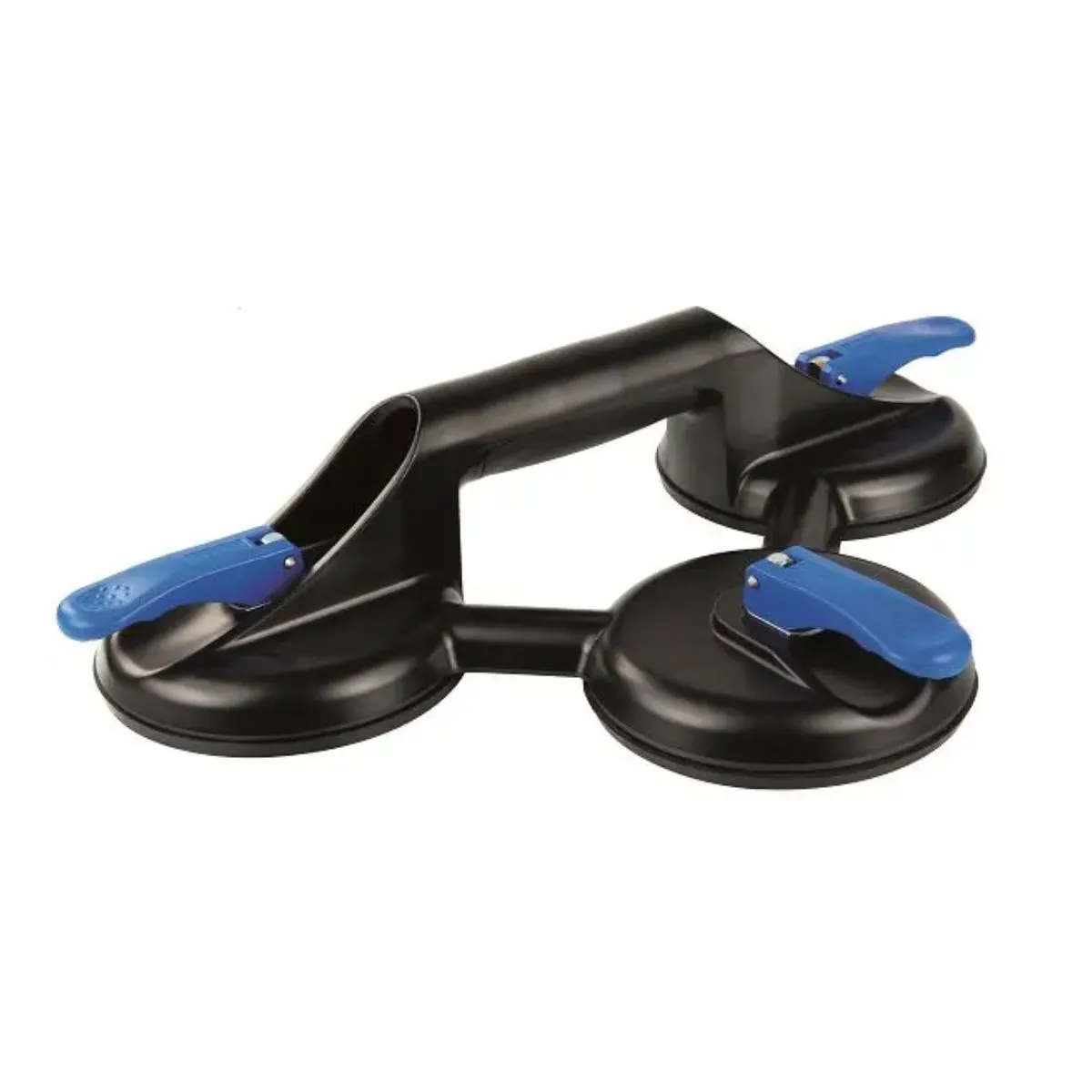
The different models vary in the number of suction cups, locking mechanism, load capacity, cup size, and handle material. Single-cup suction cups are convenient for smaller details, controlled positioning, and working in confined spaces. Double models distribute the load over a larger area and provide more stable handling of the surface. Triple models are preferred for larger and heavier items, where a stronger grip and more convenient transport by two people are required.
| Clamp type | Practical use | Distinctive features |
|---|---|---|
| With a single suction cup | Small glass panes, mirrors, tiles, lightweight panels | Compact design, quick installation, convenient for precise positioning |
| With two suction cups | Double-pane windows, display cases, larger panels | Better pressure distribution and stable grip |
| With three suction cups | Heavier and bulkier items | Larger contact area and more secure handling during transport |
| With a vacuum pump | Professional installation and longer-lasting grip | Vacuum control; on some models, a pressure gauge |
How to choose a glass gripper
When purchasing, the first thing to consider is the load capacity. It must be appropriate for the weight of the material and the number of clamps used. With large glass panels, more than one suction cup is typically used to distribute the load and reduce warping of the surface. The size of the vacuum cup also matters-a larger diameter increases the contact area but requires a sufficiently flat surface for adhesion.
The next criterion is the surface. Vacuum cups work properly on smooth and non-porous materials. They are not a good choice for rough concrete, untreated wood, textured tiles, highly curved surfaces, or dirty areas. On textured glass, film, scratches, or moisture, the grip weakens, so the contact area must be cleaned beforehand.
The body material affects the weight and stability during use. Plastic handles are lightweight and comfortable for occasional use. Metal and aluminum models are preferred for more intensive work in installation teams and workshops. The rubber cup must be elastic, free of deformations and damage, because it is this part that forms the vacuum seal.
Safety When Working with Glass
Glass is a heavy and fragile material, so the vacuum lifter should be treated as an aid, not as a substitute for proper lifting technique. Before each lift, inspect the cups, handles, and locking mechanisms. Do not work with cracked rubber, a damaged lever, or a contaminated contact surface. After securing the load, it is advisable to perform a brief test lift at a low height to ensure the grip is stable.
When moving large panels, it is advisable to have two people involved and to wear gloves, safety shoes, and clothing that protects against cuts. The clamp must not be loaded beyond the manufacturer's specified limit, nor should it be used on surfaces with questionable traction. During vertical installation, movement must be smooth, without sudden turns or impacts on the edges.
Maintenance and Storage
Proper maintenance extends the life of vacuum grippers and preserves gripping strength. After use, clean the rubber cups of dust, sand, adhesives, and construction debris. Store in a dry place, away from sharp objects, direct heat, and oils that damage the rubber. Do not leave the grippers compressed under heavy loads, as this causes the cups to deform and lose their even adhesion.
With regular professional use, it is advisable to inspect the mechanisms periodically and replace damaged components in a timely manner. A clean and flexible suction cup, a stable handle, and proper locking are the foundation for safe operation during installation, transport, and positioning of glass components.
Choose the right glass clamps for the job
Glass clamps are a valuable tool for installers, construction crews, furniture makers, service technicians, and discerning DIYers. When selected correctly, they save effort, provide better control over the piece, and reduce the risk of dropping or damaging the surface. Browse the available options at Toolsbox.bg and choose a model with the appropriate load capacity, number of suction cups, and design for the planned work.