
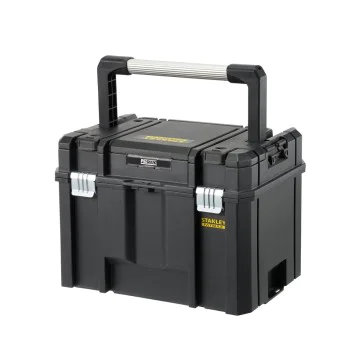
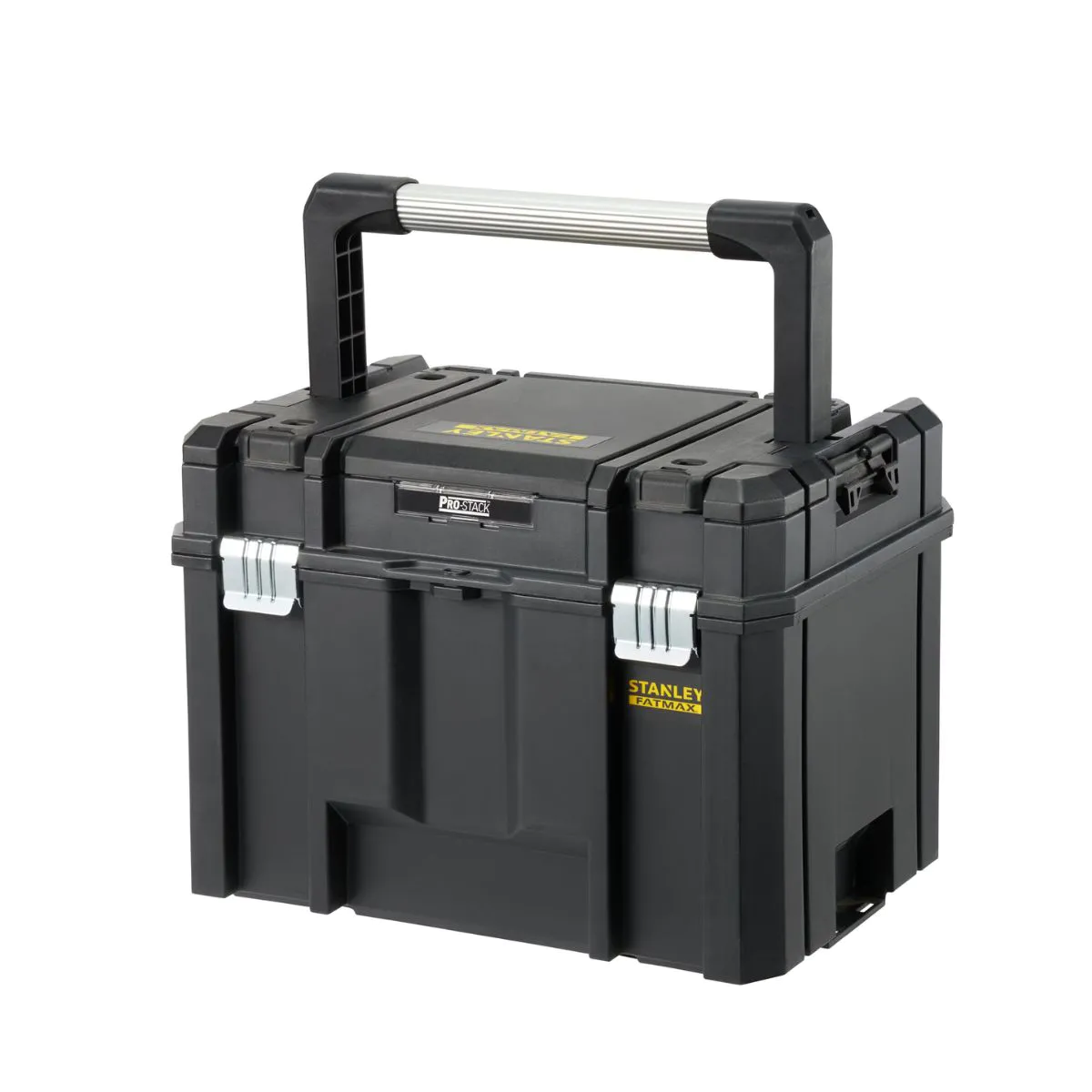
Toolbox
Tool Case for Organized and Safe Work
A tool case is a practical solution for storing, transporting, and quickly accessing hand tools, small consumables, and accessories for repair, installation, maintenance, and workshop work. A well-chosen tool case protects the contents from spillage, impacts, dust, and moisture, while the organization of the compartments saves time on every task. It is useful for both professionals-such as craftsmen, technicians, and installers-as well as for home users who keep screwdrivers, pliers, bits, sockets, fasteners, and measuring tools all in one place.
Within the category of toolboxes and organizers, this type of accessory occupies a middle ground between small fastener boxes and larger tool systems. The toolbox is lighter and more compact than a large wheeled case, yet offers more protection and organization than a standard bag. That is why it is used for home repairs, car maintenance, electrical work, plumbing, furniture assembly, construction finishing work, and machine servicing.
Types of tool cases based on application
The different models vary in size, internal layout, material, closure type, and load capacity. For a smaller set of hand tools, a compact case with a single main compartment and a tray for small parts is ideal. For technicians who carry bits, drill bits, dowels, screws, and power tools, options with more compartments, movable dividers, or an organizer in the lid are more practical.
| Type | Key Features | Intended use |
|---|---|---|
| Compact case | Small volume, lightweight, main compartments | Home repairs, minor maintenance, set of screwdrivers and pliers |
| Case with organizer | Lid with compartments, sections for fasteners and supplies | Installation work, electrical and plumbing repairs, on-site work |
| Heavy-duty case | Sturdier body, sturdy hinges and latches | Service, construction, transporting heavier hand tools |
| Modular toolbox | Compatibility with other boxes or storage systems | Mobile teams, workshops, organization by tool type |
Criteria for selecting a tool case
A tool case is selected based on the contents to be carried, the frequency of transport, and the work environment. Size is the first practical consideration. A case that is too small limits organization, while a model that is too large is harder to carry and takes up more space in a car, cabinet, or work area. A good starting point is a list of basic tools: a hammer, screwdrivers, pliers, wrenches, a tape measure, a knife, a level, bits, drill bits, and small fasteners.
The material also affects convenience. Plastic toolboxes are lightweight, corrosion-resistant, and easy to clean. Metal or combination options offer greater mechanical durability under harsh conditions. When working on a construction site or in a workshop, it makes sense to look for a tool case with a reinforced body, a sturdy handle, and reliable fasteners. For home use, a lightweight model with good internal organization is often sufficient.
Internal layout and access to contents
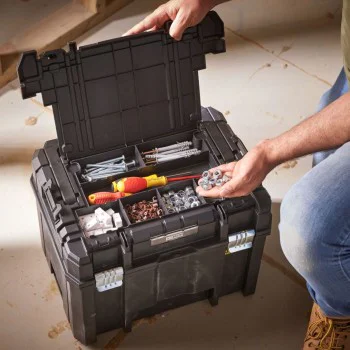
The layout inside the case determines how quickly you can find the tool you need. Trays are convenient for frequently used small accessories, while the compartments in the lid keep screws, nuts, dowels, and bits separated by size. Removable dividers provide flexibility when reconfiguring the set. When storing more delicate measuring tools, electronic devices, or power tool accessories, it's helpful to separate the areas so that metal parts don't knock against each other.
A tool case with clearly divided sections makes it easier to keep track of items after finishing a job. A missing wrench, bit, or socket is easier to spot, which reduces losses and delays on the next task. When working on the go, the lid must close securely to prevent small accessories from shifting during transport.
Handles, latches, and hinges
The handle bears the load during transport, so it must be comfortable to grip and securely attached to the body. The latches keep the case closed while in motion, and the hinges are stressed with every opening. In daily professional use, these details directly affect the product's lifespan. Metal latches and reinforced hinges are an advantage for heavier contents, while plastic mechanisms are sufficient for a lighter set intended for home use.
Practical applications in service, workshops, and at home
A tool case finds its place wherever order and mobility are valued. In a workshop, it helps organize a set for a specific task-electrical repairs, furniture assembly, automotive maintenance, or fine finishing work. During construction and installation on-site, the case keeps necessary accessories together and reduces trips to the car or storage area.
For home use, a well-organized tool case solves the problem of scattered screwdrivers, pliers, and fasteners in drawers and cabinets. This way, the necessary tool is close at hand for assembly, minor repairs, replacing accessories, installing shelves, or maintenance in the garden and garage. For professional teams, several separate toolboxes allow equipment to be organized by task or by worker.
Compatibility with tools, accessories, and consumables
When organizing the toolbox, it is best to group tools by function and size. Heavy hand tools should be placed at the bottom, while small consumables go in the compartments. Sharp accessories, knives, and drill bits should be kept in their own boxes or slots. When transporting power tools, there must be enough space for the cord, charger, batteries, and attachments without putting pressure on the tool's body.
A tool case with modular compatibility is convenient when using multiple boxes for different sets. This way, the work set can be supplemented according to the task without having to rearrange the entire equipment. For small consumables, a transparent organizer or a compartmentalized lid makes it easier to identify items and reduces the risk of mixing up different fasteners.
Maintenance and Safety
Regular cleaning extends the life of the toolbox and protects the tools from dirt. Dust, shavings, pieces of insulation, and small debris accumulate in the corners and can damage mechanisms or scratch measuring instruments. After working in a damp environment, it is advisable to dry the tools before storing them. Latches and hinges should move freely, and broken dividers or cracked parts should be replaced, or the toolbox should be relieved of excessive load.
Safety starts with proper weight distribution. An overloaded toolbox is difficult to carry and may open upon impact. Sharp tools should be placed so they do not injure the hand when being removed. When transported in a vehicle, the toolbox must remain stable to prevent it from sliding and hitting other machinery or equipment.
At Toolsbox.bg, you can browse various options for storing and transporting tool sets-from compact solutions for home use to more durable models for daily work. Choose a tool case based on its capacity, material, interior layout, and the way you work.