
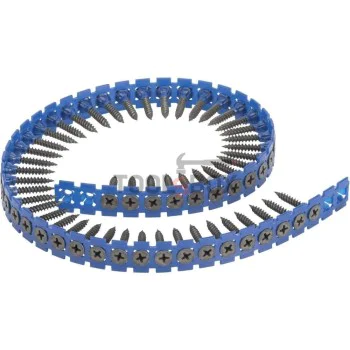
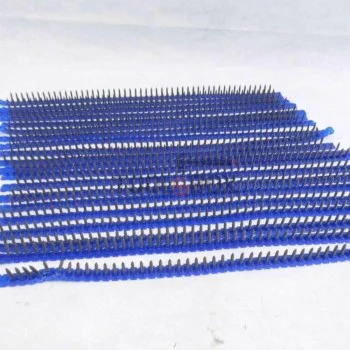
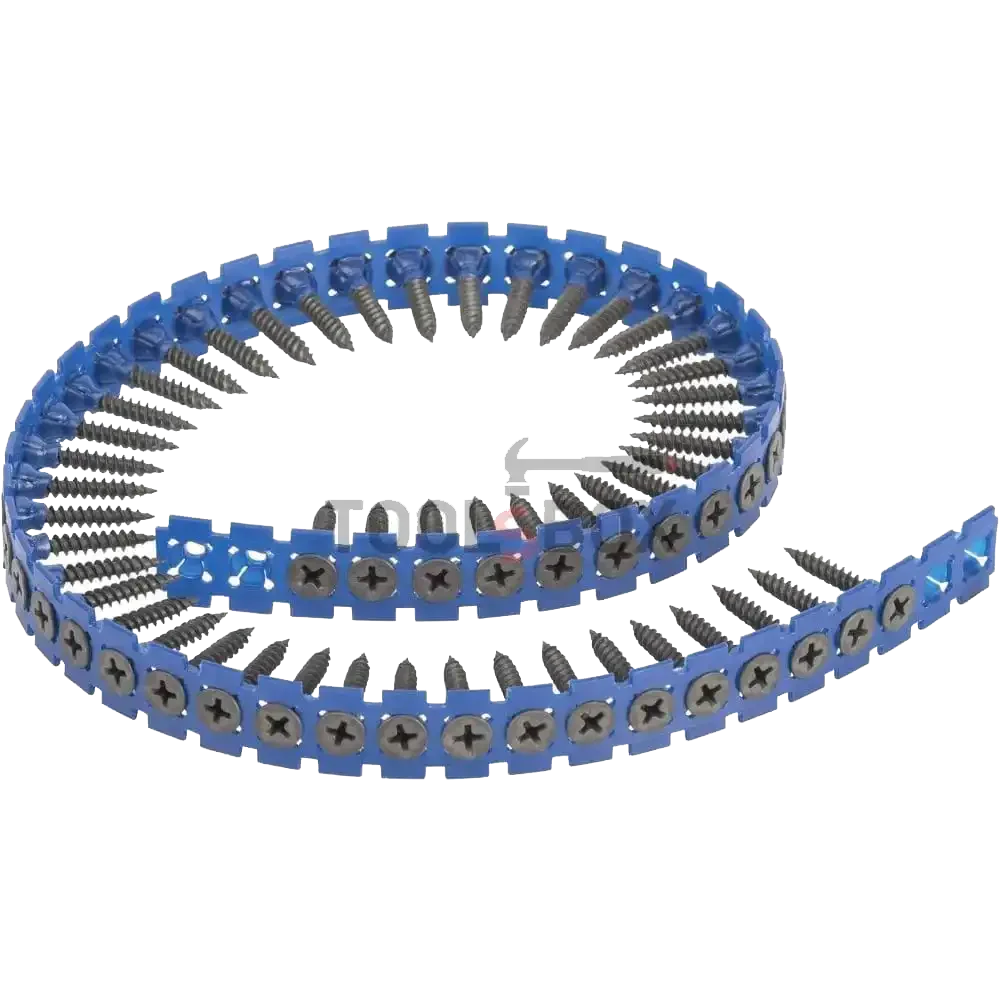
Screws on tape for plasterboard
Drywall Screws on a Strip - Quick Installation with a Cordless Screwdriver
Plasterboard screws on a strip are fasteners arranged in sequence on a plastic or paper strip for use with a cordless screwdriver or a continuous-screwing attachment. They are designed for fastening drywall panels to metal profiles or wooden substructures where a consistent installation rhythm, fewer interruptions, and a clean countersink of the head into the surface are desired. The continuous feed saves time when cladding walls, ceilings, partition walls, wall linings, and drywall construction with a large number of fastening points.
Unlike individual screws, strip screws are fed sequentially from the machine's magazine. The installer holds the tool steadily, and the screw is automatically positioned in front of the bit, reducing fatigue during repetitive operations. This type of fastener is valuable for professional construction teams, but it is also practical for precise home repairs when working on larger areas or with multiple layers of drywall.
What are drywall screws used for?
Their primary application is drywall construction-installing drywall to studs, building suspended ceilings, and lining niches, shafts, partition walls, and interior structures. A properly selected screw grips the surface without tearing the paper, sinks in smoothly, and prepares the surface for spackling.
For metal structures, a screw with a fine thread is usually preferred because it works well in thin-walled profiles. For wooden grids, a coarse thread is used, which grips better into the wood fibers. For harder profiles or specific installation tasks, there are options with a self-drilling tip, which facilitates penetration into the metal without pre-drilling when the thickness of the substrate allows it.
Main types based on thread and tip
| Screw type | Typical application | What to consider |
|---|---|---|
| Fine thread | Drywall to metal profiles | Profile thickness, screw-in depth, compatible bit |
| Coarse thread | Drywall to wooden structure | Wood density, screw length, secure fastening |
| Self-drilling | Installation on a harder metal substrate | Tip type, machine power, stop adjustment |
How to choose sheet metal screws for drywall
The selection starts with the substrate to which the panel is attached. Metal studs, wooden furring strips, and multi-layer installations require different thread geometries and lengths. Short screws are suitable for standard single-layer installation on metal studs, while longer versions are used for additional layers of drywall or deeper penetration into wood. The length should not be excessive, as this leads to slower screwing, greater strain on the machine, and the risk of unnecessary penetration through the back of the structure.
The shape of the head also matters. Drywall screws typically have a countersunk head that sinks slightly below the surface without tearing the paper layer. This allows the joint compound to cover the area evenly, creating a smooth base for subsequent painting or finishing. The sharp tip facilitates the start of screwing, while the stable slot reduces slippage of the bit.
- Screw length-depends on the thickness of the surface, the number of layers, and the type of substrate.
- Thread-fine for metal profiles, coarse for wood, special or self-tapping for harder substrates.
- Machine compatibility-the strip must fit the magazine, and the bit must match the slot, often PH2.
- Coating-phosphated or protected surfaces facilitate work with dry construction mixtures and minimize unwanted marks.
- Number of screws per strip-affects reloading frequency and convenience during continuous work.
Compatibility with magazine screwdrivers and attachments
Strip screws work best when paired with a suitable magazine screwdriver or automatic feed attachment. When purchasing, compare the width and pitch of the strip, the maximum screw length for the specific magazine, the bit type, and the depth setting. A properly adjusted depth stop sinks the head evenly with every turn, without tearing the cardboard or leaving protruding fasteners.
For more precise installation, it is helpful to monitor the condition of the bit. A worn tip begins to slip in the slot, damages the head, and slows down the work. With more intensive use, spare bits, depth stops, and consumables for the specific machine ensure consistent results. A clean magazine and proper tape placement reduce the risk of jamming and improper feeding.
Practical guidelines for clean and secure installation
Even screwing is crucial for the strength of the cladding. The screw must press the panel against the profile, but the head must not tear the cardboard. Screwing too deeply weakens the hold, while insufficient penetration makes filling difficult. The depth setting is adjusted on a test piece of material, after which it is maintained for the entire series of fasteners.
Storage also affects performance. It is best to store strip screws in a dry room, away from moisture and dust, to keep the strip intact and ensure the screws feed evenly. During transport, the packages should not be compressed too tightly, as a deformed strip can hinder movement through the magazine.
At Toolsbox.bg, you can select drywall screws based on the machine, substrate, and specific installation task. Review the available sizes, thread types, and strip options to ensure precise fastening, faster work, and a clean finish on drywall structures.