
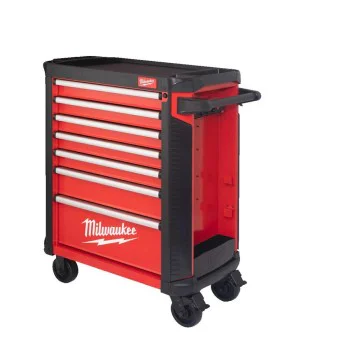
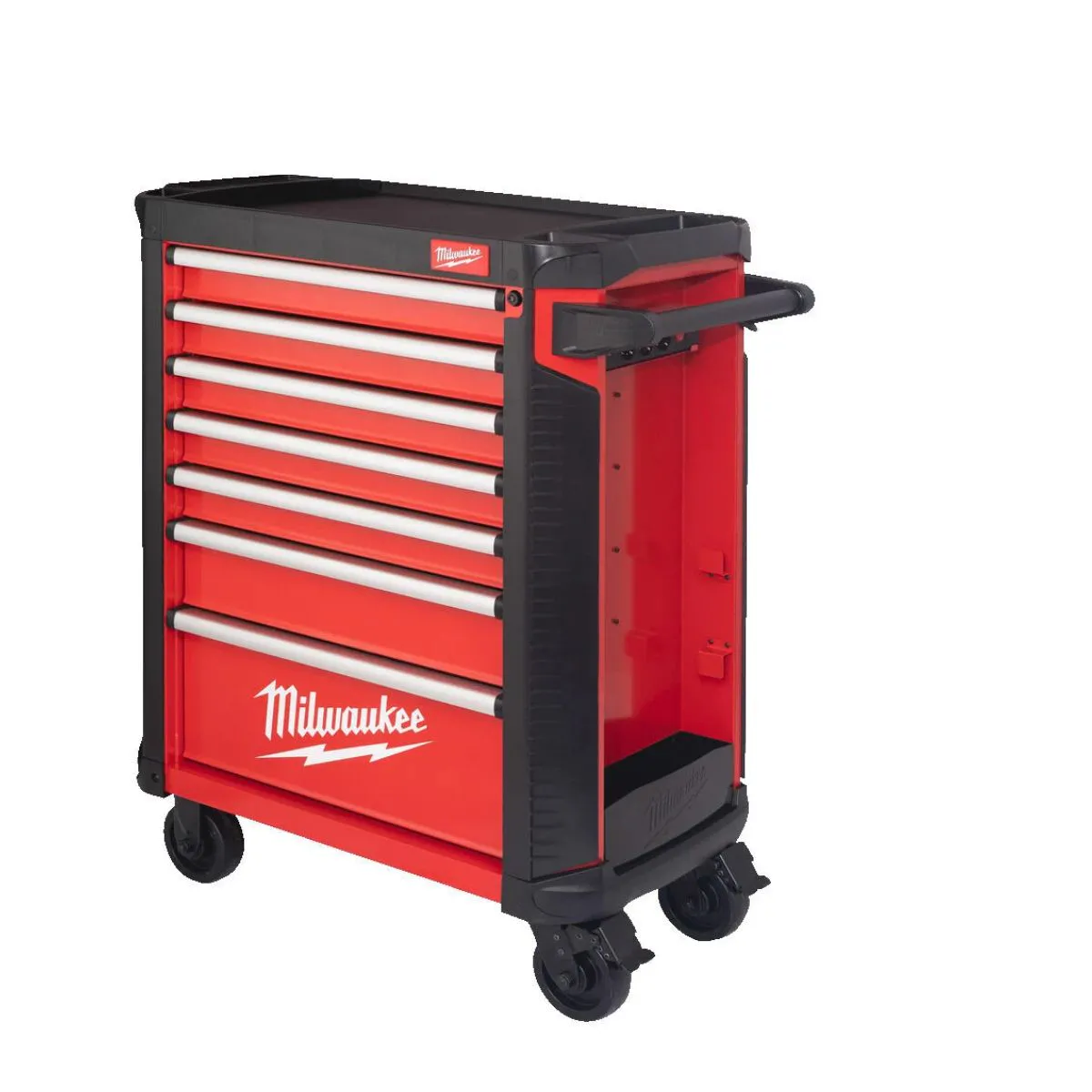
Tool trolleys
Tool carts for organized and mobile work in the workshop
Tool carts are practical equipment for auto repair shops, workshops, garages, and mobile repair areas. They keep hand tools, sockets, wrenches, screwdrivers, measuring tools, consumables, and small accessories close to the work area, eliminating the need to search through shelves and cabinets. When repairing cars, maintaining machinery, or performing assembly work, a well-organized cart facilitates the workflow and keeps the area around the vehicle or workbench tidy.
In a car repair shop, time and order are critical to the success of every operation. Tool carts allow kits for disassembly, diagnostics, replacement of consumables, and general repairs to be grouped in a way that's convenient for the specific task. This way, the mechanic has the necessary supplies right by the lift, the tire-changing area, or the workbench, without having to constantly move heavy boxes and crates.
What Do Tool Carts Include?
Tool carts offer various solutions for storing and transporting tool equipment. Some models are open service carts with shelves for quick access, while others are wheeled cabinets with drawers, locks, and side panels for additional holders. There are compact options for limited space, taller cabinets with more compartments, and work carts with a work surface for temporary preparation of parts.
Differences can be seen in the number and depth of the drawers, load capacity, type of wheels, body material, locking mechanism, and interior layout. For heavy sockets, ratchets, and specialized auto service kits, a more stable body and smooth-gliding drawers are required. For light hand tools, sprays, rags, and small consumables, open shelves or combination configurations work well.
Main Types and Applications
| Cart type | Application | What to Consider |
|---|---|---|
| Open service cart | Quick access to frequently used tools, supplies, and parts | Number of shelves, side panel height, stability during movement |
| Trolley with drawers | Organization of wrenches, sockets, screwdrivers, pliers, and measuring tools | Drawer depth, guides, locking mechanism, load capacity of each compartment |
| Combination cart | Working with tools and accessories that change throughout the day | Layout of shelves and drawers, access from different sides |
| Cabinet on wheels | Larger set of hand tools for professional use | Total load capacity, body material, wheel brakes |
Selection based on the workspace and workload
When selecting tool carts, the key factors are the actual tasks, available space, and the weight of the equipment. In a small garage, a compact cart with several drawers is more convenient, as it can be pushed against the wall and does not obstruct movement. In a busy auto repair shop, larger models with a reinforced metal body, sturdy wheels, and a locking system are preferred, as tools are moved between workstations and remain within reach throughout the day.
Size matters not only for storing tools but also for moving freely around the car. A cabinet that is too large makes it difficult to work in tight spaces, while a model that is too small quickly becomes overfilled. A good rule of thumb is to allow space for the current set and for future additions of specialized wrenches, adapters, extensions, pliers, bits, and consumables.
Drawers, shelves, and interior organization
Drawers help separate different groups of tools. Shallow drawers are convenient for wrenches, sockets, bits, and measuring tools, while deeper ones accommodate power tools, larger accessories, and tool sets in cases. The shelves provide easy access to sprays, grease, rags, small parts, and accessories that are frequently used throughout the workday.
Tool carts with dividers, non-slip mats, perforated side panels, or the option to attach hooks are practical. Such features keep things organized and minimize metal-on-metal contact during movement. The locking mechanism is valuable in shared service areas, mobile teams, and workshops where several people work with the same equipment.
Wheels, Handles, and Stability
Mobility is one of the reasons tool carts are so useful in auto repair shops. The wheels should roll smoothly over concrete, tile, or industrial flooring, and the brakes should secure the cart when working next to a vehicle. Swivel wheels make it easier to maneuver in narrow aisles, while a larger diameter helps when navigating small bumps.
The handle should be comfortable to grip and positioned so that the loaded cart can be pushed with control. A stable base minimizes wobbling when drawers are open, and even weight distribution protects the wheels and axles from excessive strain. For heavy sets, it is advisable to place the heaviest tools in the lower compartments.
Materials, Maintenance, and Safe Operation
Tool carts for service use are typically made of metal with a powder-coated finish or another durable finish that withstands daily friction and dirt. The worktop and shelves should be easy to clean of dust, oils, and work debris. Rubber or polymer mats reduce slippage and protect surfaces from scratches.
Regular maintenance includes cleaning the drawers, inspecting the runners, tightening the fasteners, and cleaning the wheels of shavings, dust, and small debris. Do not overload the cart beyond its specified load capacity. When moving across sloped areas, the load must be secured, the drawers closed, and the brakes released only while in motion.
Tool Carts at Toolsbox.bg
Tool carts are a smart investment for any auto repair shop, technical workshop, and well-equipped garage. They combine storage, mobility, and better organization in the workplace. At Toolsbox.bg, you can choose a model based on the size of your space, the number of tools, the need for locking, and the way you work every day. Choose a cart that fits your tasks and helps keep your tools where they're needed.