
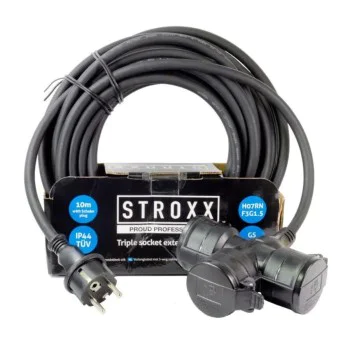
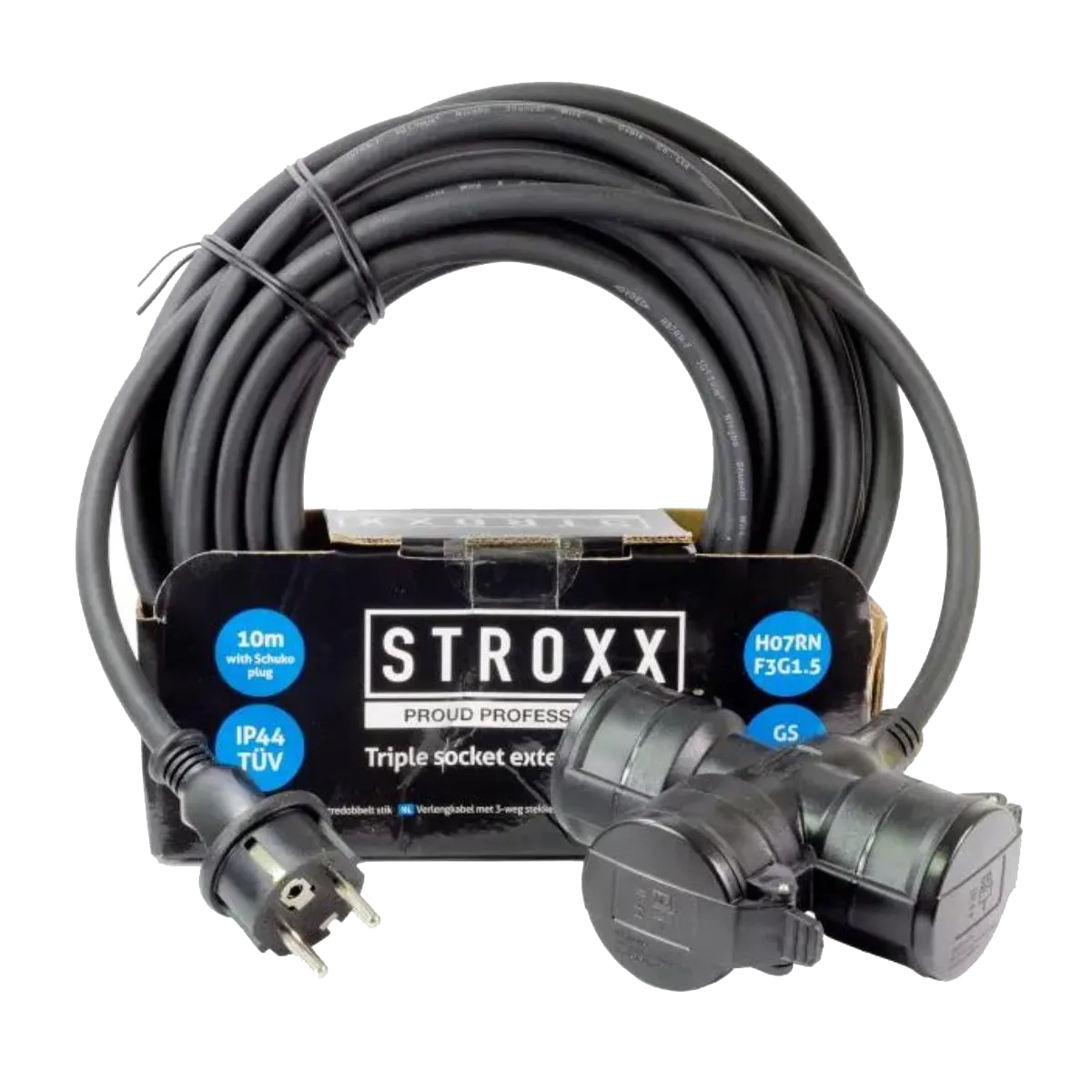
Extension cord for electricity
Power Extension Cord for Workshops, Repairs, and Everyday Use
A power extension cord is a practical way to bring power to the worksite when a fixed outlet isn't conveniently located. It's used for repairs, installations, construction work, and tasks in garages, workshops, yards, warehouses, or around the home. With the right cable, you can power power tools, lighting, chargers, garden equipment, small appliances, and various devices without constantly having to move your equipment to the nearest outlet.
When choosing a power extension cord, the length, cable type, number of outlets, load capacity, moisture protection, and mechanical durability are important factors. For home use, a compact model with several outlets is often needed, while for a workshop or construction site, a cable on a reel is more practical, as it can be extended to the required length and is easier to store after use.
What power supply products include
The range includes straight extension cords, power strips with cables, cable reels, models with outdoor protection, and solutions with varying numbers of outlets. Some are designed for household use, while others are built for heavier-duty use around machinery, power tools, and service equipment. An extension cord with a thicker cable and sturdy insulation is suitable for heavier loads, while lighter models are convenient for offices, apartments, small repairs, and temporarily plugging in appliances.
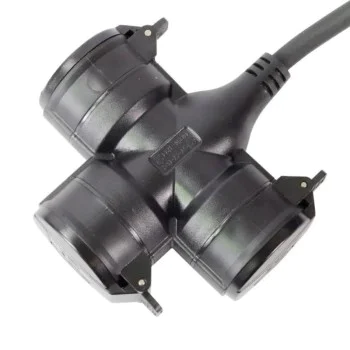
Outlets can be single or multiple, with Schuko-type grounding, protective covers, or a built-in switch. Cable reels are preferred for longer distances because they keep the cable organized and reduce the risk of kinking. For outdoor use, models with enhanced protection against dust and moisture are sought when the environment requires it.
Applications in Repair, Construction, and Maintenance
Power extension cords are widely used for drilling, cutting, sanding, painting, structural assembly, temporary lighting setups, and yard maintenance. In a workshop, it facilitates the connection of bench-top machines, soldering irons, charging stations, medium-power compressors, and measuring equipment. For home use, it serves as a temporary power source for vacuum cleaners, lamps, small appliances, and chargers.
During construction and renovation projects, the cable is often run along floors, stairs, rough surfaces, or around materials. Therefore, the outer sheath, flexibility, and kink resistance are directly relevant to convenience. For yard work, an extension cord must safely reach a lawn mower, trimmer, water pump, or lighting without being stretched excessively or running over sharp edges.
How to Choose a Power Extension Cord
Cable length and working distance
Choose a length based on the distance between the outlet and the work area. A cable that is too short restricts movement, while a cable that is too long can create unnecessary tangles on the floor. Medium lengths are convenient for a workshop, while a reel with a longer cable is more practical for a yard, construction site, or large room.
Cross-section, power, and type of load
The cross-section of the conductors is directly related to the permissible load. More powerful machines and power tools require a cable that can handle a higher current without overheating. Check the power of the connected devices against the specifications on the extension cord. When using multiple devices, the total load is cumulative, so it is not advisable to plug multiple high-power machines into the same extension cord at the same time.
Number of Outlets, Grounding, and Protections
One outlet is sufficient for a single tool, while multiple outlets are convenient when using a lamp, charger, and machine in the same location. Grounding is essential for metal casings and high-power equipment. For areas with dust, shavings, or moisture, look for caps, tighter connections, and housings that protect the contacts from contamination.
| Type | Application | Practical tip |
|---|---|---|
| Short extension cord | Home, office, minor repairs | Convenient for close-range use and light appliances |
| Power strip with cable | Workbench, chargers, lighting | Suitable for several moderate-power devices |
| Cable reel | Workshop, yard, construction | Makes it easier to work at a greater distance |
| Outdoor use | Garden, shed, open areas | Look for moisture protection and a sturdy housing |
Safety when using an extension cord
The power supply requires careful handling. The cable must not be crushed by heavy objects, run over sharp edges, or pulled by the plug. If there is visible damage to the insulation, overheating, a burning smell, or a loose connection, stop using the extension cord. It is best to unroll a reel extension cord when using it with a heavier load, as the coiled cable retains heat.
For outdoor use, use only models designated for such environments. Protect the connections from direct water, mud, and heavy soiling. After completing the task, clean the cable of dust, debris, or moisture and wind it up without sharp kinks. This keeps the insulation, plug, and sockets in good condition for future use.
A practical choice for professional and home use
The right power extension cord improves workplace organization and reduces unnecessary movement of machines and tools. For service and workshop use, look for a more durable cable, sturdy plugs, and a convenient length. For home use, focus on compactness, the number of sockets, and plug protection. For yard and construction tasks, pay attention to insulation, the housing, the reel, and stability when moving over rough terrain.
Browse the options at Toolsbox.bg and choose an extension cord based on your work location, the power of your equipment, and the required distance to the power source.