
Fans
Battery-powered fans for workshops, service centers, and job sites
Cordless fans are a practical choice for cooling, ventilation, and directing airflow where there is no nearby outlet or where a cord would get in the way. They are used in workshops, garages, service areas, construction sites, warehouses, RVs, camping areas, and home renovations. Among cordless tools, these devices are valued primarily for their mobility, ease of transport, and compatibility with batteries from a specific platform.
When working with power tools, painting, installing, sanding, or performing tasks in enclosed spaces, good airflow enhances comfort and helps quickly remove hot, stagnant, or dusty air. A cordless fan does not replace a professional ventilation system for specialized tasks, but it is a convenient tool for locally ventilating the work area, tools, materials, or the operator.
What do cordless fans include?
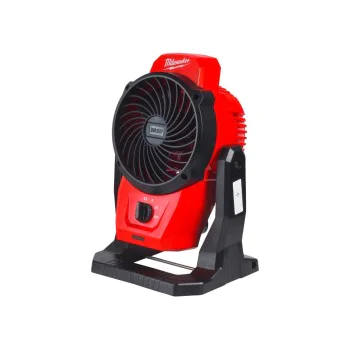
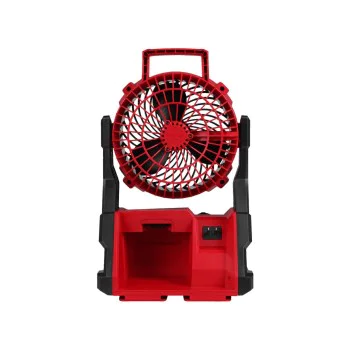
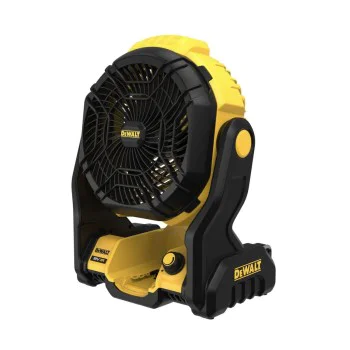
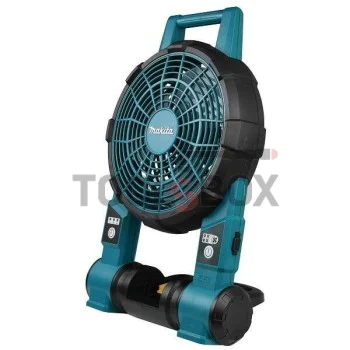
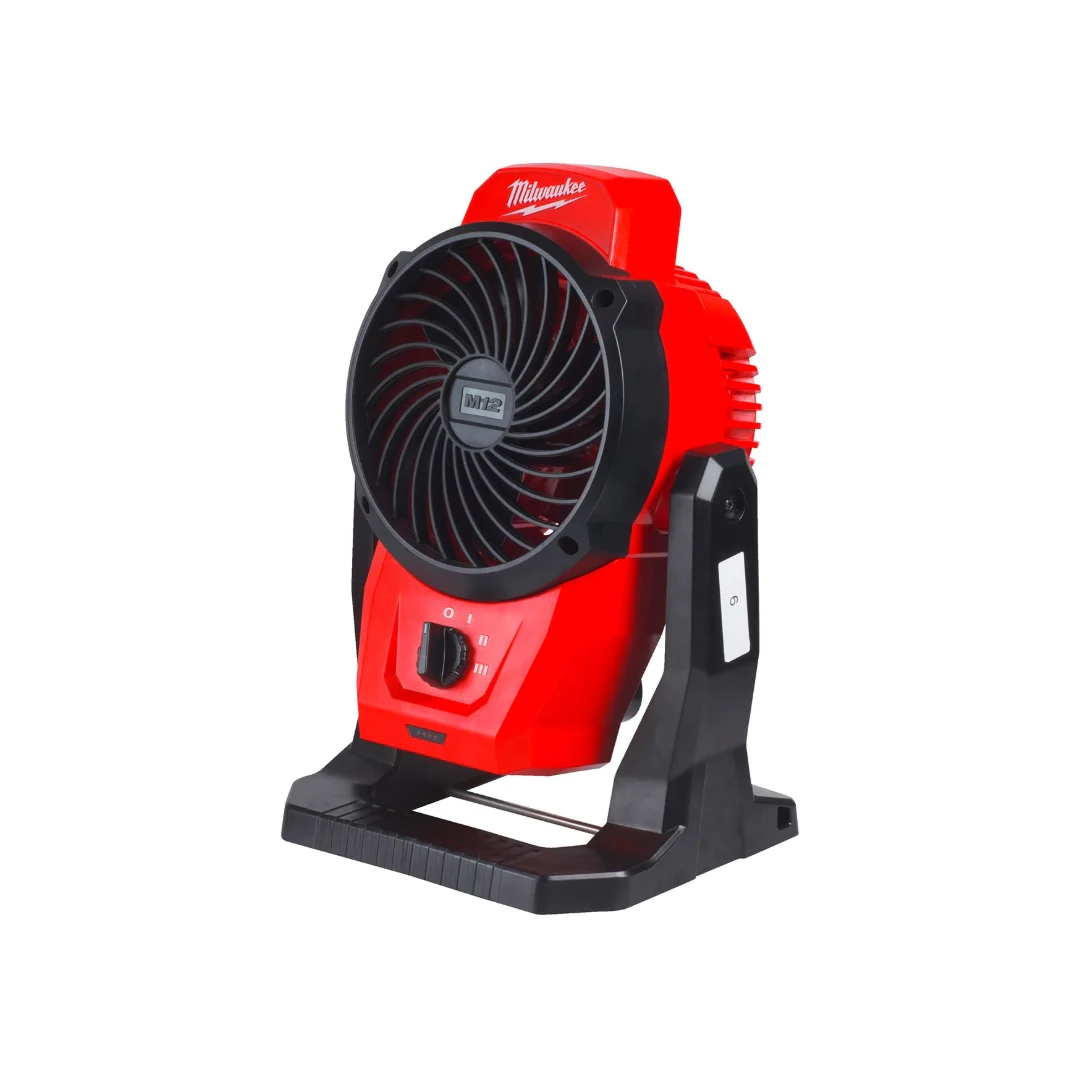
This product group includes compact and more powerful models with different blade diameters, speed settings, stand types, and mounting options. Some are designed to be placed on a workbench, shelf, or floor, while others feature a hook, swivel head, tripod thread, or mounting base. This allows the airflow to be directed toward a specific area without the unit taking up unnecessary space.
Some models operate exclusively on a rechargeable battery, while others also support power from a wall adapter. For devices in cordless tool systems, the battery is often shared with screwdrivers, drills, grinders, saws, and other machines in the same series. This simplifies maintenance of the tool set and reduces the need for separate chargers.
Differences Between Models
The most significant differences lie in airflow power, runtime, size, settings, and construction. Small fans are convenient for personal workspaces, precision assembly, workbenches, and travel. Larger models are better suited for garages, repair work, storage areas, and sites where a more substantial airflow is needed.
- Size and airflow: a larger fan blade moves more air, but takes up more space and typically puts more strain on the battery.
- Speed settings: multiple settings allow you to choose between quieter operation and a stronger airflow.
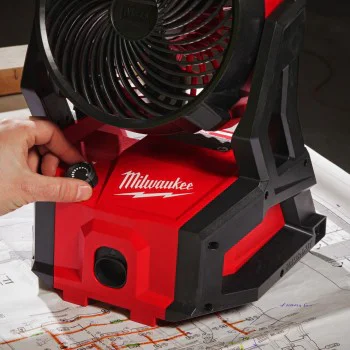
- Airflow direction: A rotating or tilting head makes it easier to direct the airflow toward the operator, a workpiece, or the work area.
- Mounting and placement: a hook, bracket, mounting hole, or tripod thread are valuable when working in tight spaces.
- Power supply: Compatibility with a battery platform is a key purchasing criterion.
Applications in repair, installation, and daily work
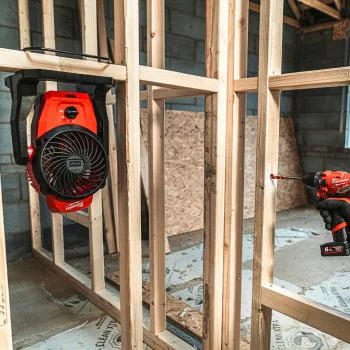
Cordless fans are useful for summer repairs, working in rooms with limited air circulation, ceiling and wall installation, car maintenance, furniture assembly, and working in basements, attics, and vans. They help keep the operator cool during prolonged tasks and create a more comfortable environment around the workbench.
When painting, gluing, or working with odor-emitting materials, the fan aids air circulation, but ventilating the room remains a mandatory precaution. When sanding and cutting, it is best to ensure the unit does not direct dust toward the face, electronics, or exposed mechanisms. Positioning matters for both comfort and cleanliness around the work area.
For camping, fishing, caravanning, or a temporary worksite, a battery-powered fan is valuable due to its independent power source. Compact models are easy to carry in a trunk or toolbox, while larger versions are more convenient for stationary use throughout the workday.
How to Choose a Battery-Powered Fan
When choosing, start with compatibility. The battery must match the manufacturer's voltage and system. Some models are sold as a standalone unit without a battery or charger, while others come as a set. Check what's included in the package to plan for the actual cost of the purchase and operational readiness.
Battery capacity affects runtime. A battery with more amp-hours supports longer operation but increases weight. For short tasks and moving between different locations, a compact battery is convenient, while for extended use in a workshop or on a construction site, a larger capacity is more practical.
Also pay attention to the noise level. For rough work in a garage, this is rarely an issue, but when installing in a home, office, RV, or small workshop, a quieter mode is a major plus. Adjustable speeds give you the freedom to reduce noise when maximum air pressure isn't needed.
Practical considerations before purchasing
- Compatible battery system-voltage, battery type, and charger.
- Run time-related to battery capacity and the selected speed.
- Stability-wide base, rubber feet, or secure grip during vibrations and movement.
- Adjustability-tilt, rotation, speeds, and user-friendly control buttons.
- Weight and portability-important when frequently moving between rooms or sites.
- Working environment-dust, humidity, confined spaces, and the need for installation at height.
Compatibility, maintenance, and safe operation
The safest approach is to ensure that the battery and charger are from the same battery system for which the fan is designed. Mixing incompatible batteries, adapters of questionable origin, or chargers without clear specifications poses a risk to the device and the user. Check the markings on the housing, the voltage, and the manufacturer's instructions.
Maintenance is easy but should not be neglected. Clean the grilles and blades of dust, shavings, and fine particles, as dirt reduces airflow and strains the motor. Do not place the fan on unstable surfaces and do not cover the intake vents. When working near water, wet floors, or rain, use only models designated for such environments, and keep the battery dry.
In a workshop environment, it is advisable to keep the fan away from sparks, grinding sparks, aggressive chemicals, and flammable vapors. The airflow should not direct dust toward open electrical panels, bearings, freshly painted surfaces, or sensitive equipment. When positioned correctly, the unit operates more quietly, more stably, and more effectively for the task.
Fans for Professional and Home Use
For professional use, models with a sturdy housing, good battery life, a comfortable handle, and multiple mounting options are in demand. They are moved between rooms, vans, workbenches, and construction sites, so mechanical durability and ease of use are important. For home use, more compact models are often sufficient; they are easy to store and can be used for repairs, hobbies, garage work, or travel.
At Toolsbox.bg, you'll find fans for various work situations-from small portable options to more robust cordless models for job sites and workshops. Browse the options, compare power sources, size, features, and accessories, then choose a tool that fits your battery system and your work style.