
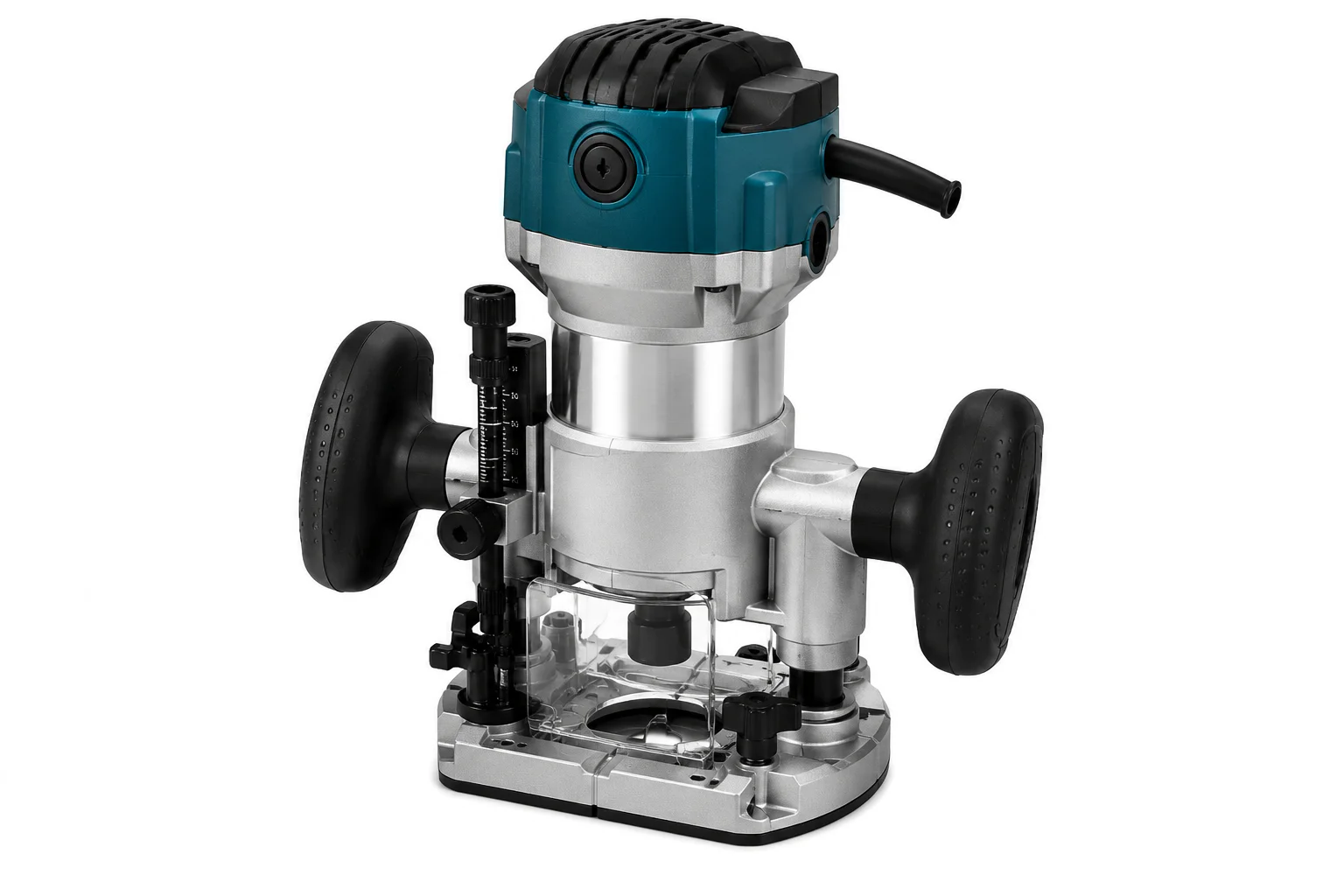
Router for overmilling
Router bit for precise shaping of wood and surfaces
A router bit is a cutting tool for routers used to create grooves, chamfers, profiles, roundings, joints, and decorative edges in wood, MDF, particleboard, plywood, and similar materials. The precision of the bit directly affects the cleanliness of the cut, the stability of the cut, and the final appearance of the workpiece. This section covers various router bits for edging, grooving, template work, material removal, copying, and fine profiling, designed for workshops, installation work, furniture manufacturing, repairs, and home projects with higher precision requirements.
Each router bit has a specific cutting edge shape, diameter, length, shank type, and working geometry. These parameters determine whether the bit will work along an edge, in an internal channel, along a template, or in solid material. With a well-selected router bit, the machine runs more stably, the load is more even, and the machined area requires less subsequent sanding.
Applications for router bit cutting
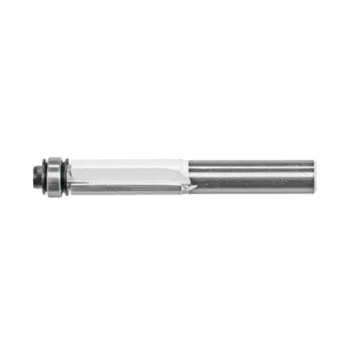
Router bits are used in the manufacture of furniture, cabinet doors, countertops, frames, trim, decorative elements, hinge slots, back panel notches, joint channels, and the shaping of visible edges. A router bit with a bearing is guided along an edge or template and is convenient for copy routing, edge trimming, and repetitive operations. Bits without a bearing are guided using a parallel guide, template, stop, or precise machine adjustment.
For rough material removal, look for cutters with a larger diameter and stable cutting geometry. For fine decorative profiles, models with a precise cutting edge shape and a smooth profile are selected. When working with laminated panels, a clean cut and sharp cutting edges are particularly beneficial, as they reduce the risk of nicks in the finish.
| Blade type | Typical application | Practical tip |
|---|---|---|
| Straight router | Channels, grooves, pockets, material removal | Select by diameter, cutting depth, and shank |
| Edge router with bearing | Edge trimming, template copying | The bearing guides the cutter along the edge of the workpiece |
| Profile router | Oval, radius, chamfer, decorative edge | The shape of the cutting profile determines the final appearance |
| V-shaped or engraving router | Inscriptions, decorative lines, V-grooves | The angle of the tip affects the width and depth of the line |
| Joint cutter | Dovetail, rebate, tongue and groove | Precise depth and feed adjustment is required |
Selecting a router bit based on the machine, shank, and material
When selecting a router bit, first check the shank size against the machine's collet. Common shank sizes are 6 mm, 8 mm, 12 mm, 1/4", and 1/2", and a mismatch between the collet and the bit is not permitted. A larger shank provides more stability for heavier-duty operations, while smaller sizes are suitable for fine profiles and compact machines.
- Cutting diameter: affects the width of the groove, the radius of the profile, and the removal rate.
- Working length: selected according to the material thickness and required depth.
- Presence of a bearing: facilitates guidance along an edge, template, or pre-formed part.
- Profile shape: determines whether a chamfer, radius, rebate, decorative line, or joint will be created.
- Blade material: carbide-tipped blades are suitable for wood panels and extended use, while HSS options are primarily used for softer materials and lighter operations.
For serial production and professional use, the precision of the sharpening, the balance, and the durability of the cutting edge play a greater role. For home use, the key factors remain compatibility with the available router, the required profile, and the correct size for the specific detail.
Materials, Geometry, and Cut Quality
A router bit with carbide-tipped cutting inserts is preferred for MDF, particleboard, plywood, solid wood, and laminated panels. The geometry of the cutting edge affects chip evacuation, the smoothness of the groove walls, and the load on the power tool. When working with harder woods and coated panels, more careful adjustment of speed and feed is required to avoid burning, vibration, and chipping of the edge.
For decorative profiles, the precise shape of the bit is crucial for the repeatability of the details. When machining visible edges, the bearing and smooth guidance help achieve a smooth line without abrupt transitions. For channels and pockets, the depth of the cuts and the secure clamping of the workpiece to the worktable are important.
Operation, Safety, and Maintenance
Before starting work, the tool shank must be clean and securely clamped in the collet, free of debris and without protruding excessively. The workpiece must be securely clamped, and the feed must be controlled evenly, without abrupt movements. For deeper grooves, it is better to work in several passes, which protects the machine and the cutting edge. Safety goggles, dust extraction, and a secure grip on the material increase safety during every operation.
Storing each router bit in a separate slot or box protects the cutting edges from impact. Resin and dust on the cutting edges should be removed with a suitable tool cleaner, and the bearings should be kept free of chip buildup. A bit with visible wear, wobble, or a damaged bearing is not suitable for precision work.
Selection for workshop, installation, and finishing work
Select a router bit based on the type of machining, material, collet size, and desired cut shape. Toolsbox.bg offers a selection of bits for grooves, edges, profiles, template work, and decorative routing, so you can find the right tool for your router, workshop, installation tasks, and precision finishing operations.