
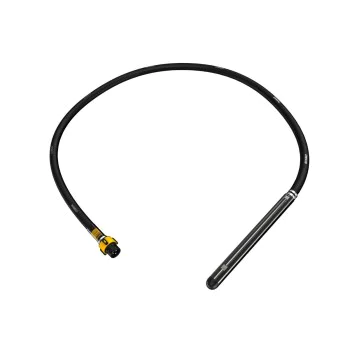
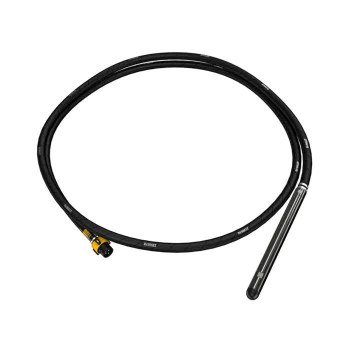
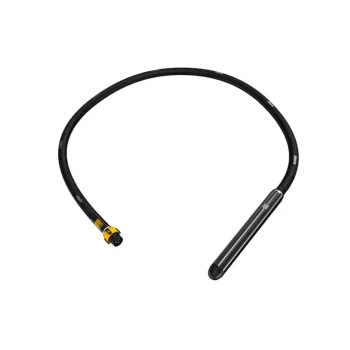
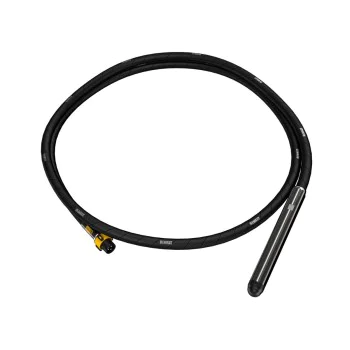
Needle vibrators
Needle vibrators for compacting concrete
Needle vibrators compact freshly poured concrete through high-frequency vibrations that remove trapped air and promote uniform distribution of the mixture around reinforcement, formwork, and structural details. They are essential equipment for pouring foundations, columns, slabs, beams, girders, walls, and other reinforced concrete elements, where proper compaction directly affects strength, watertightness, and the final surface finish.
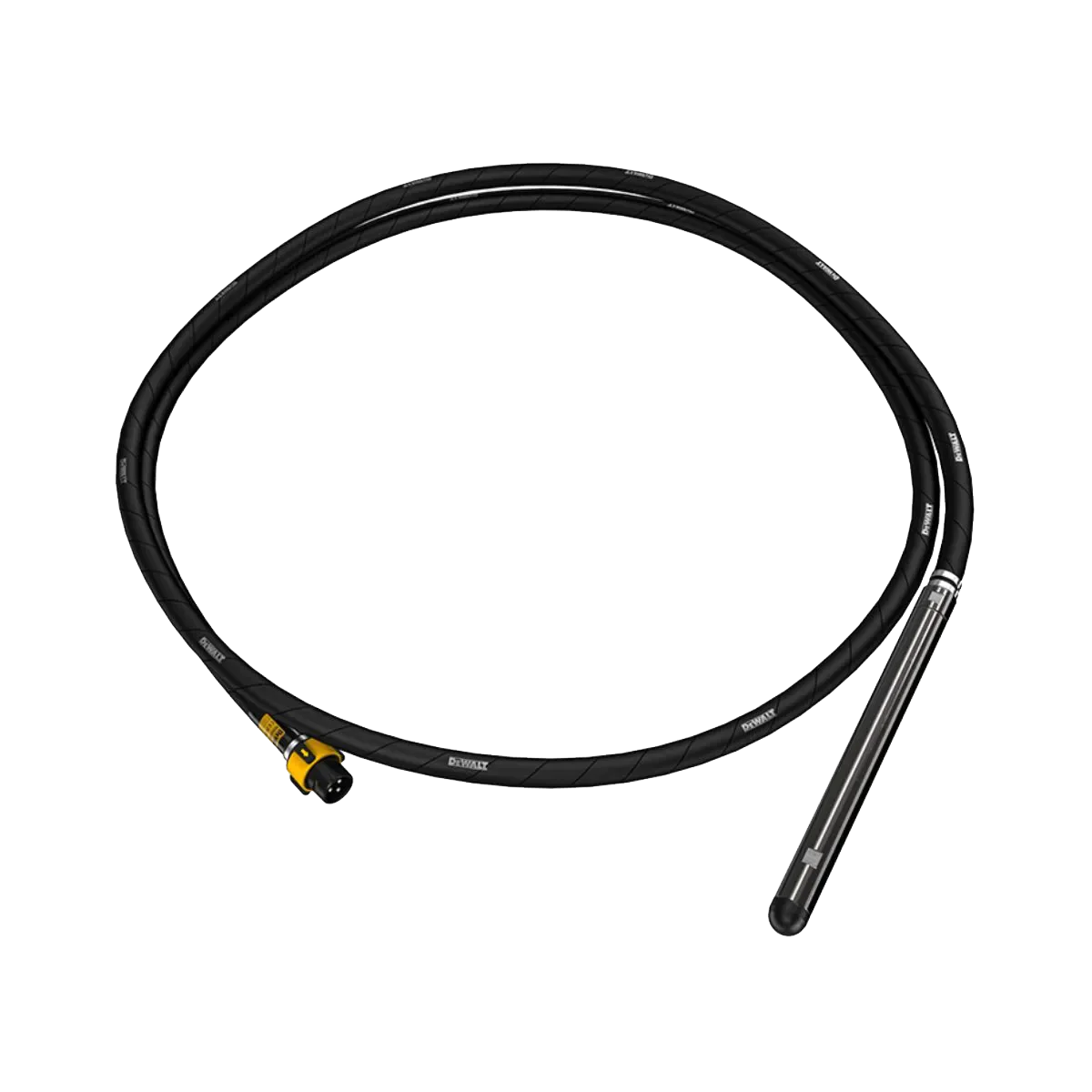
This section includes models for construction sites, repair work, installation crews, and contractors who work with concrete mixes of varying volumes. The needle vibrator consists of a drive unit, a flexible shaft or cable, and a vibrating needle that is immersed directly into the mix. Depending on the model, the machines differ in needle diameter, shaft length, power, vibration frequency, power source, and portability.
Where are needle vibrators used?
Submersible concrete vibrators are used in areas where the mixture must tightly cover the reinforcement and fill the formwork without voids. They are valuable for narrow cross-sections, tall columns, densely reinforced elements, and deep pours where manual spreading alone is not sufficient to achieve a high-quality result.
- Foundations and footings-for removing air bubbles in massive pours.
- Columns, slabs, and walls-for compaction around reinforcement and formwork corners.
- Slabs and beams-for even distribution of the mixture in horizontal structures.
- Repair and finishing work-for spot pours, grouting, and reinforcement.
- Production of concrete elements-for molds, forms, and small batches for construction needs.
Types of needle vibrators and differences between them
Electric needle vibrators are a common choice for sites with access to power. They are valued for their ease of use, relatively simple maintenance, and good control during prolonged operations. Models with a separate drive unit and a flexible shaft provide the operator with greater reach, which is practical for formwork of varying heights and when working around rebar.
High-frequency models are designed for more intensive compaction and rapid processing of larger areas. In these models, vibration is transmitted directly to the rammer at a constant frequency, which helps achieve uniform results with drier or denser mixes. The more compact models are convenient in confined spaces, for single pours, and for repair tasks where mobility is a key factor.
| Model Type | Key features | Application |
|---|---|---|
| Electric needle vibrator | Driven by an electric motor, standard power supply depending on the model | Construction sites, workshops, small and medium-sized concrete projects |
| Flexible-shaft vibrator | Drive unit and submersible needle connected by a shaft | Columns, walls, deep formwork, hard-to-reach areas |
| High-frequency needle vibrator | Intense vibrations and stable operation under load | Larger pours, professional construction tasks |
| Compact design | Lighter weight and easy to carry | Repairs, spot casting, home and occasional use |
Selecting a needle vibrator based on the concrete job
When selecting a concrete vibrator, first consider the size of the structure, the density of the rebar, and the consistency of the mix. The diameter of the vibrator needle affects the area of action and the compaction speed. Smaller diameters are used for narrow formwork and dense reinforcement, while larger ones facilitate the handling of massive components and larger pours.
The length of the flexible shaft determines how far the operator can reach without moving the drive unit. For high formwork, foundations, or working at different levels, a longer shaft provides more freedom. In confined spaces, a shorter shaft is easier to handle and reduces fatigue during frequent repositioning.
The power and vibration frequency are selected according to the load. For occasional home use and small repairs, a more compact machine is sufficient, while for daily work on a construction site, it makes sense to look for a model with a longer service life, a durable housing, and a comfortable handle. Weight, cord length, protection of electrical components, and access to consumables also affect ease of use.
Compatibility, Consumables, and Maintenance
For machines with interchangeable shafts and needles, it is necessary to match the connection size, drive type, and working length. An improper combination of motor, shaft, and needle strains the mechanism and reduces the compaction result. For maintenance, the condition of the bearings, seals, flexible shaft, cable, and protective components is important.
After use, the vibrating needle and shaft must be cleaned of concrete residue before the mixture sets. A dry and clean housing facilitates subsequent use and reduces the risk of damage. For electric models, the cable should be inspected for damage, and the plug and switch should be protected from moisture and impact. During prolonged use, breaks are required according to the manufacturer's instructions to prevent the drive unit from overheating.
Safe operation of a submersible concrete vibrator
Working with a needle vibrator requires a stable stance, protective gloves, work boots, and caution around cables, rebar, and formwork. The needle is inserted vertically or at a slight angle, without forcing it into the rebar. Holding the vibrator in one place for too long causes the mixture to segregate, while too brief an immersion leaves air pockets. Moving the vibrator evenly across adjacent areas results in a dense structure and a clean surface after formwork removal.
At Toolsbox.bg, you'll find needle vibrators for a variety of job sizes-from compact machines for repairs and home concrete projects to models for construction crews and more intensive use. Compare the needle diameter, shaft length, power source, and working load to select a machine that suits your specific pour and work style.